
Trunk comparison: Hyundai Kona vs Seat Tarraco

Key Differences
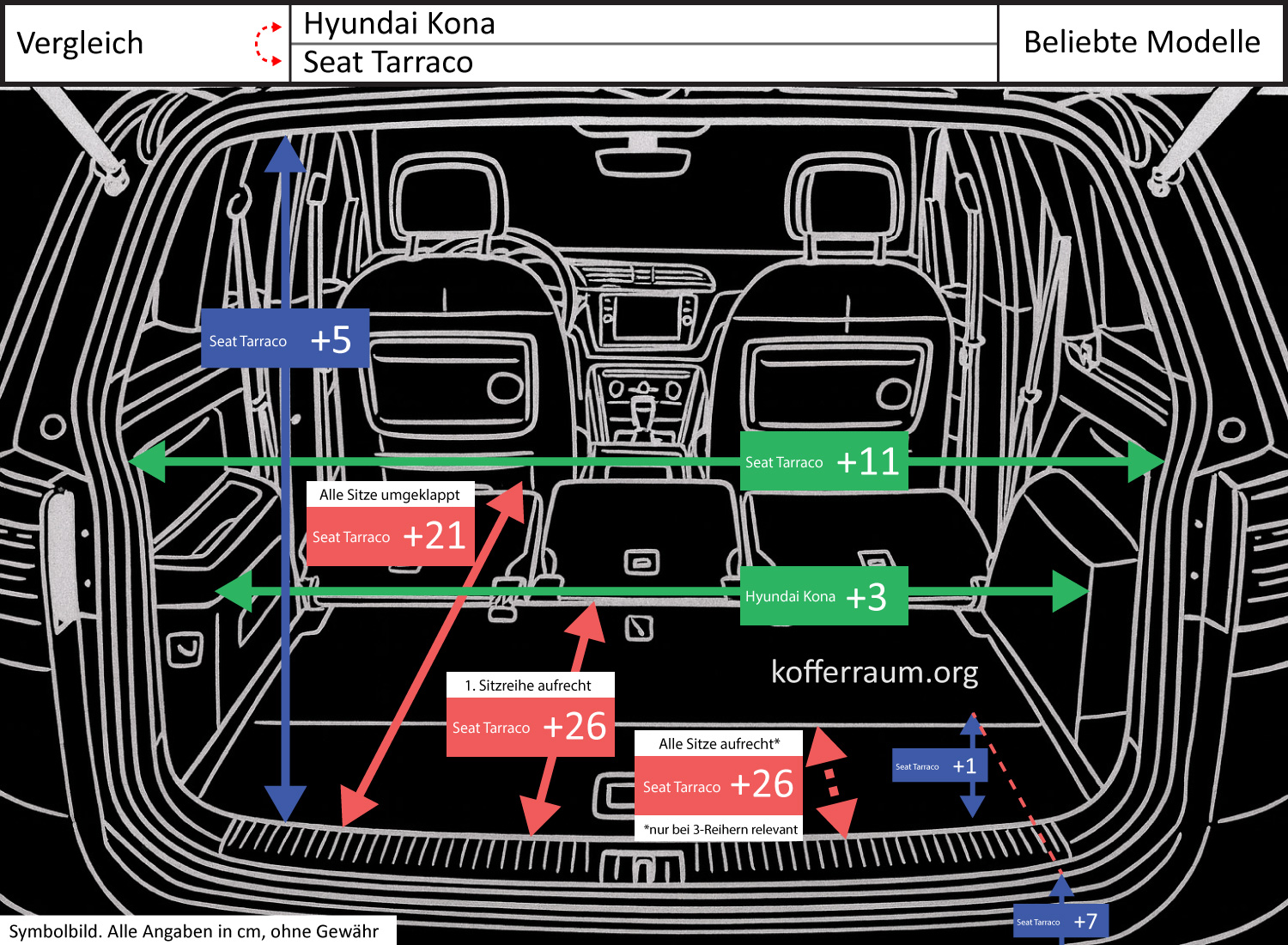
The SEAT Tarraco offers a significantly larger cargo space with the rear seats folded down: it is 8.3 in (13%) longer than the Hyundai Kona. With the first row of seats upright, the difference is even more pronounced: the Tarraco has a trunk that is 10.2 in (30%) longer.
Additionally, the depth of the Tarraco's trunk (loading edge → trunk floor) is 0.4 in (20%) greater, and the width of the trunk opening is 4.3 in (11%) wider than that of the Kona.
What impact do these differences have on usability?
The greater loading length both with folded seats and with the front row upright makes the Tarraco significantly more versatile for long items (e.g., slats, long furniture parts, bulky sports equipment).
Especially the +30% advantage with the front row upright means: more cargo space while passengers can still be seated — a clear benefit for families or longer trips with a full load.
The increased depth (+20%) increases usable cargo volume and makes stacking luggage, boxes, or shopping bags easier because there is more space behind the loading edge. The wider trunk opening (+11%) simplifies maneuvering wider or bulky items inside and reduces the need to angle things.
Some minor drawbacks to note: the Tarraco's loading edge is slightly higher (+2.8 in), which makes lifting heavy loads a bit more strenuous, and the narrowest interior width is slightly (+1.2 in) more favorable in the Kona — this can be relevant for very narrow pass-throughs.
The opening height (+2 in) is advantageous but less noticeable in everyday use.
Conclusion: Those who need more length, volume, and a larger opening for transport tasks (families, transports, outdoor activities) clearly benefit from the SEAT Tarraco. The Hyundai Kona can offer slight advantages in situations with a low loading edge or very tight interior widths but remains overall more compact.