
Trunk comparison: Hyundai Kona vs Volvo V90
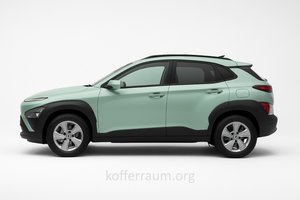
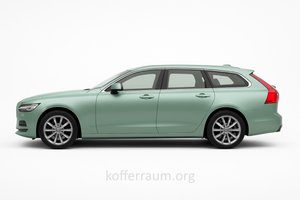
Key Differences
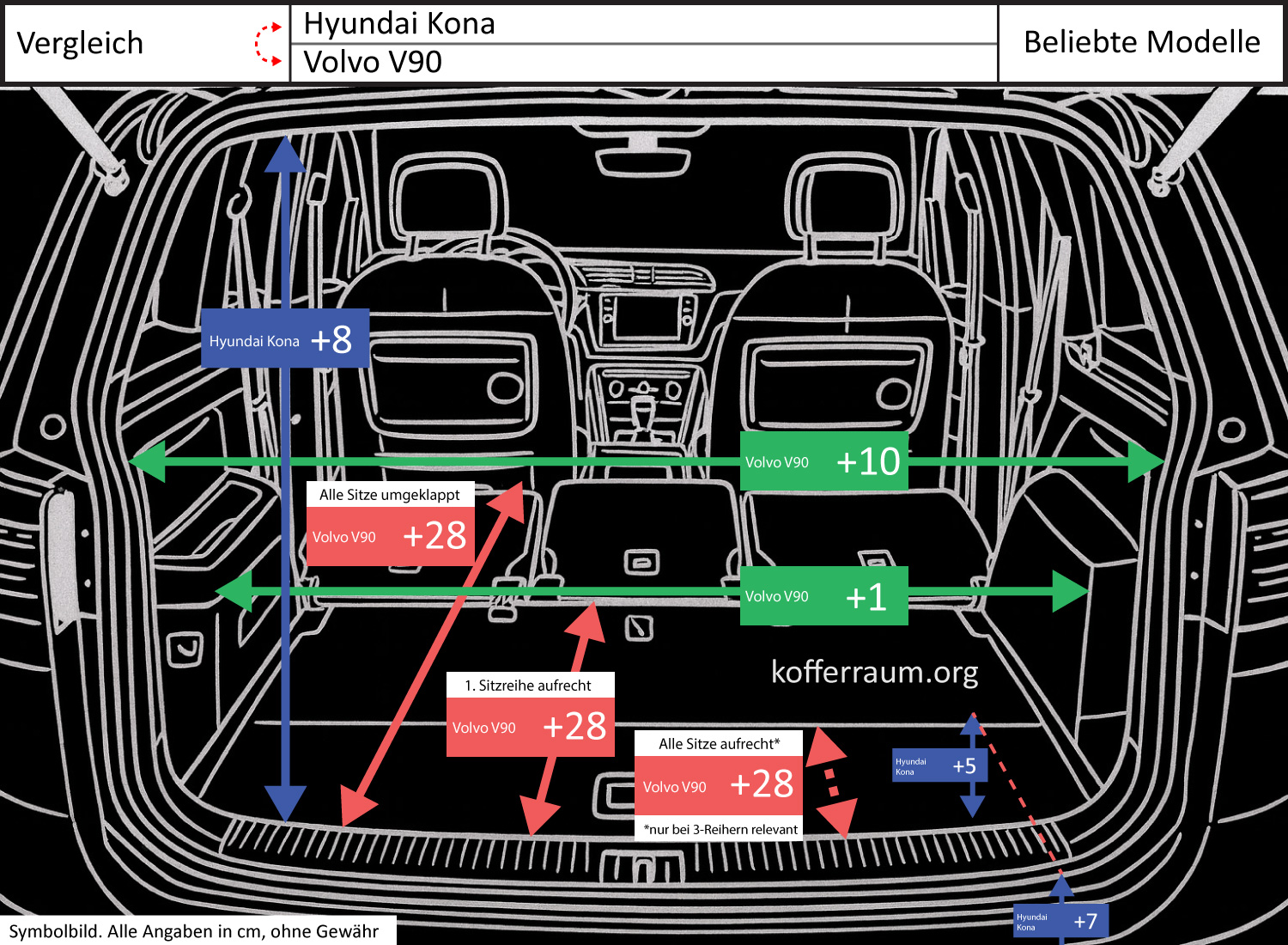
The Volvo V90 offers significantly more loading length:
, and
than the Hyundai Kona. This makes the V90 clearly superior when it comes to long items like furniture parts, skis, or long boxes. On the other hand, the Kona has several features that can be advantageous:
,
, and
. These values mean that the Kona has more vertical space at the opening and a deeper interior below the loading edge, but the loading edge is overall higher. The width differences are minor: the narrowest point is only +0.4 in (1%) wider on the V90, and the opening width of the V90 is +3.9 in (10%) — these two values do not exceed the 10% mark and are therefore of minor practical significance.
Specific Implications for Usability
- Longer items: The V90 is the better choice. Its significantly greater loading length makes it easier to fit long items without complicated folding or angled loading techniques. - Heavy lifting and frequent loading: The V90 has a lower loading edge than the Kona (Kona +2.8 in). This makes loading heavy items easier overall in the V90 because less lifting effort is required. - Tall/voluminous items: The Kona is better suited for tall items right at the opening because the trunk opening offers +3.1 in more height. Likewise, the greater depth below the loading edge allows for more storage space downward but can make retrieving flat, heavy items more difficult (larger recess behind the loading edge). - Everyday versatility: If you regularly transport long but not necessarily tall loads (e.g., slats, furniture parts, long boxes), the V90 is more practical. If you often load bulky, tall, or awkward items and the higher loading edge is not an issue, the Kona is more advantageous. In short: Volvo V90 = better for length and easier loading of long items; Hyundai Kona = more vertical space at the opening and deeper interior, but with a higher loading edge that can make lifting harder.