
Trunk comparison: Hyundai Kona vs Volvo XC60


Key Differences
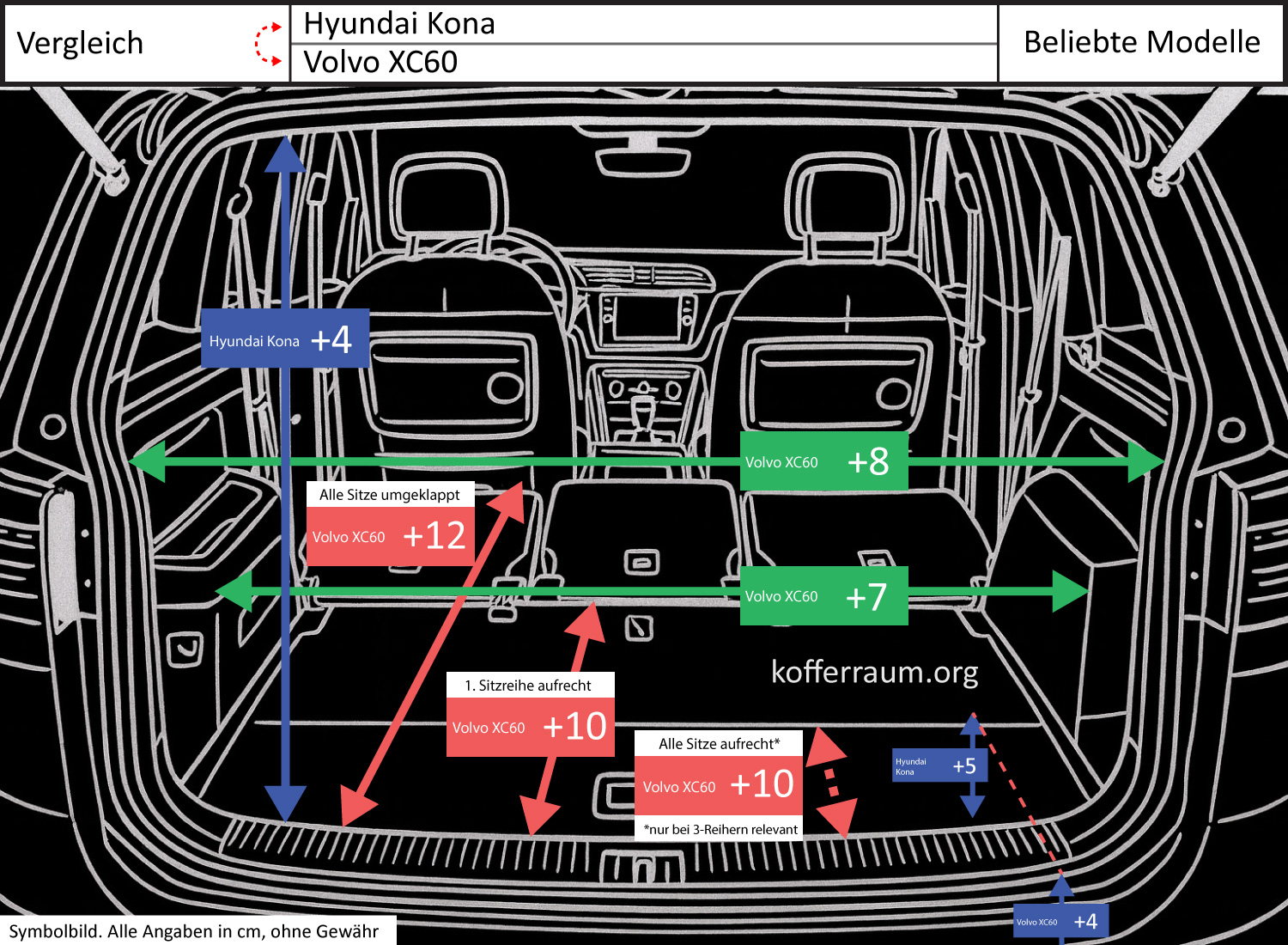
The Volvo XC60 offers a longer cargo floor with the front seats upright than the Hyundai Kona —
— while it is also somewhat longer with the seats folded down (+4.7 in / 7%). The Hyundai Kona, on the other hand, has a significantly greater depth between the loading edge and the trunk floor —
. Other differences: the height of the trunk opening is 1.6 in (5%) larger on the Kona, the loading edge of the XC60 is 1.6 in (6%) higher above the ground, the narrowest width in the trunk is 2.8 in (7%) larger on the XC60, and the width of the trunk opening is 3.1 in (8%) larger on the XC60.
Impact on Usability
The longer cargo floor of the Volvo XC60 with the rear seat upright makes it better suited for long items that need to be transported without folding down the seats (e.g., slats, long boxes, or skis in a simple loading situation). The greater depth of the Hyundai Kona means there is more vertical space behind the loading edge — this is practical for taller or bulky items, stacked boxes, or when cargo should lie in a deeper recess. A practical combination: the Kona has a lower loading edge and a slightly higher opening, which makes loading and unloading heavy or tall loads easier, even though these differences are smaller in percentage terms. The XC60 also scores with somewhat more width at narrow points and at the opening, which facilitates sliding in wider items, as well as overall more cargo length with the rear seat folded down. Which choice is more sensible depends on typical loading needs: for longer, flat loads the XC60 is advantageous; for bulky, taller, or easier-to-load items, the Kona is preferable.