Trunk comparison: Jeep Compass vs Durchschnitt Wagon
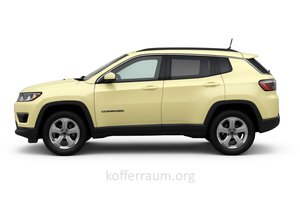
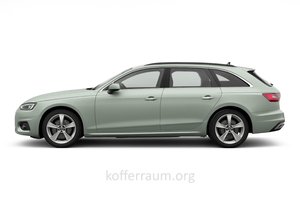
Key Differences
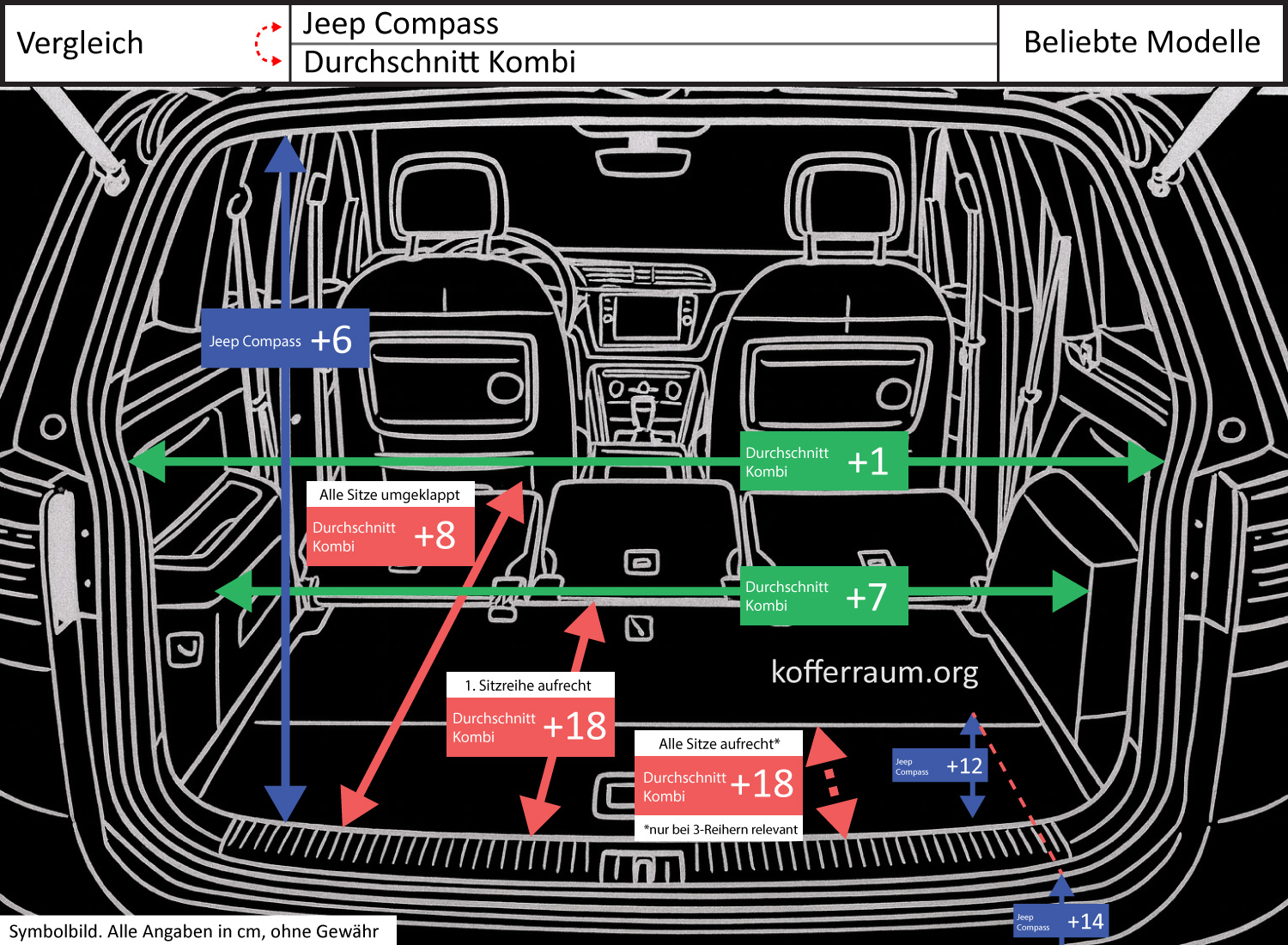
The average wagon offers a significantly longer cargo area with the first row of seats upright: it has +7.1 in (22%) more loading length than the Jeep Compass. With the seats folded down, however, the difference is small (+3.1 in / 5% in favor of the wagon).
The depth of the trunk (distance from loading edge → trunk floor) of the Jeep Compass is significantly greater (+4.7 in, stated as 300%), and the loading edge of the Compass sits higher above the road (+5.5 in / 22%).
Other dimensions such as the height of the trunk opening (+2.4 in / 8% in favor of the Compass), the narrowest width (+2.8 in / 7% in favor of the wagon), and the width of the trunk opening (+0.4 in / 1%) differ only slightly.
Impact on Usability
Because the average wagon offers significantly more loading length with the rear seat upright, it is more practical for longer items that need to be transported without folding down seats (e.g., skis, slats, long boxes).
With the fully folded loading floor, the lengths differ only slightly, so both vehicles are comparably usable here.
The Jeep Compass offers more usable depth in the trunk and a higher trunk opening, so bulky or taller items can be better accommodated or stacked.
However, the loading edge of the Compass is significantly higher above the road, which makes lifting heavy loads into the trunk more difficult and loading and unloading more strenuous for individuals. For frequent lifting of heavy items, the lower loading edge height of the wagon is more ergonomic.
Since the narrowest width and the opening width differ only slightly in favor of the wagon, these values have little impact on everyday usability.
In summary: wagon = better for long, flat loads with rear seats upright and more ergonomic loading and unloading; Compass = more depth and stacking volume, but with a higher loading edge that complicates handling heavy loads.