
Trunk comparison: Jeep Compass vs Mercedes Benz GLB
Key Differences
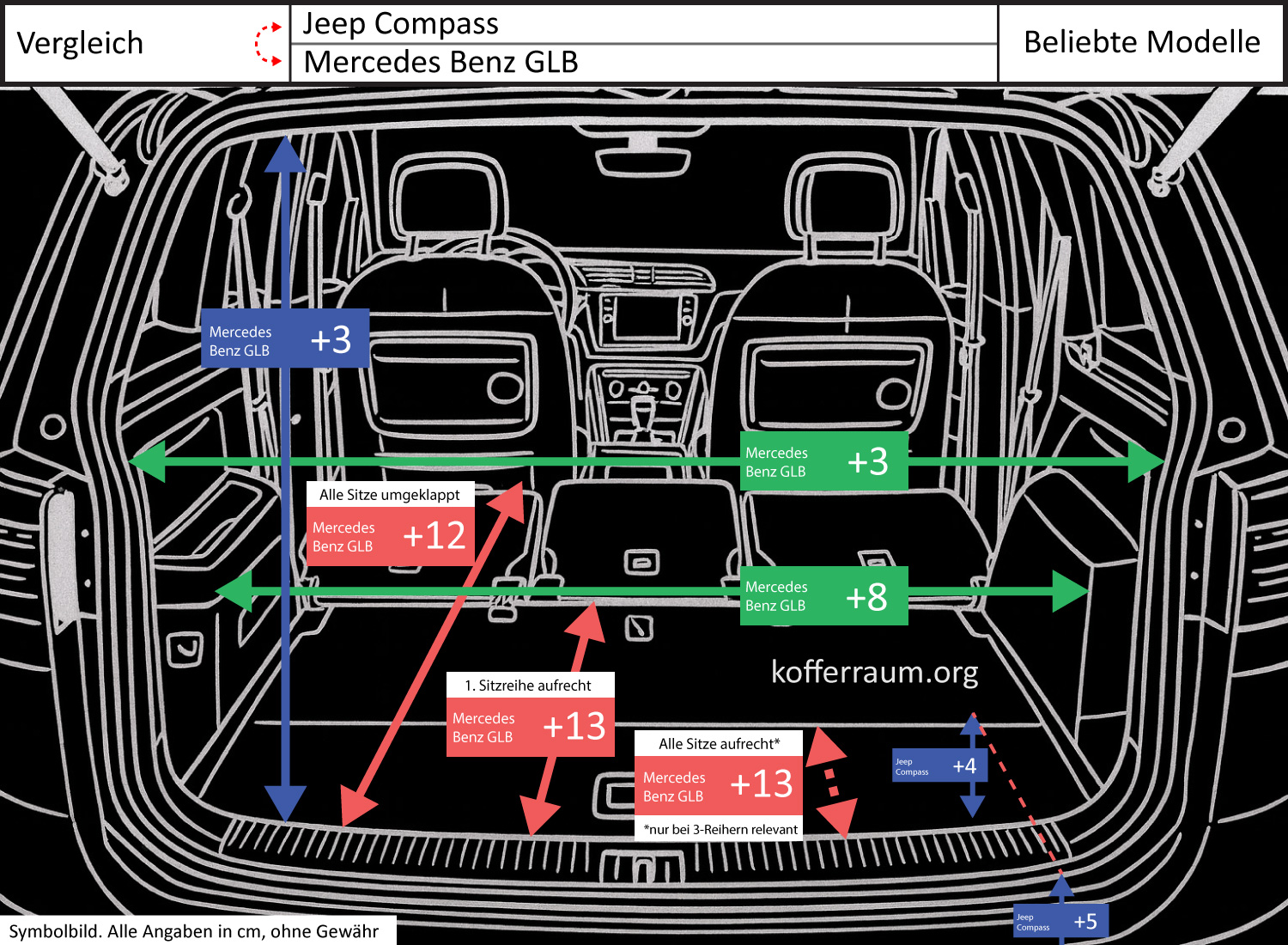
Two clear differences stand out from the data: The Mercedes-Benz GLB offers a 5.1 in (≈16%) longer cargo floor with the first row of seats upright than the Jeep Compass.
Conversely, the Jeep Compass has a 1.6 in (≈33%) greater depth between the loading edge and trunk floor than the GLB. Smaller deviations concern the height and width of the opening as well as the loading edge height, all below the 10% mark.
Impact on Usability
The longer loading length of the GLB with the rear seat upright means practically: longer items (e.g., slats, skis, long boxes) can be transported more easily without folding down the rear seats.
For users who frequently transport long, flat cargo with full seating occupancy (craftsmen, families with large luggage), the GLB is more flexible in everyday use.
The greater depth of the Jeep Compass (loading edge → trunk floor) creates a deeper cargo area directly behind the loading edge. This offers more usable volume in the lower part of the trunk and helps to recess bulky or tall items somewhat deeper, making the cargo floor visually and actually more spacious.
In combination with the slightly higher loading edge, however, this also means: heavy luggage must be lifted over a higher threshold before it can be lowered into the deeper trunk — this can make loading individual heavy pieces more cumbersome.
Conclusion: Those who frequently transport long items with full seating benefit from the GLB. Those who rely more on larger, deeper cargo volume and place less value on a low loading edge will find advantages in the Jeep Compass.