
Trunk comparison: Jeep Compass vs Tesla Model 3
Key Differences (highlighted)
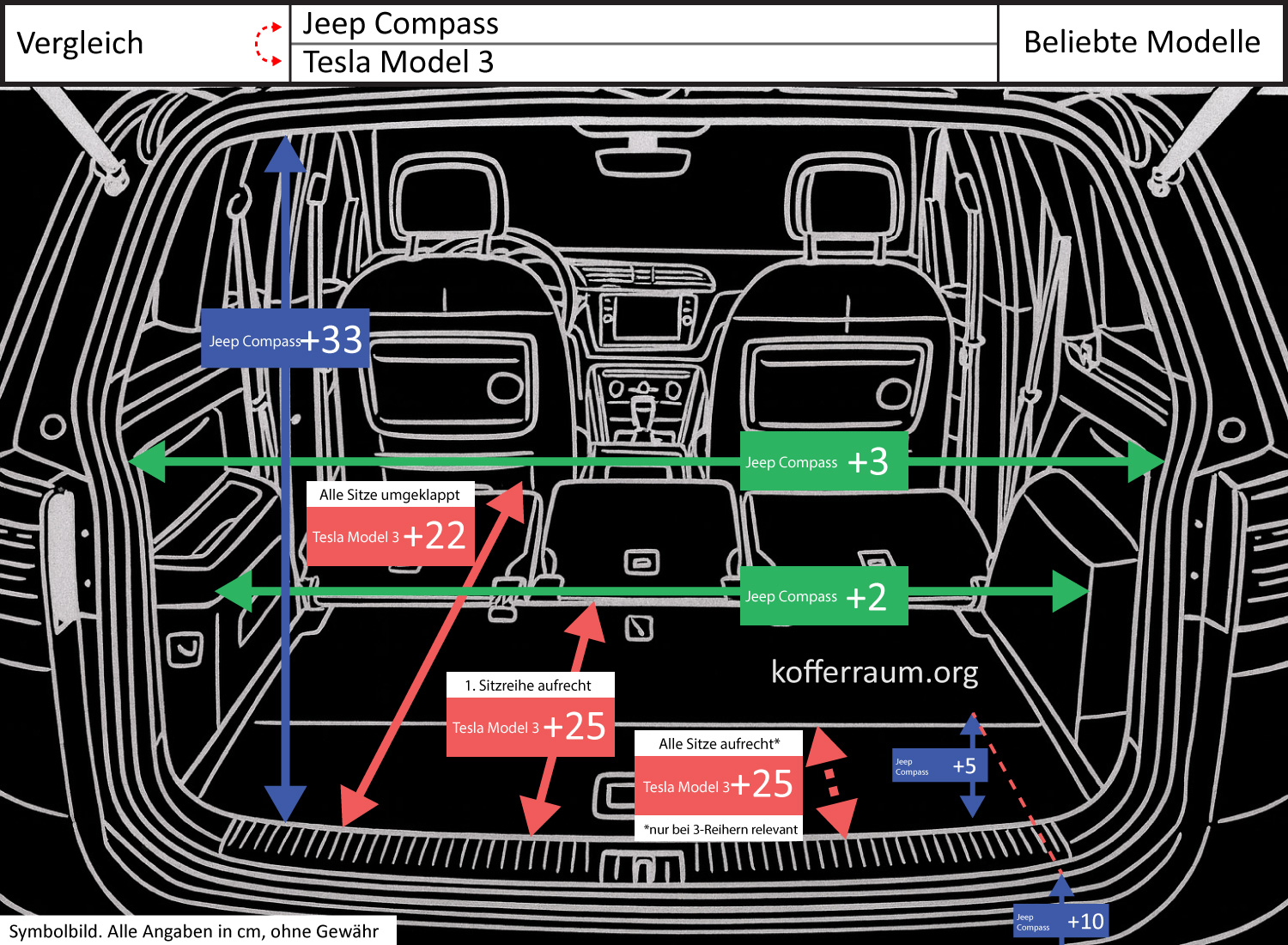
Longer cargo lengths with the Tesla: The Tesla Model 3 offers +8.7 in (13%) more cargo length with the seats folded down and even +9.8 in (30%) with the front row upright compared to the Jeep Compass.
Jeep advantages in vertical space and loading height: The Jeep Compass has a significantly higher trunk opening (+13 in / 63%), a greater depth from the loading edge to the trunk floor (+2 in / 45%), and a higher loading edge above the road (+3.9 in / 15%) than the Model 3. The width differences (each +2–1.2 in / ≈2–3%) are negligible.
Implications for usability
- Long, flat loads: Due to the significantly greater cargo length, the Model 3 is better suited for long, flat items (boards, skis, furniture), especially when the rear seat remains upright. - Tall or bulky items: The Compass clearly has the advantage when it comes to tall or bulky cargo.
The higher opening and greater depth mean bulky items fit more easily through the opening and can sit deeper in the trunk. - Loading and unloading / effort: The higher loading edge of the Jeep (+3.9 in) makes lifting heavy items onto the loading edge more strenuous.
The Model 3 with its lower loading edge makes sliding or lifting heavy loads easier. - Everyday practicality: For users who regularly transport long, flat items or frequently need a full cargo area, the Model 3 is more practical.
Those who often transport bulky, tall, or voluminous items (camping gear, boxes, larger crates) benefit more from the Compass—despite the higher effort required when lifting.