
Trunk comparison: Jeep Compass vs Volvo XC60
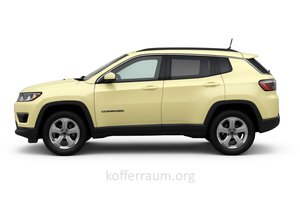
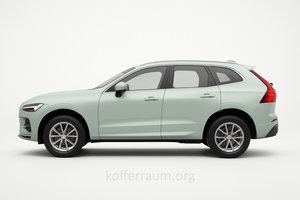
Key Differences
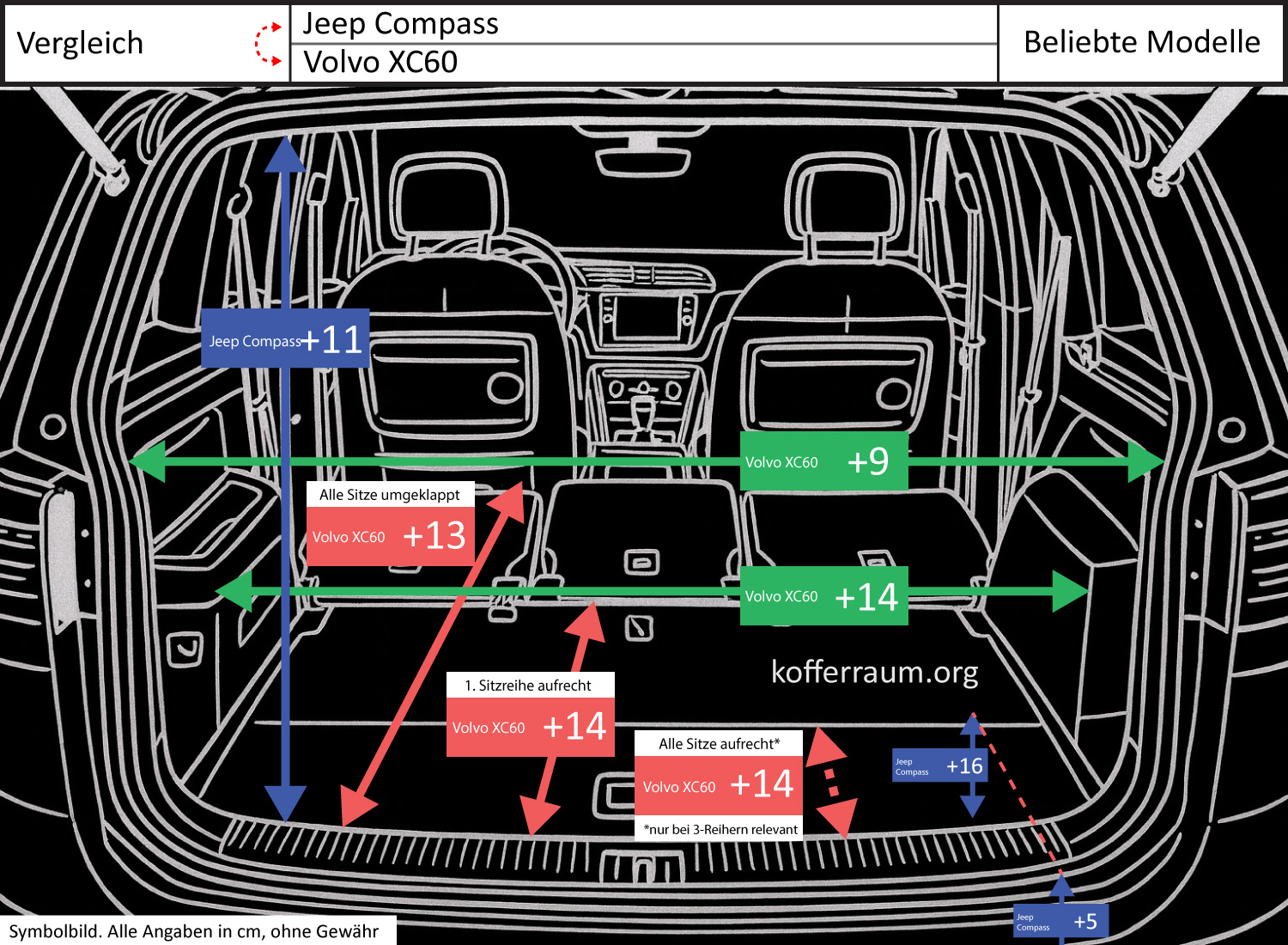
When comparing both models, four differences stand out: The Volvo XC60 offers a +5.5 in (≈17%) longer cargo space with the rear seats folded down than the Jeep Compass.
The Jeep Compass has a +4.3 in (≈15%) higher trunk opening than the XC60. The difference in depth between the loading edge and the trunk floor is even more pronounced: the Compass is +6.3 in (≈1500%) deeper here. Finally, the narrowest width of the trunk is +5.5 in (≈14%) larger in the Volvo than in the Compass.
Smaller differences (under 10%) include: with seats folded down, the XC60 is only about 8% longer, the loading edge of the Compass is about 2 in (≈7%) higher above the ground, and the width of the XC60’s trunk opening is nearly 9% larger.
Impact on Usability
These differences affect everyday usability as follows: The 17% longer cargo space of the XC60 with the rear seats upright makes it more practical for long items (skis, slats, long boxes) without needing to fold the seats down.
When the seats are folded, however, the length difference is small (≈8%), and the models are comparable.
The greater narrow width in the Volvo (+14%) means that wide or bulky loads (width of furniture parts, wide boxes) fit more easily in the XC60. Combined with the slightly larger opening width of the XC60 (≈9% smaller difference), it is overall more favorable for wide loads.
The Jeep Compass scores in height and depth: the trunk opening that is 4.3 in higher makes it easier to load tall items and increases headroom when loading.
The significantly greater depth between the loading edge and trunk floor (+6.3 in) creates more "vertical space" in the cargo area; this increases usable volume for stackable, bulky cargo but can make handling heavy items more difficult because they must be lowered deeper.
The slightly higher loading edge (+2 in) makes lifting heavy loads a bit more strenuous but is not a major difference.
In short: For long and wide loads with the rear seats upright, the Volvo XC60 is more practical. For very tall or bulky cargo and loading with a higher opening, the Jeep Compass offers advantages.