
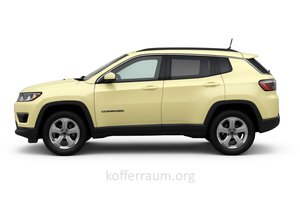
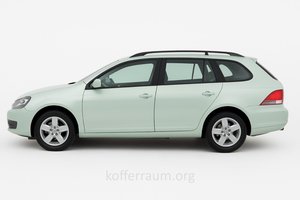
Trunk comparison: Jeep Compass vs VW Golf Wagon (Mk5)
Key Differences
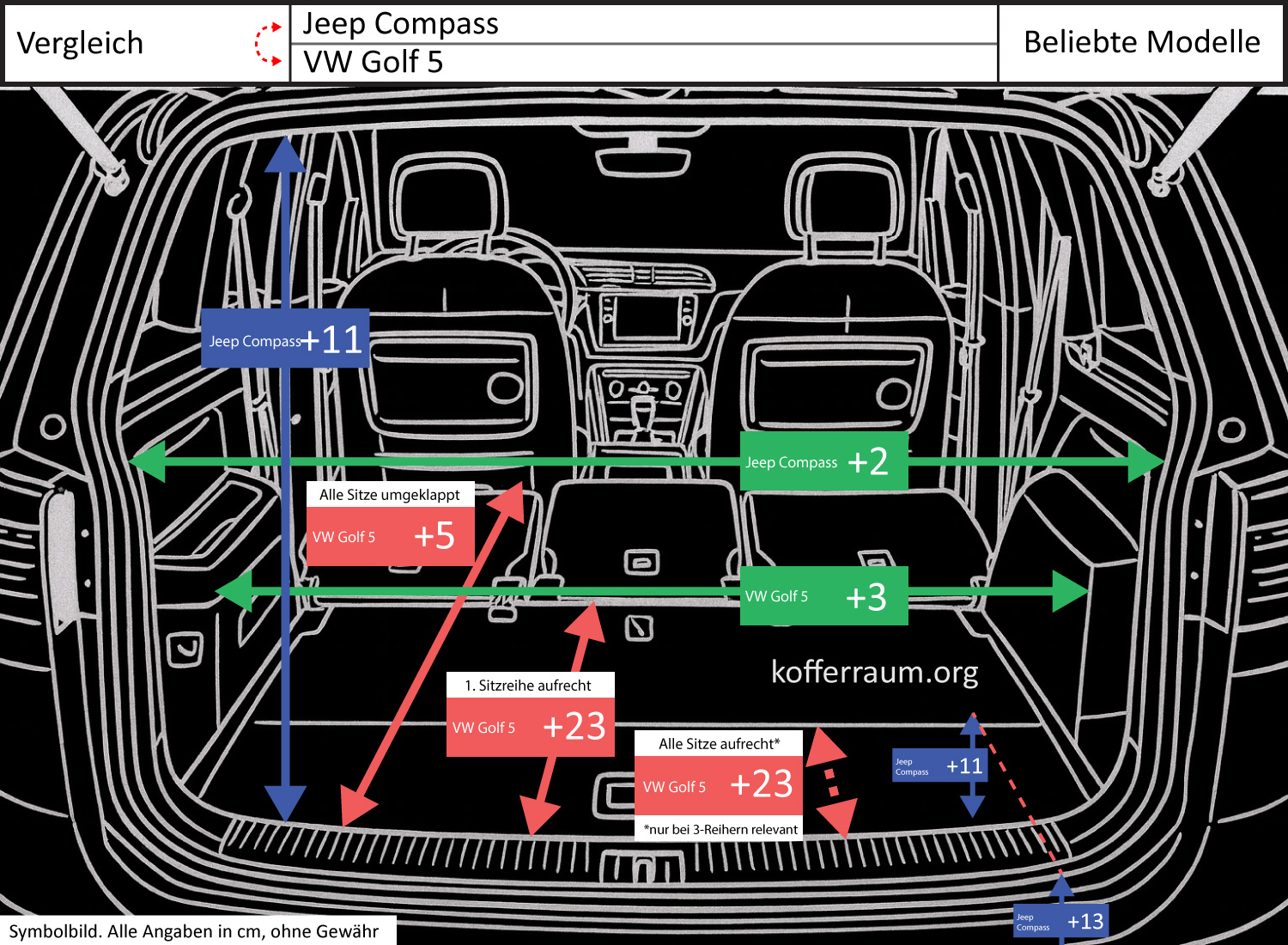
There is a clear difference in usable cargo space depending on seat position: The VW Golf 5 offers a +9.1 in (28%) length advantage with the first row upright compared to the Jeep Compass. When all seats are folded down, the difference is small at +2 in (3%).
The Jeep Compass scores mainly in vertical dimensions: The height of the trunk opening is +4.3 in (15%) larger, the depth between the loading edge and trunk floor is +4.3 in (220%) larger, and the loading edge is +5.1 in (20%) higher above the road.
Width differences are minor (Golf at the narrowest point +1.2 in / 3%, Compass at the opening +0.8 in / 2%).
Implications for Usability
VW Golf 5 — longer loading surface with rear seats occupied: - Thanks to the significantly longer loading surface with the rear seats upright, the Golf is better suited when long items need to be transported regularly without folding down the rear seats (e.g., skis, long packages, furniture parts). - With fully folded seats, the advantage is small (+2 in) and usually negligible in practice.
Jeep Compass — more vertical space but higher loading edge: - The higher trunk opening makes loading taller items easier because more clearance height is available. - The significantly greater depth (loading edge → trunk floor) creates more vertical storage space or a deeper cargo well that can better accommodate bulky or voluminous items or "sink" storage space (advantageous for bulky but not too heavy cargo). - However, the loading edge being 5.1 in higher means more lifting effort when loading and unloading heavy items — this is ergonomically less favorable and requires more strength or aids when loading.
Brief Recommendation
Those who regularly transport long loads with full seating are better off with the VW Golf 5. Those who more often transport tall or bulky items and need greater vertical cargo space benefit from the Jeep Compass — provided the higher loading edge is not an issue.