
Trunk comparison: Kia Ceed vs Durchschnitt Compact SUV

Key Differences (>10%)
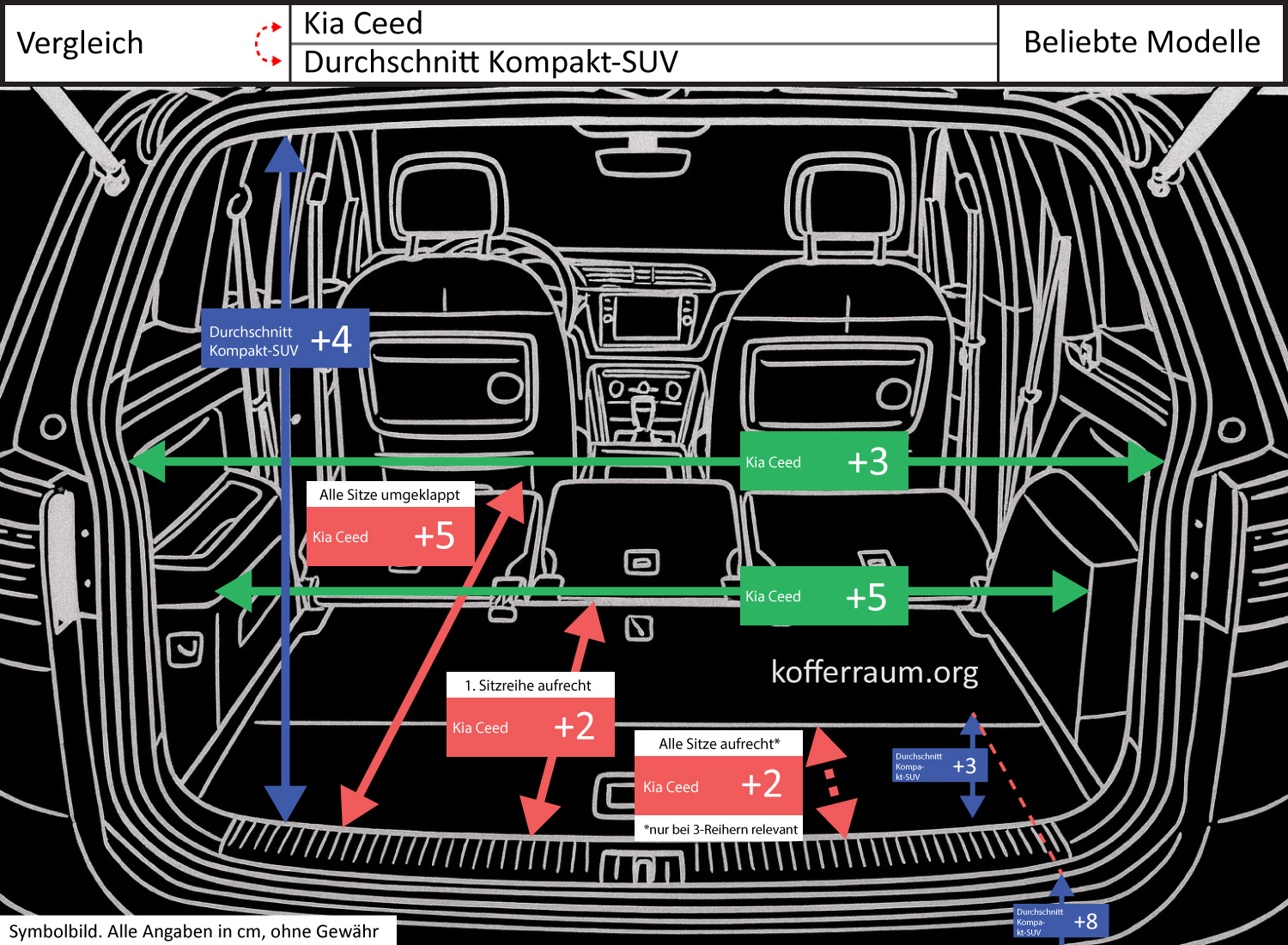
The most significant deviations concern the depth of the trunk (loading edge → trunk floor) and the height of the loading edge: The average compact SUV has a loading surface that is +1.2 in (+27%) deeper and a loading edge that is +3.1 in (+12%) higher above the road than the Kia Ceed.
Combined, this results in the SUV's trunk floor being net +2 in higher above the road (3.1 in higher loading edge minus 1.2 in deeper loading surface).
Impact on Usability
Practical consequences of these differences:
- Higher loading edge on the SUV (+3.1 in): Loading heavy items requires more effort, more frequent lifting, and is less practical for regular loading. For users who often have to lift heavy or bulky loads, the Ceed is more advantageous due to the lower loading edge.
- Deeper loading surface on the SUV (+1.2 in / +27%): The SUV's trunk "well" is slightly larger inside, items can lie a bit deeper and remain better "recessed" behind the loading edge. This helps when transporting taller items, as they protrude less over the loading edge.
- Net higher trunk floor on the SUV (+2 in): Despite the deeper well, the floor overall lies higher above the road, which increases the physical effort when lifting — the advantage of the deeper loading surface is partially offset by the higher loading edge.
- Other differences (each <10%): The Kia Ceed is slightly wider at the narrowest point of the trunk (+2 in) and the trunk opening is marginally wider (+1.2 in); additionally, the Ceed is minimally longer when folded out. These smaller deviations improve loading of wider items in the Ceed but are less decisive in practice than the loading edge/depth differences.
In short: Those who frequently load and unload heavy loads benefit more from the Kia Ceed due to the lower loading edge; those who need more recessed storage space for taller items benefit from the compact SUV due to the deeper loading surface and slightly higher opening.