Trunk comparison: Kia Ceed vs Nissan Rogue Sport
The Biggest Differences (Highlighted)
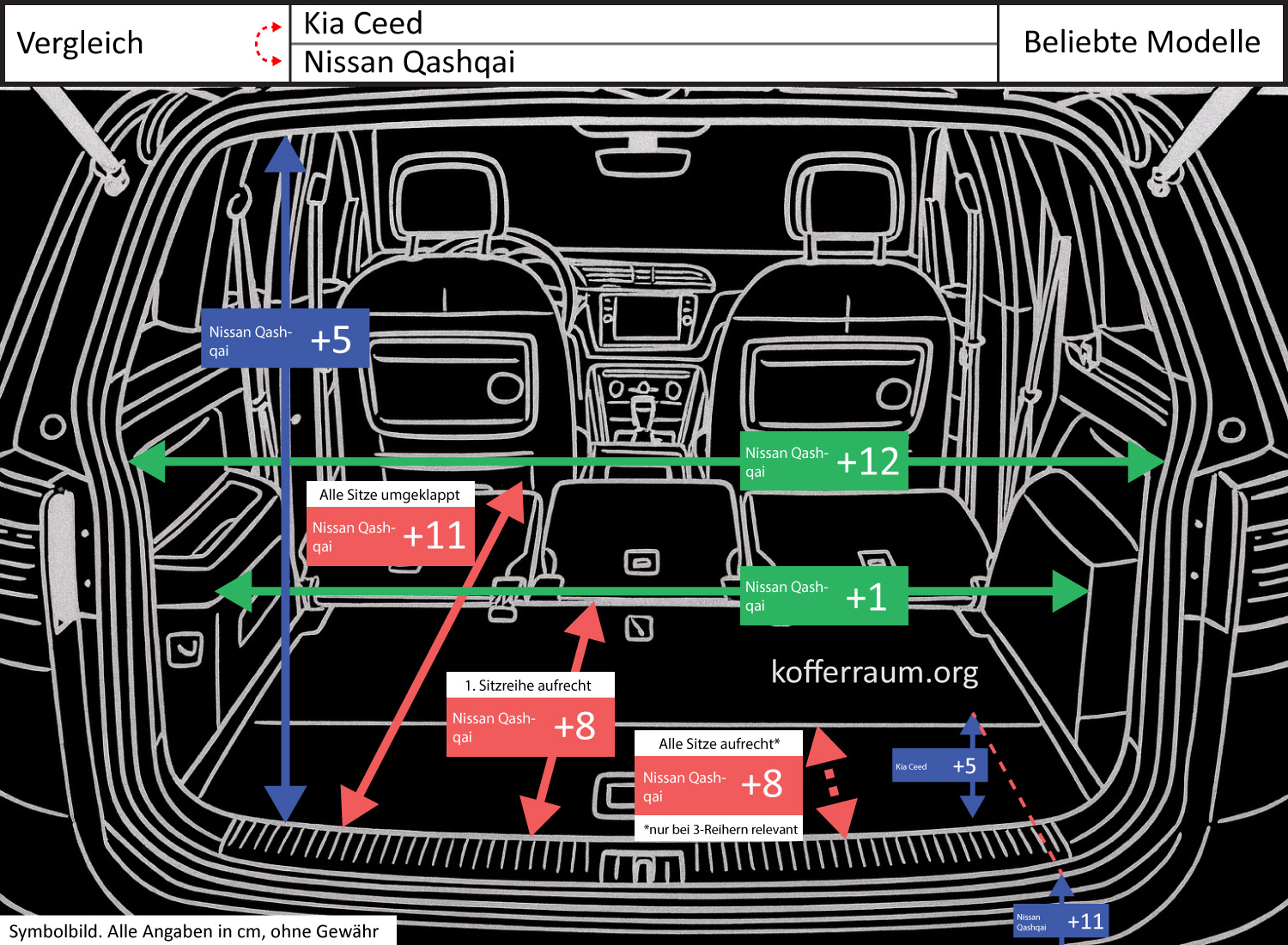
In the comparison, it is particularly noticeable that the Kia Ceed has a significantly deeper cargo well: the depth from the loading edge to the trunk floor is 2 in or about 83% greater in the Ceed than in the Qashqai.
At the same time, the loading edge of the Nissan Qashqai sits 4.3 in (17%) higher above the road, and the width of the Qashqai's trunk opening is 4.7 in (12%) larger than that of the Ceed.
Smaller differences in trunk length (with folded seats +7% or with the first row upright +10%) and in opening height (+7%) are present but are not highlighted here.
Impact on Usability
The significantly deeper cargo well of the Ceed practically means more usable "vertical height" in the trunk: items sit lower, allowing volume to be used more efficiently and bulky or taller cargo to protrude less into the loading area.
Because the loading edge of the Qashqai is noticeably higher, lifting heavy items in the Qashqai is more strenuous; combined with the deeper cargo well of the Ceed, this results in an overall easier, more ergonomic handling of heavy or bulky cargo in the Ceed.
Conversely, the Qashqai benefits from the wider tailgate opening: wider or bulky items can be loaded and unloaded more easily in the Qashqai, which is a noticeable advantage when loading strollers, furniture parts, or wide boxes.
Although the higher loading edge distance to the road in the Qashqai makes lifting harder, the wider opening facilitates maneuvering larger parts when loading.
In summary: Those who frequently transport heavy loads or many bulky, tall items and value easy handling benefit more from the Kia Ceed (deeper cargo well, lower loading edge).
Those who regularly load very wide items have advantages with the Nissan Qashqai due to the wider opening width and the overall somewhat longer loading length — despite the higher loading edge that makes lifting more difficult.