
Trunk comparison: Kia Ceed vs Skoda Kamiq
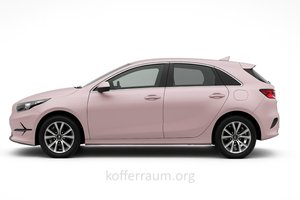
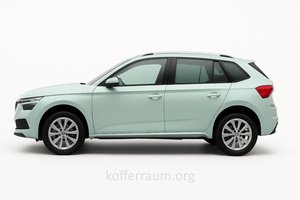
Biggest Differences (Brief)
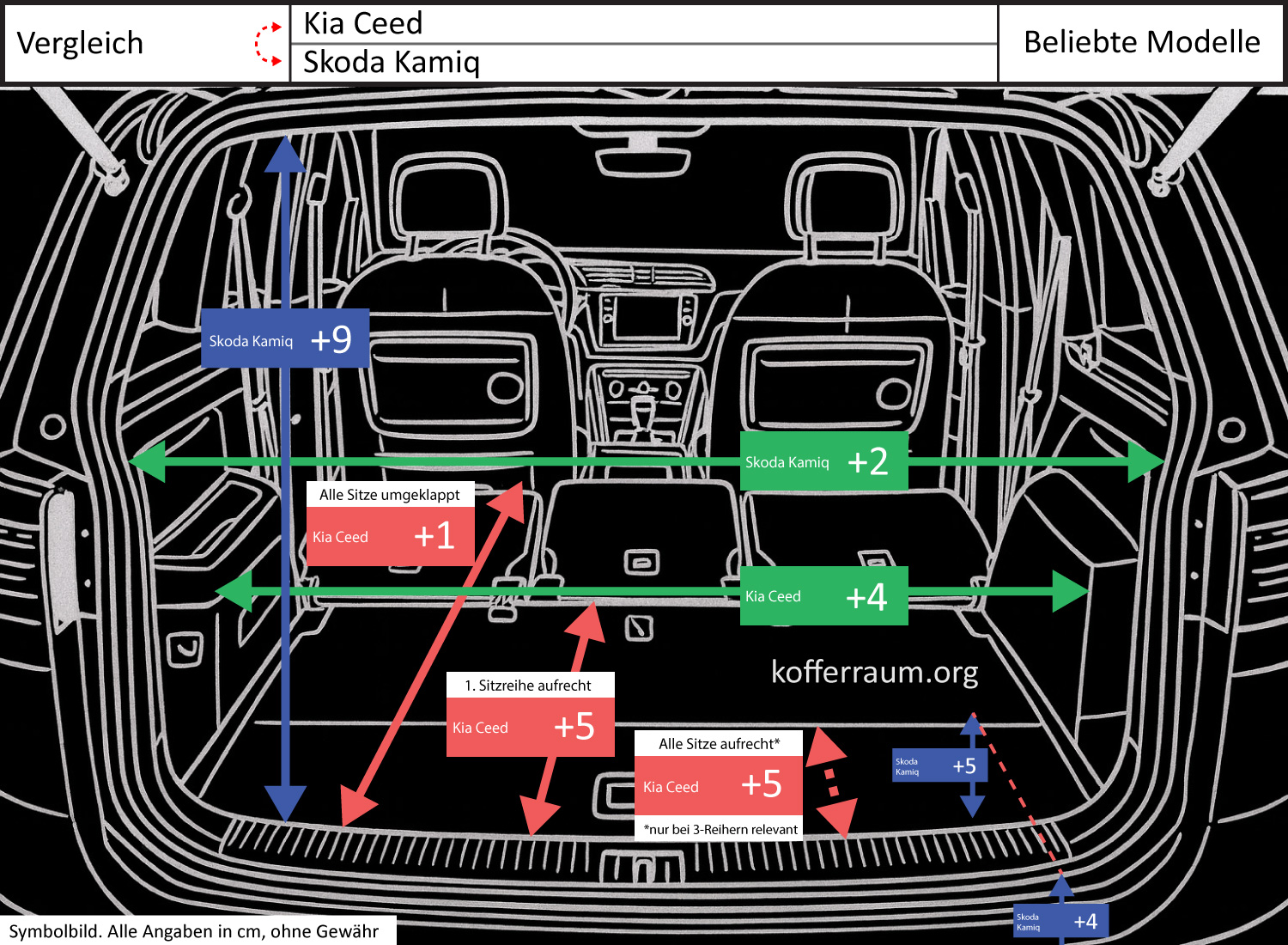
Two differences stand out clearly from the given values: the height of the trunk opening on the Škoda is 3.5 in (≈12%) larger and the depth of the trunk (as the vertical distance from loading edge → trunk floor) on the Škoda is 2 in (≈45%) larger.
All other deviations are under 10% (e.g., Kia: +2 in cargo length with rear seats upright, Kia: +1.6 in narrowest width), they exist but are less significant.
What are the implications for usability?
The greater height of the trunk opening on the Škoda makes it easier to load tall items (e.g., suitcases, plants, furniture parts) because there is more vertical clearance at the opening.
Combined with the significantly larger "depth" (here understood as the vertical distance from the loading edge to the trunk floor), this means: The Škoda offers more vertical space at the loading point and thus fewer restrictions for tall or bulky cargo, especially when inserting items standing upright.
The greater vertical depth can also have a downside: If the trunk floor lies lower relative to the loading edge, lifting creates a shorter lever path downward and somewhat more lifting effort with heavy items.
Combined with the Škoda's loading edge being 1.6 in higher (not >10%, but relevant), lifting heavy or low items can be a bit more strenuous than in the Kia.
Despite the smaller opening height and lesser depth, the Kia scores with a slightly larger usable length with the rear seats upright and a slightly larger narrowest width inside.
This makes the Kia more practical for flat, wide items that mainly lie flat (e.g., flat boxes, longer boards), as they fit more easily in width and length utilization.
In short: Those who often load tall or bulky items vertically or with little tilting benefit more from the Škoda (larger opening and more vertical space). Those who more frequently transport flat, wide, or elongated cargo and prefer an uncomplicated, lower edge lever are often better served by the Kia.