
Trunk comparison: Kia Ceed vs Skoda Karoq
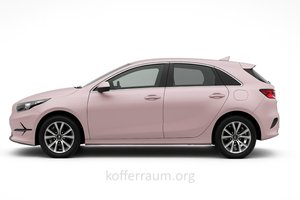
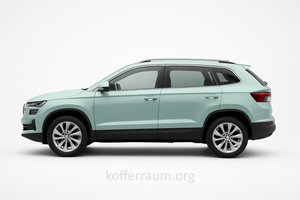
Key Differences
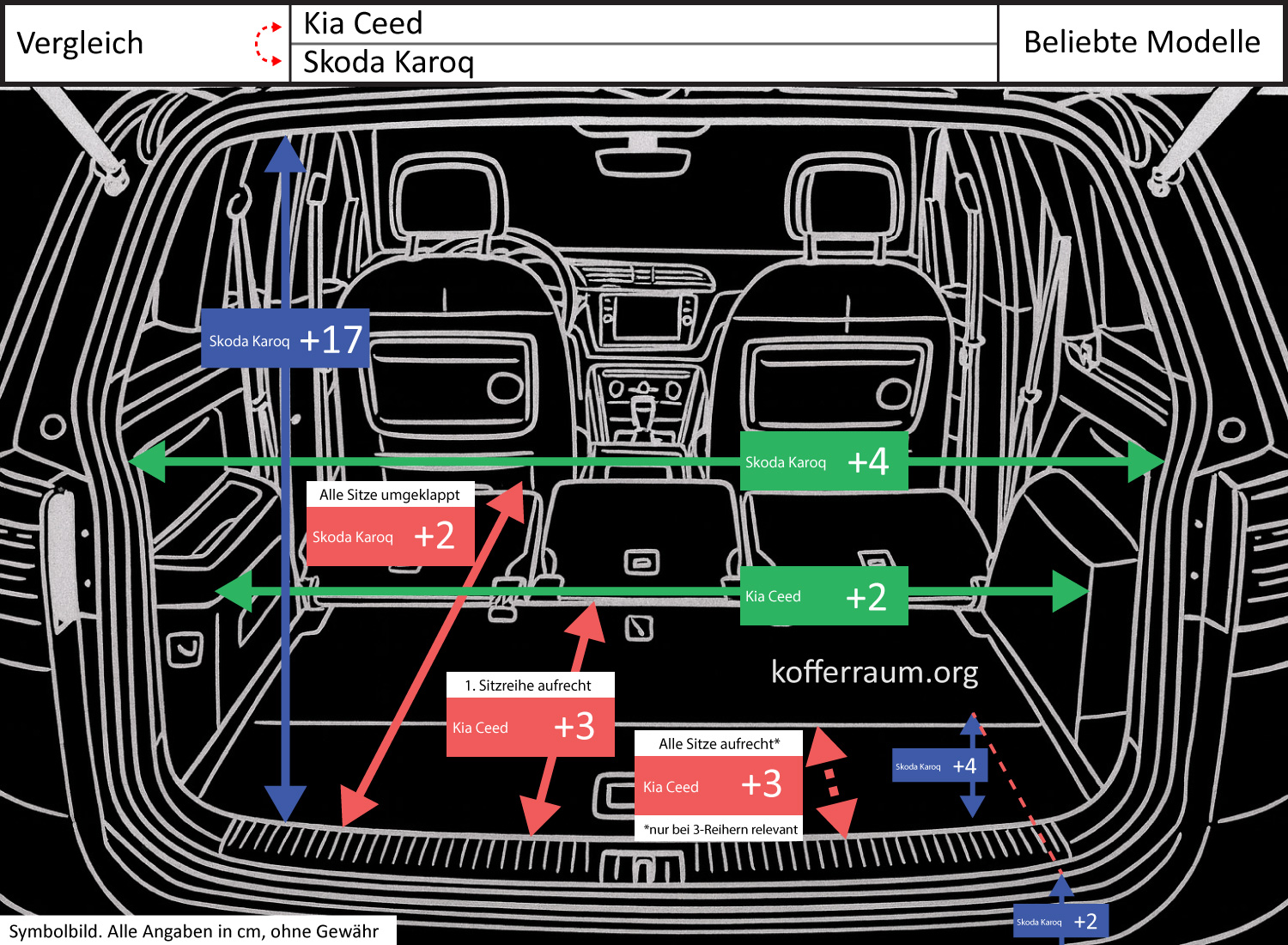
The most notable differences lie in the vertical dimensions: The height of the Škoda Karoq's trunk opening is 6.7 in (23%) higher than that of the Kia Ceed, and the depth of the trunk (loading edge to trunk floor) is 1.6 in (36%) greater in the Karoq.
Smaller differences (under 10%): The Kia Ceed offers a 1.2 in (4%) longer loading floor with the front seats upright and a 0.8 in (2%) wider width at the narrowest point.
The Škoda is 0.8 in (1%) longer with the seats fully folded down, the trunk opening is 1.6 in (4%) wider, and the loading edge sits 0.8 in (3%) higher above the road.
Impact on Usability
The significantly higher trunk opening and greater depth in the Karoq improve handling of tall and bulky items: bulky boxes, crates, small furniture, or tall plants can be loaded and unloaded more easily because more vertical space and more distance from the loading portal to the ground are available.
This makes the Karoq more practical for moves, construction materials, or regularly changing large cargo.
On the other hand, the Karoq has a slightly higher loading edge (+0.8 in), which means heavier items must be lifted a bit higher — this slightly increases the effort compared to the Ceed.
The minor width and length advantages in favor of the Ceed are noticeable in practice only with very tight items or when precisely utilizing width/length: flat, wide cargo can be maneuvered slightly easier through the narrowest point of the Ceed.
Conclusion: For frequent transport of tall or bulky items, the Škoda Karoq is advantageous due to the larger opening height and the deep loading floor. Those who mainly load flat or wide items and prefer a slightly lower loading edge will benefit more from the Kia Ceed — however, the differences there are small.