Trunk comparison: Kia Ceed vs VW ID.3
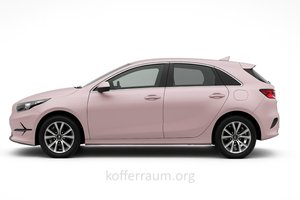
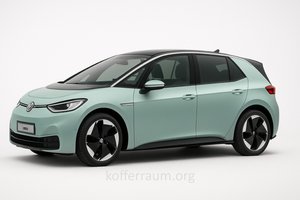
Key Differences
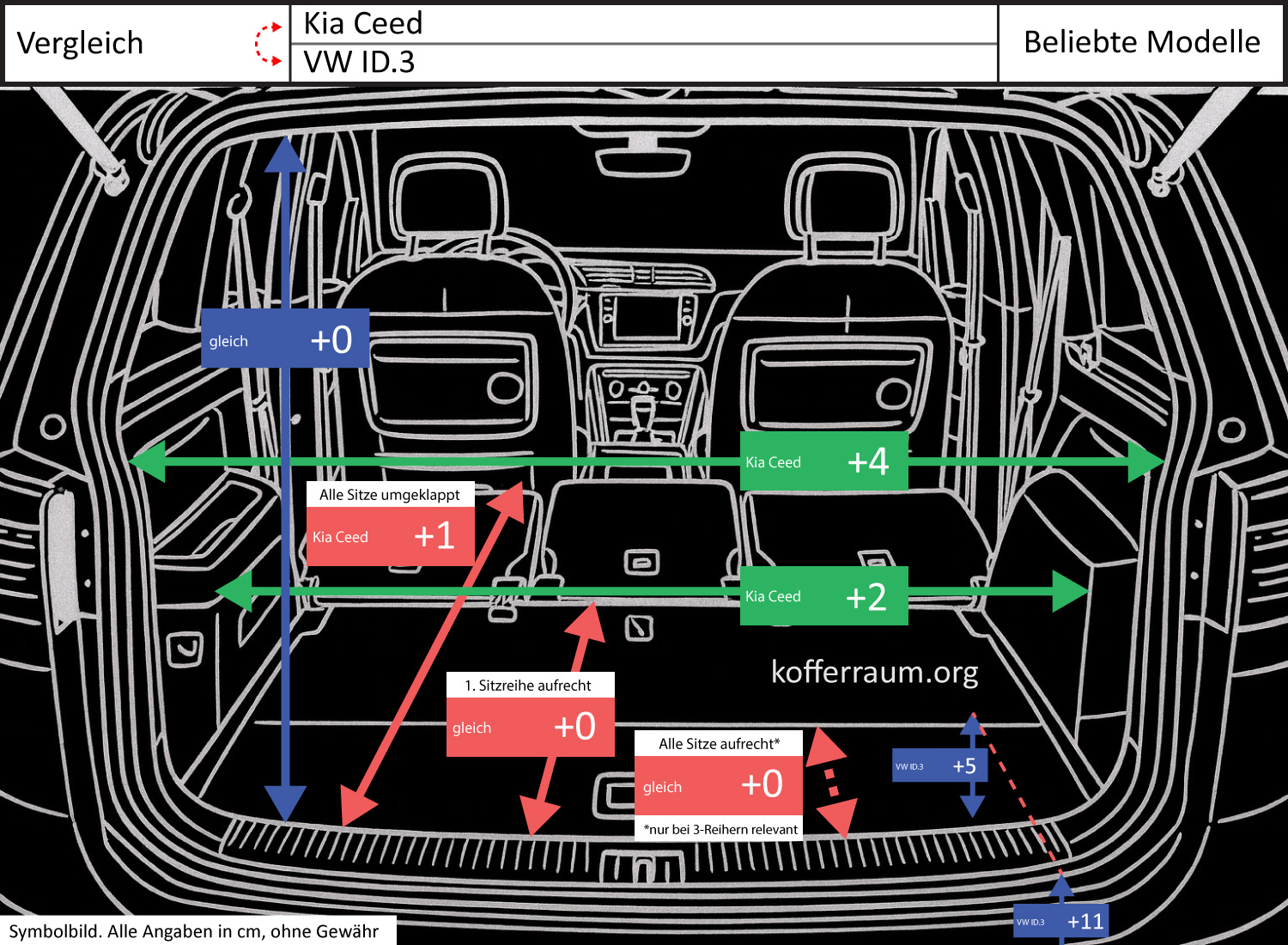
The clearest differences concern the depth of the trunk and the loading edge height: The VW ID.3 has a 2 in (≈45%) greater trunk depth (measured from the loading edge to the trunk floor). At the same time, the loading edge of the VW ID.3 is 4.3 in (≈17%) higher above the road than that of the Kia Ceed.
All other dimensions are either the same (length with the first row upright, height of the trunk opening) or only slightly different (loading opening +1.6 in, narrowest width +0.8 in, length with folded seats +0.4 in) and are under 10% difference.
Impact on Usability
The greater trunk depth of the VW ID.3 means that longer items can be pushed in further and overall there is slightly more usable interior space in the longitudinal direction. This helps when transporting longer boxes, skis, or suitcases.
However, the higher loading edge of the VW ID.3 makes loading more strenuous: heavier or bulky items must be lifted higher instead of just slid in. This increases loading effort and makes loading and unloading more difficult, especially with frequent, heavy loads or for shorter individuals.
The Kia Ceed offers a practical advantage with its lower loading edge when handling heavy loads — loading is more ergonomic and often faster. The slightly larger opening width and narrowest width of the Ceed are present but only marginal and usually not decisive in practice.
Conclusion: Those who frequently transport very long but comparatively light items benefit from the deeper cargo floor of the VW ID.3. Those who often lift heavy or bulky loads or value easier loading and unloading will find the Kia Ceed the more practical solution.