
Trunk comparison: Kia Stonic vs Mercedes Benz GLC


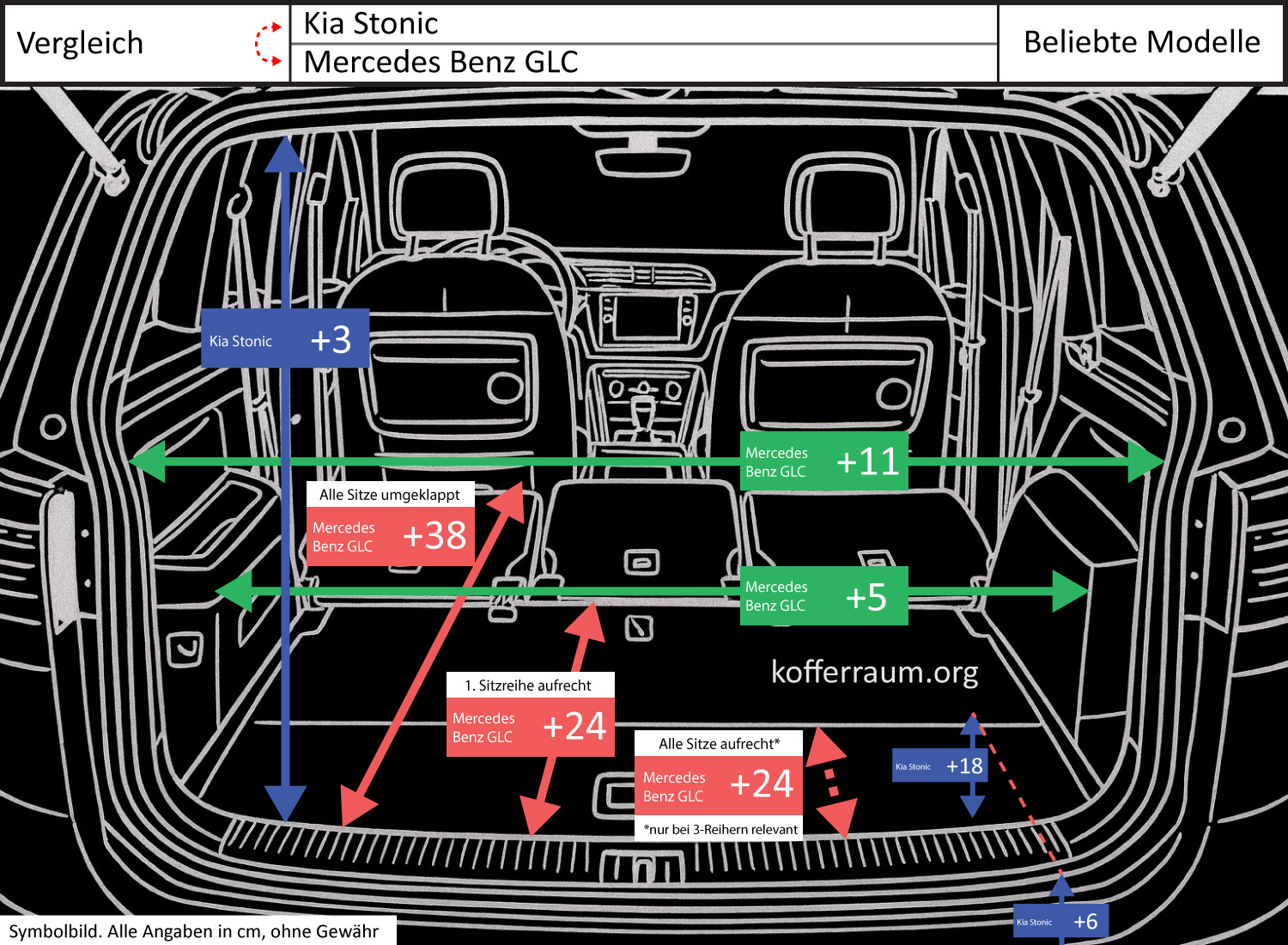
Biggest Differences (highlighted)
+15 in (28%) longer trunk with seats folded down in the GLC — the GLC offers significantly more loading length with the rear seats folded down.
+9.4 in (35%) longer trunk with front seats upright in the GLC — even with seats upright, the GLC remains noticeably longer.
+7.1 in (1700%) greater depth (loading edge → trunk floor) in the Kia Stonic — the Stonic has a significantly deeper cargo well below the loading edge.
+4.3 in (11%) wider trunk opening in the GLC — the GLC can be loaded noticeably wider at the opening.
Impact on Usability
Length requirements: The longer cargo areas of the GLC (both with folded and upright seats) make it better suited for long items: furniture parts, slats, skis, or multiple suitcases lined up. Those who regularly transport longer loads have practically more flexibility with the GLC.
Opening width: The 4.3 in wider opening of the GLC makes loading and unloading bulky or wide items easier. Difficult-to-maneuver parts can more often be lifted directly sideways through the opening in the GLC.
Depth of the cargo well in the Stonic: The significantly greater depth in the Kia means items sit deeper below the loading edge.
Advantages: small items lie more protected, luggage shifts less, and visibly less protrudes over the loading edge. Disadvantages: placing and lifting heavy items requires more lifting effort, and usable height above the floor may be limited.
Handling when loading: Due to the higher loading edge of the Stonic (because of the deeper cargo well), lifting is somewhat harder than with the lower GLC cargo floor. Small differences in opening height and narrowest width are minor and have less practical impact.
Conclusion (Brief)
Those who regularly transport long or wide loads benefit more from the Mercedes‑GLC (longer trunk, larger opening). Those who benefit from a deep cargo well (protected storage, luggage sits lower) find an advantage in the Kia Stonic — but at the cost of more demanding lifting and loading operations.