
Trunk comparison: Mazda Mazda CX-60 vs Skoda Octavia Wagon


Key Differences
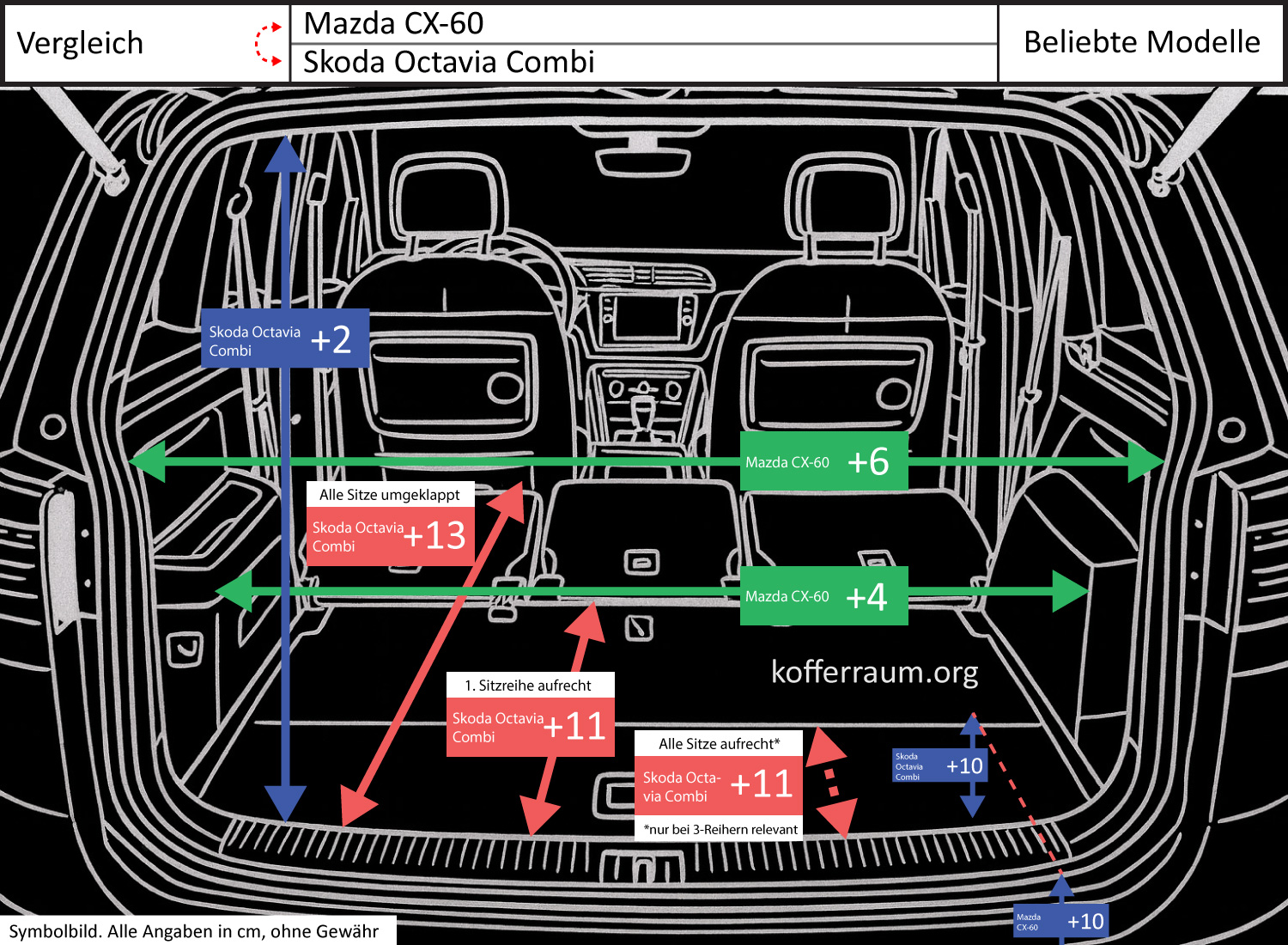
Three clearly relevant differences stand out in the comparison: The Škoda Octavia Wagon offers a +11% longer cargo area with the first row of seats folded down, the trunk depth (measured from the loading edge to the trunk floor) is +3.9 in — stated as +900% larger in the Škoda, and the loading edge of the Mazda CX‑60 sits +3.9 in or +16% higher above the road than in the Škoda.
These three points are the biggest practical differences; the other dimensions (e.g., width differences) are under 10%.
Impact on Usability
The +11% longer cargo area with the first row of seats upright makes the Octavia more practical for everyday use when the rear seats are occupied: longer items (e.g., skis, long boxes) fit more easily without folding the seats.
The significantly greater trunk depth in the Octavia (indicated as +3.9 in or +900%) creates additional space behind the loading edge and allows bulky or taller items to be stored lower down and thus more stably — this improves stacking and securing cargo.
In contrast, the Mazda’s +3.9 in or +16% higher loading edge makes loading and unloading heavy items more difficult because more lifting is required.
Advantages for the Mazda include slightly larger interior widths and a wider trunk opening, making it easier to load wide, flat items sideways through the access — however, this advantage is below the 10% threshold.
In short: Those who frequently transport long items or value easy loading/unloading as well as more depth and volume in the cargo area benefit more from the Škoda Octavia Wagon.
Those who often load wide, flat parts and rely on a wider opening have slight advantages with the Mazda CX‑60 but must accept the higher loading edge.