
Trunk comparison: Mercedes Benz CLA Shooting Brake vs Skoda Elroq


Key Differences
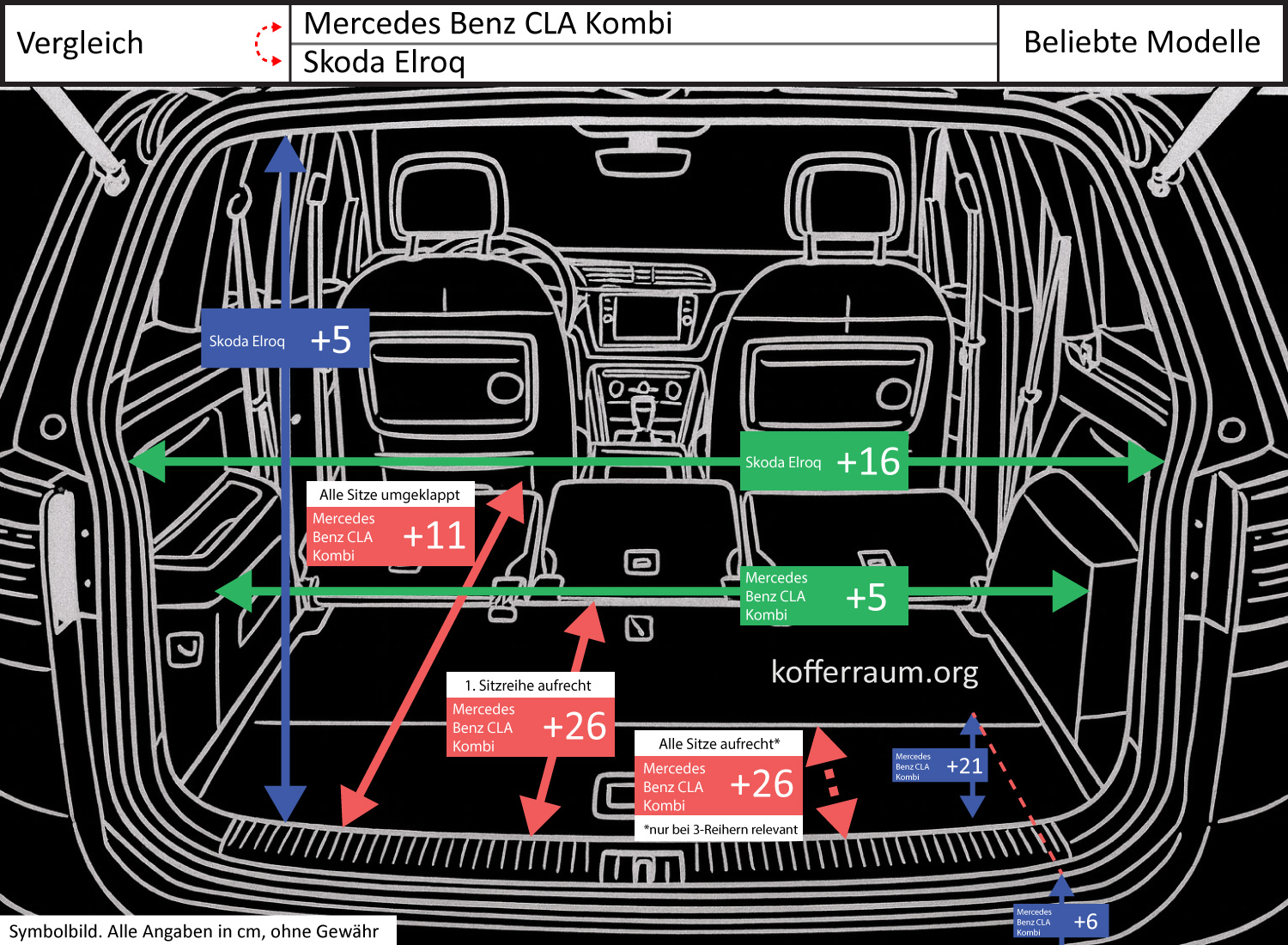
The Mercedes‑Benz CLA Shooting Brake offers a trunk that is 10.2 in (33%) longer with the front seats upright than the Škoda Elroq. Additionally, the measured depth of the trunk (loading edge → trunk floor) is 8.3 in (2100%) greater in the Mercedes, indicating a significantly deeper cargo area.
In contrast, the width of the trunk opening is 6.3 in (18%) larger in the Škoda, making it easier to load wider items.
Other smaller differences: with the seats folded down, the Mercedes is only 4.3 in (7%) longer; the opening height is +2 in (7%) higher in the Škoda, and the loading edge of the Mercedes is +2.4 in (9%) higher above the ground. The narrowest interior width is 2 in (5%) greater in the Mercedes.
Impact on Usability
The 33% longer cargo space with the front seats upright makes the Mercedes more practical for everyday use when seats are occupied — longer items like skis, furniture parts, or long boxes can be transported more easily.
The significantly greater depth in the Mercedes increases usable volume, accommodating more cargo, but may require heavier items to be lifted or pushed further down.
The larger trunk opening of the Škoda (18%), on the other hand, simplifies loading and unloading wider items: bulky furniture or household goods fit more easily through the opening, even if the interior is slightly narrower at its tightest point.
The slightly higher opening height (+2 in) and lower loading edge compared to the Mercedes also make lifting items in easier.
In summary: For more cargo volume and longer loads with seats occupied, the Mercedes is advantageous; for easier loading and unloading of wider or bulky items and better ergonomics when lifting, the Škoda is preferable.
Smaller differences (7–9%) have minimal practical impact but can be noticeable with frequent transport of heavy loads or very wide cargo.