
Trunk comparison: Mercedes Benz GLC vs Durchschnitt Wagon

Key Differences (highlighted)
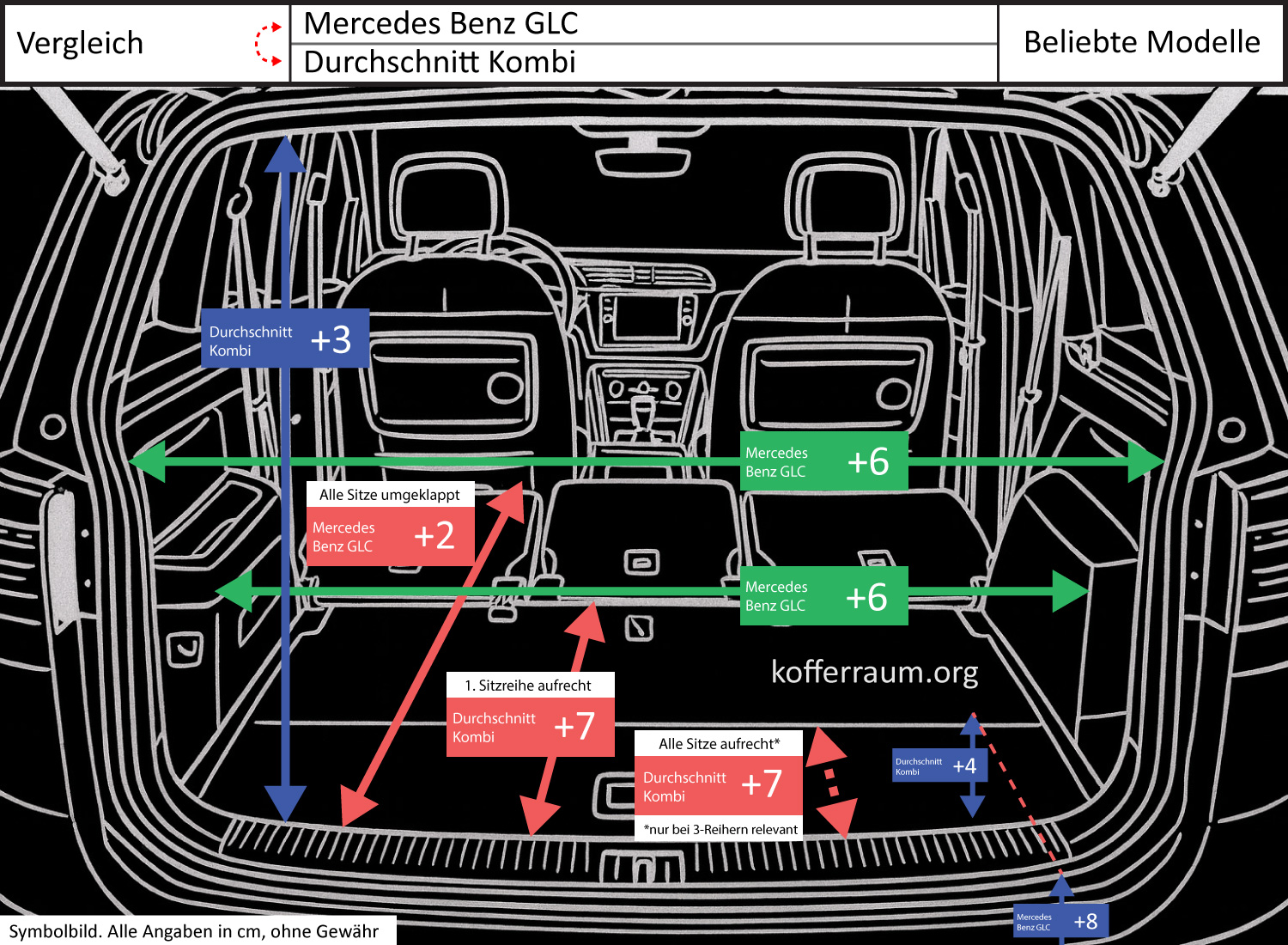
Two differences stand out clearly in the cargo area: the depth of the trunk (loading edge to trunk floor) is 1.6 in (+300%) greater in the average wagon than in the Mercedes‑Benz GLC, and the loading edge of the Mercedes‑Benz GLC is 3.1 in (+13%) higher above the ground than in the average wagon.
Impact on Usability
These two features together have the strongest practical effect: Due to the greater depth in the wagon, the cargo sits lower in the vehicle, which makes loading heavy or bulky items easier because less lifting force is required and more usable volume exists below the loading edge.
The lower loading edge in the wagon further reduces lifting when loading.
In the GLC, the higher loading edge means heavy luggage or bulky parts must be lifted higher; combined with the shallower trunk depth, this results in more effort and somewhat limited usability for heavy or bulky cargo in practice.
Conversely, the higher loading edge of the GLC can offer advantages in everyday situations, such as better protection against splash water intrusion or improved ground clearance on uneven terrain.
Other Differences (brief)
Smaller deviations concern length with seats folded down (+0.8 in, 1% in favor of GLC), trunk length with first row upright (+2.8 in, 8% in favor of wagon), opening height (+1.2 in, 4% in favor of wagon), as well as width at the narrowest point and width of the trunk opening (+2.4 in, each 6% in favor of GLC).
These differences exist but affect everyday usability significantly less than the two highlighted values.