
Trunk comparison: Mercedes Benz GLC vs Durchschnitt Compact SUV


Key Differences
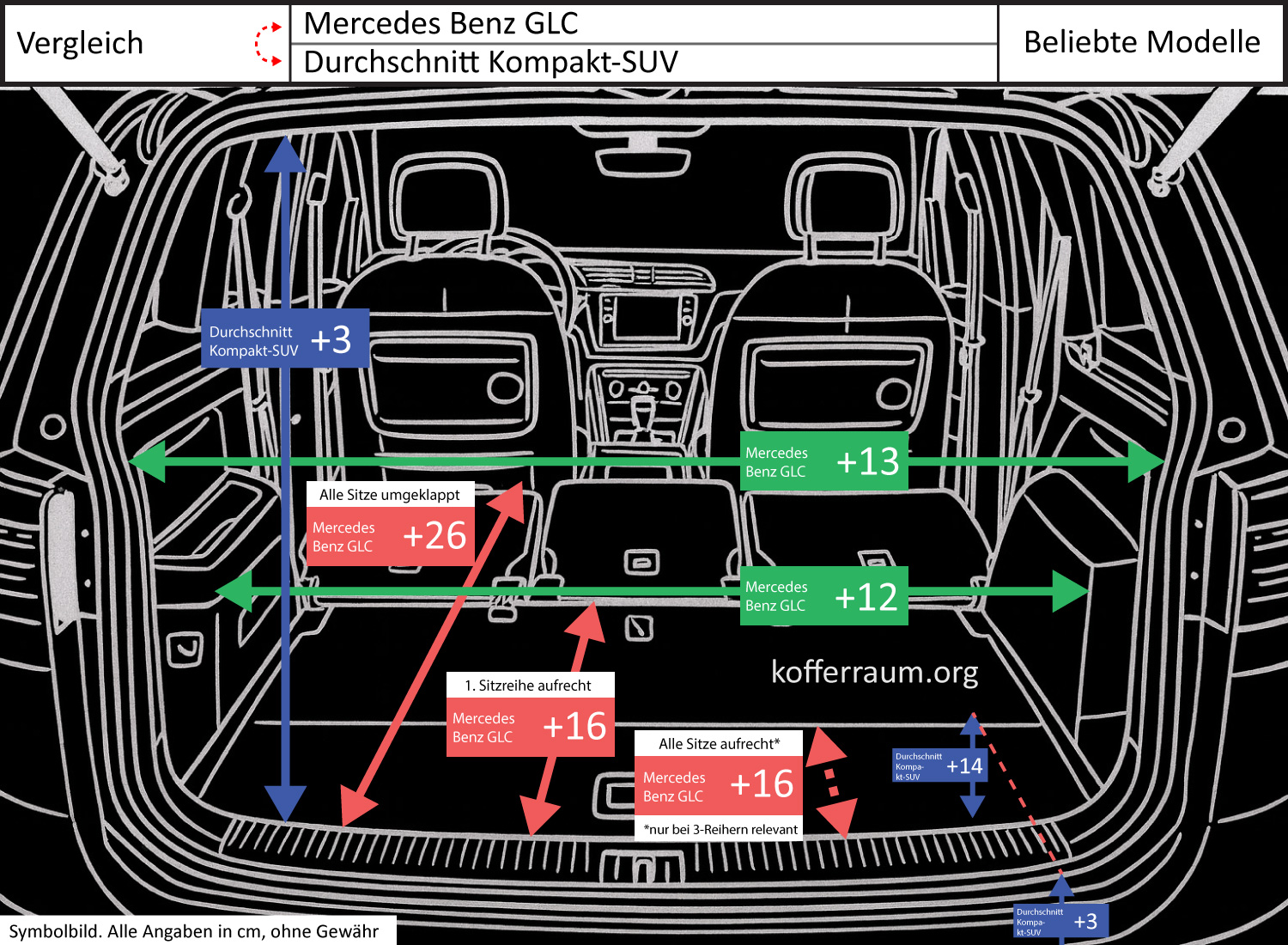
In terms of cargo space, the Mercedes-Benz GLC shows advantages over the average compact SUV in several important aspects:
- Trunk length with seats folded down: +10.2 in (17%) in favor of the GLC — the GLC offers a significantly longer loading area when the rear seats are folded down.
- Trunk length with front row upright: +6.3 in (21%) in favor of the GLC — even with the normal seat setup, the GLC has more loading length.
- Width at the narrowest point: +4.7 in (12%) in favor of the GLC — there is more space inside at the tightest cross-section of the cargo area.
- Width of the trunk opening: +5.1 in (13%) in favor of the GLC — the opening is significantly wider, making it easier to load wider items.
- Depth (loading edge to trunk floor): Average compact SUV is +5.5 in (1300%) higher — the average SUV offers significantly more vertical depth above the loading edge than the GLC.
Impact on Usability
The GLC's advantages in length and width mean specifically:
- The GLC is better suited for long items (e.g., slats, skis, long boxes) thanks to the longer loading area with folded seats.
- The greater minimum width and wider opening make it easier to load bulky or wide cargo and reduce difficulties when maneuvering large parts inside.
The greater depth of the average SUV has the following effects:
- More space between the loading edge and trunk floor allows for better accommodation of taller or bulky items and stacking without hitting the roof limit.
- However, a higher depth combined with a slightly higher loading edge (see below) can make lifting heavy items into the vehicle more difficult.
Other, Smaller Differences
The remaining differences are minor (<10%):
- Height of the trunk opening: Average compact SUV is +1.2 in (4%) higher — easier to slide in tall items.
- Loading edge above road: Average compact SUV is +1.2 in (4%) higher — slightly more effort required when lifting items into the vehicle.
Conclusion
The GLC offers clear advantages in the length and width of the cargo space, making it more practical for long and wide loads. The average compact SUV, on the other hand, provides significantly more depth above the loading edge, which is advantageous for tall or stackable cargo.
The choice therefore depends on primary use: transports loaded lengthwise and wide favor the GLC; those needing more vertical storage space and stackability are better served by the average compact SUV.