
Trunk comparison: Mercedes Benz GLC vs Tesla Model 3
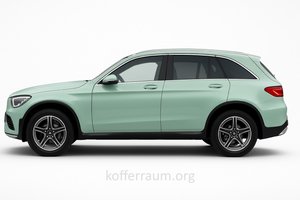
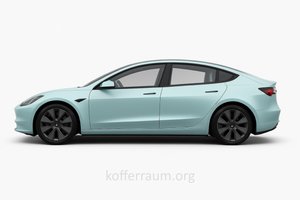
Key Differences and Impact on Usability
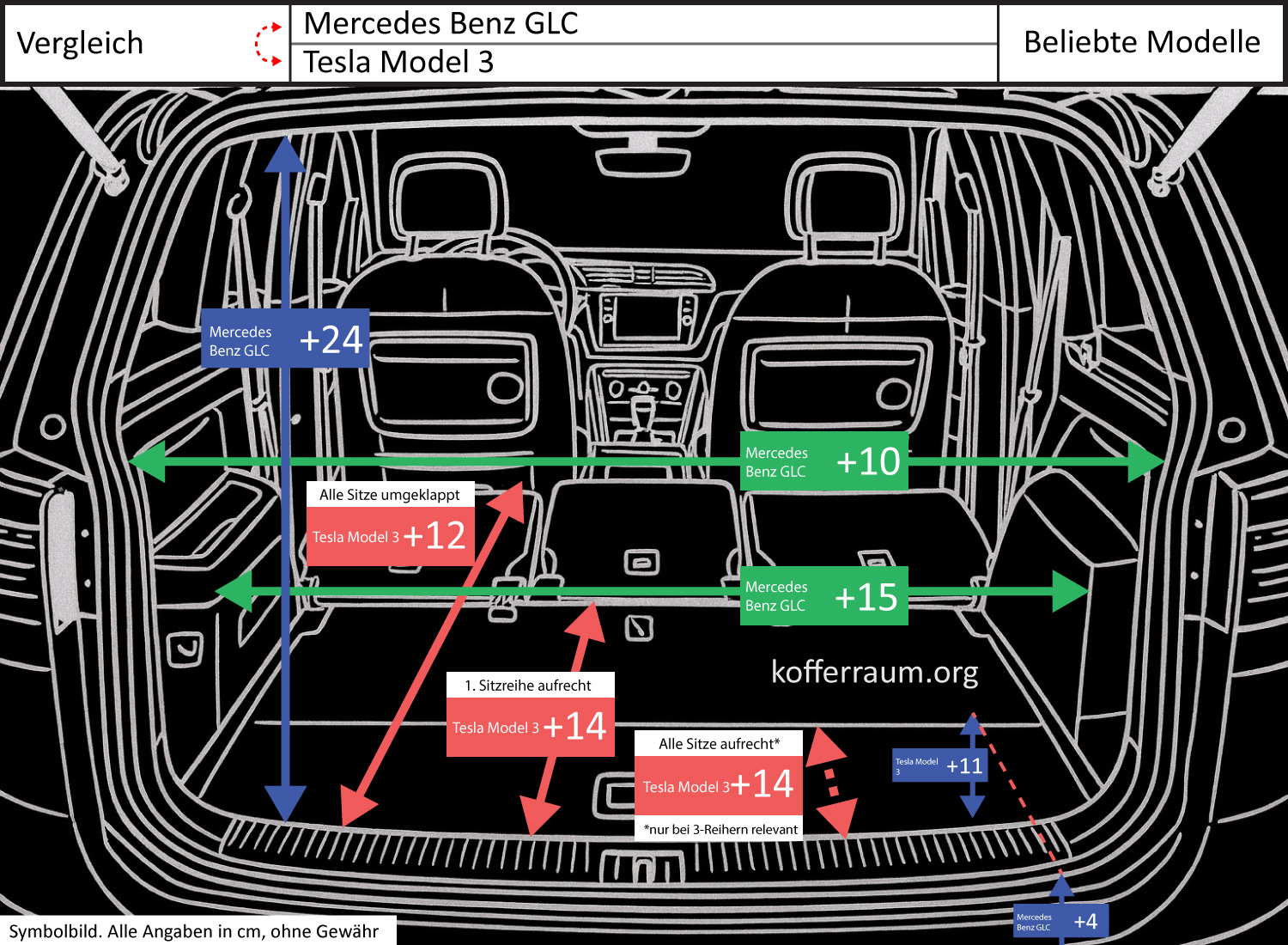
The most noticeable differences lie in length, depth, and loading opening. The Tesla Model 3 offers a +5.5 in (≈15%) longer cargo area with the rear seats upright than the GLC, making the Model 3 more advantageous for longer, flat items in everyday use.
Additionally, the Model 3 has a significantly greater depth between the loading edge and trunk floor (+4.3 in, stated as +1000%), indicating a deeper cargo well: more volume at the bottom, but also deeper placement of items and harder reach to the floor.
The GLC scores points for accommodating tall and wide items: the trunk opening is +9.4 in (≈46%) higher than the Model 3, and at the narrowest point, the GLC is +5.9 in (≈16%) wider.
This makes the GLC better suited for bulky, tall, or wide cargo (e.g., boxes, furniture parts, larger suitcases) because larger cross sections fit through the opening.
Other effects: The loading edge of the GLC is slightly higher above the road (+1.6 in, ≈6%), which makes lifting heavy items somewhat more strenuous; the Model 3 therefore offers easier sliding-in clearance.
Differences of ≤10% (e.g., +4.7 in or ≈7% with folded seats or +3.9 in / 10% in opening width) exist but affect practical usability less noticeably.
Brief conclusion: For long, flat cargo and ergonomically easier sliding in, the Tesla Model 3 is often more practical; for tall or wide items and better pass-through height, the Mercedes‑GLC is the better choice.
Those who frequently transport heavy, low, or long items benefit from the Model 3’s length and lower loading edge; those who often need bulky, tall, or wide cargo gain from the GLC’s larger opening height and greater width at the narrowest point.