
Trunk comparison: Mercedes Benz GLE vs Peugeot 5008
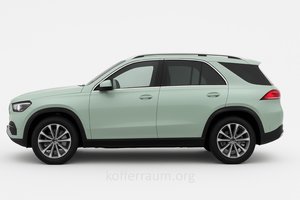
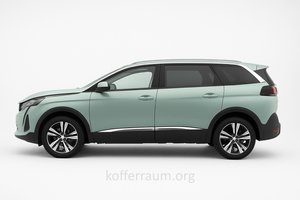
Summary of the main differences (>10%)
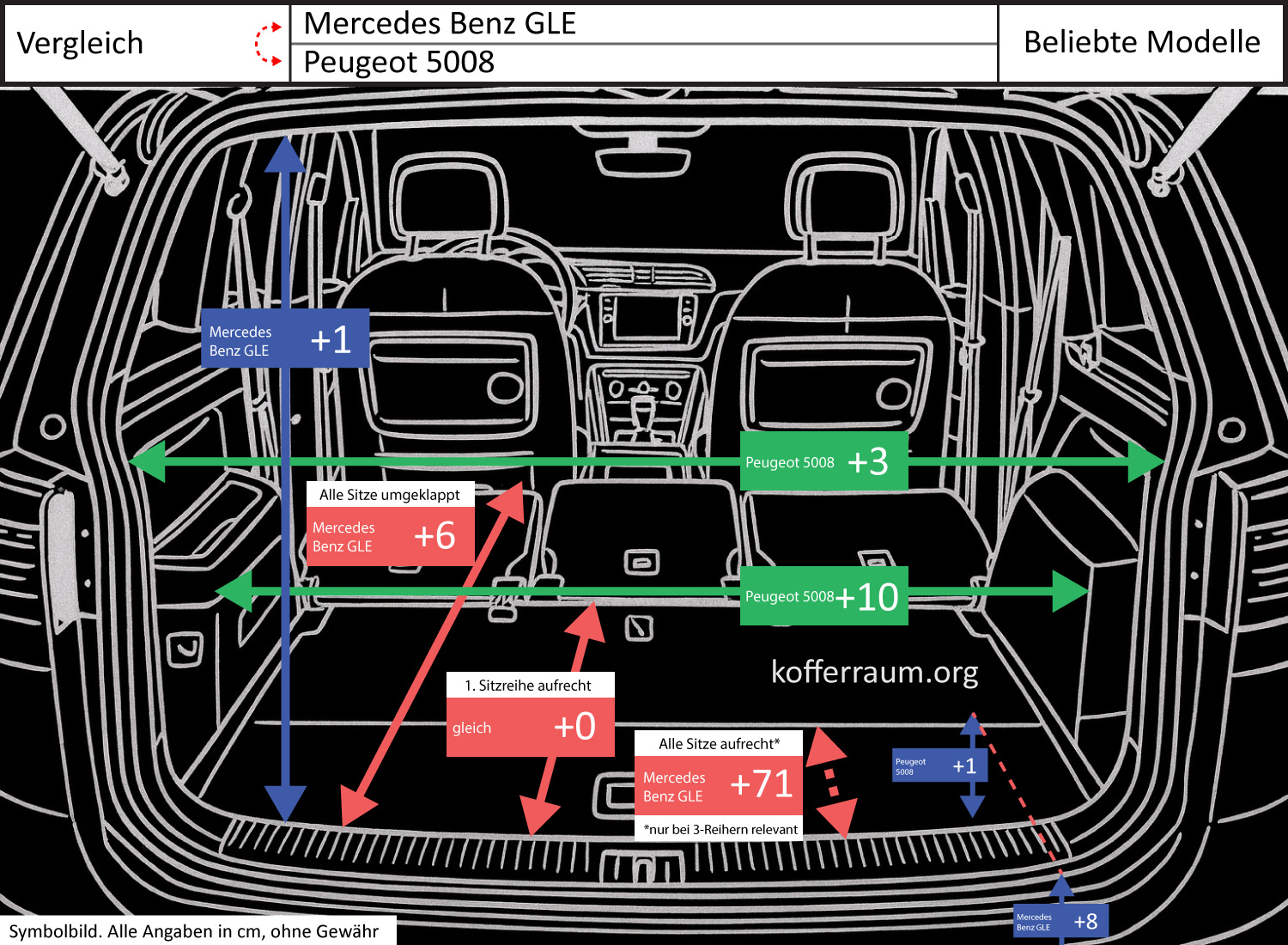
Mercedes‑Benz GLE offers a significantly larger trunk with the rear seats upright: With seats up, the trunk of the GLE is 28 in or 209% longer than that of the Peugeot 5008. The loading edge of the GLE is also 3.1 in (12%) higher above the road than that of the 5008.
Other, but smaller differences
With the seats folded down, the GLE is only 2.4 in (3%) longer. When the first row of seats is upright, the lengths are the same. The height of the trunk opening differs by only 0.4 in (1%) in favor of the GLE.
The depth (loading edge → trunk floor) is 0.4 in (≈0%) higher in the 5008. The narrowest width is 3.9 in (10%) larger in the 5008; the width of the trunk opening is 1.2 in (3%) wider in the 5008.
Impact on usability
The significantly greater usable length of the GLE with seats upright makes it more practical when passengers are seated in the rear and luggage needs to be transported — such as suitcases, sports equipment, or longer items without folding down seats.
With fully folded seats, both models are largely equal (only ~3% difference), so there is hardly any advantage in pure cargo volume with seats folded down.
The higher loading edge of the GLE (±3.1 in) negatively affects loading and unloading heavy items: greater effort or additional aids (loading ramp, lifting aid) are more likely needed. The 5008 is more practical here for frequent lifting of heavy loads.
The 3.9 in narrower bottleneck in the GLE can make storing very wide items more difficult; here the 5008 has an advantage, although the difference is exactly 10% and therefore not highlighted as >10%. Opening width, opening height, and trunk depth differ only minimally and hardly affect everyday usability.
Conclusion
For transport-intensive use with full passenger operation, the Mercedes‑Benz GLE is clearly advantageous (significantly longer trunk with seats upright). If frequent heavy lifting or loading wide items is important, the Peugeot 5008 is more practical due to its lower loading edge and greater narrow width.