
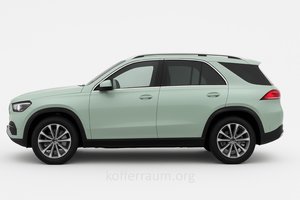
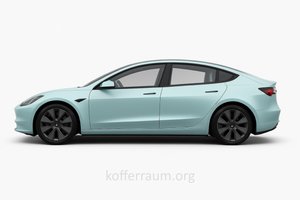
Trunk comparison: Mercedes Benz GLE vs Tesla Model 3
Key Differences
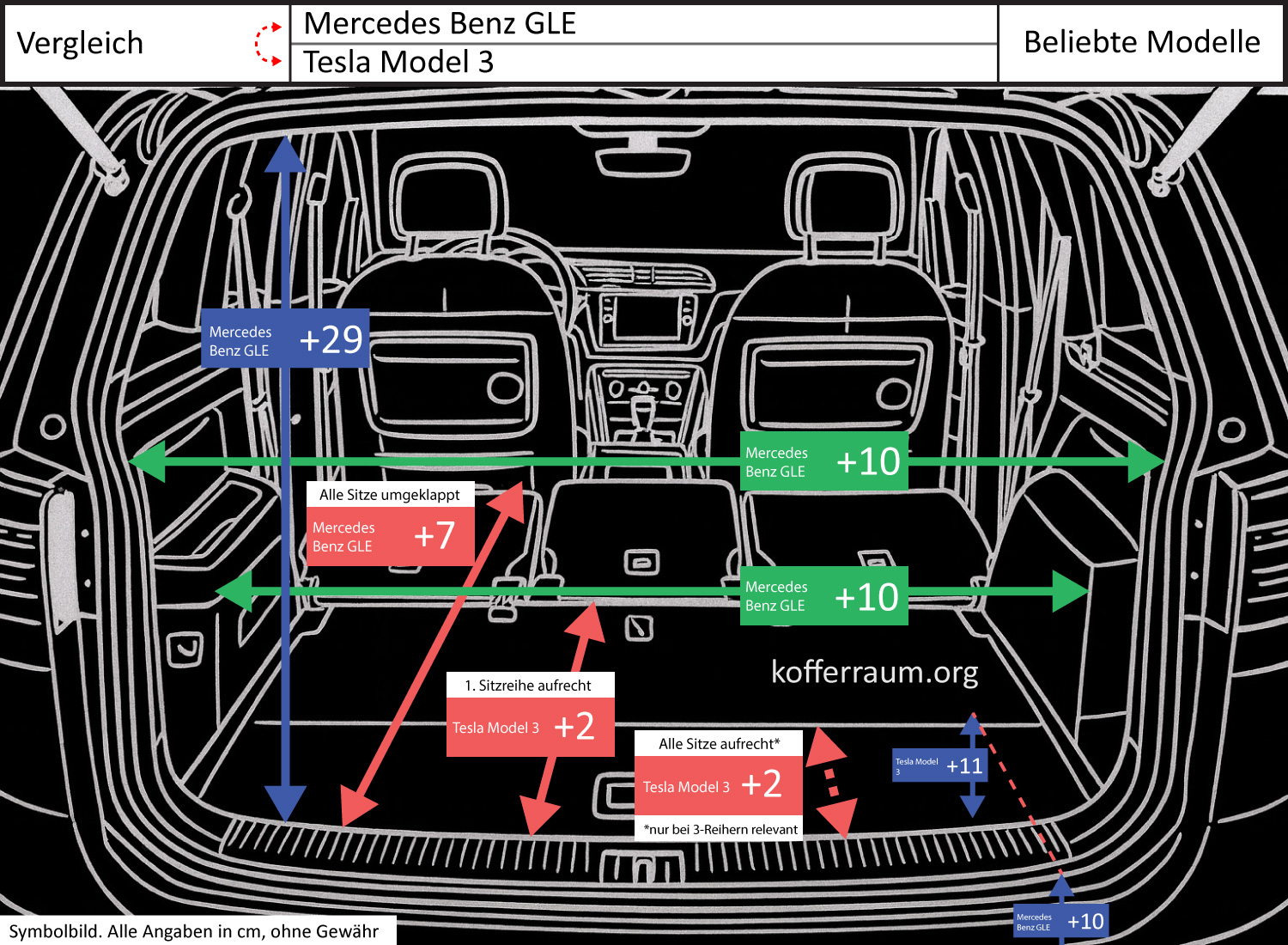
The largest, practically relevant differences are:
- Height of the trunk opening: GLE is 11.4 in (+56 %) higher than the Model 3.
- Depth of the trunk (loading edge → trunk floor): Model 3 has 4.3 in more depth (+1000 %) than the GLE.
- Loading edge height above the ground: The loading edge of the GLE is 3.9 in higher (+15 %) than that of the Model 3.
- Width of the trunk at the narrowest point: GLE is 3.9 in wider (+11 %) at the narrowest point than the Model 3.
Implications for Usability
The combination of differences results in the following practical advantages and disadvantages:
- GLE — better for tall and wide cargo: Due to the significantly higher trunk opening (+56 %) and the greater narrowest width (+11 %), bulky, tall, or wider items (e.g., furniture pieces, tall boxes, upright ski equipment) can be loaded and unloaded more easily. The wider narrow point makes fitting wider items more likely without rearranging or turning them frontally.
- GLE — disadvantage when lifting heavy loads: The loading edge sits 3.9 in higher (+15 %), making lifting heavy items onto the cargo floor more strenuous (more effort or ramps/helpers required).
- Model 3 — better for deeper, lower cargo and heavy lifting: The Model 3 has a significantly greater depth from loading edge to trunk floor (+4.3 in), providing more usable vertical storage space (items can be placed deeper). Combined with the lower loading edge height, loading heavy items is easier because less lifting is needed.
- Model 3 — limitations with tall or wide items: The lower opening height and narrower narrow point restrict loading very tall or wide items; such items may need to be tilted, disassembled, or transported via the rear seats.
Practical Conclusion
For users who frequently transport tall or wide cargo (e.g., camping or sports equipment, bulky furniture parts), the GLE is more practical due to the significantly larger opening and width — despite the higher loading edge.
For users who often load heavy suitcases or many deep, stackable items and prefer less lifting effort, the Model 3 is advantageous because of the greater interior depth and lower loading edge. Smaller length differences with folded or upright seats are hardly decisive in practice.