Trunk comparison: Nissan Rogue Sport vs Durchschnitt Wagon
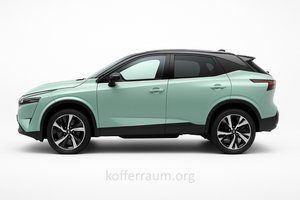
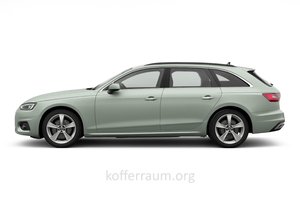
Key Differences
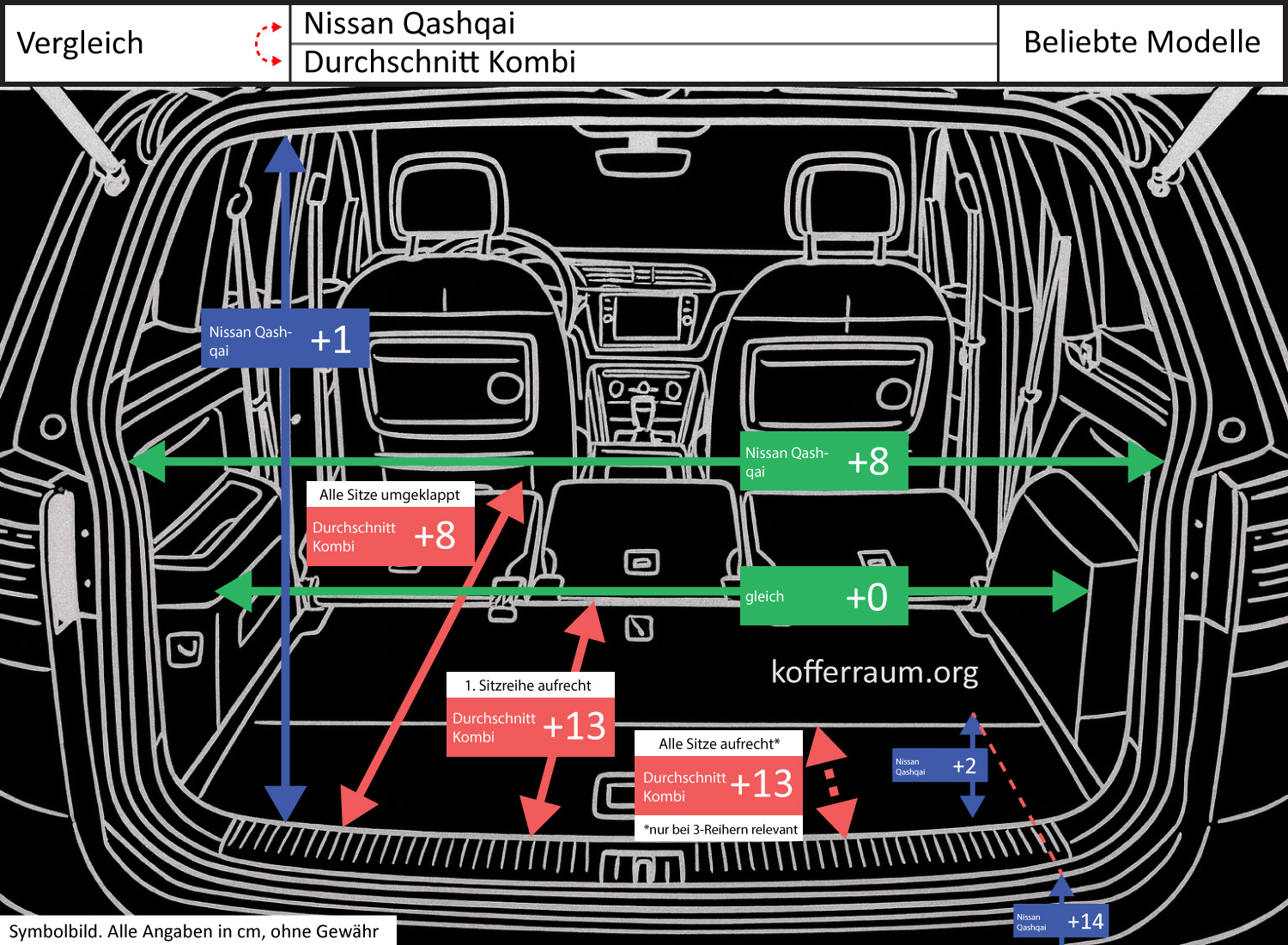
The biggest differences between the Nissan Qashqai and an average wagon mainly concern the cargo volume and cargo geometry.
The average wagon offers a significantly longer cargo area with the front seats upright: +5.1 in (≈+15%) compared to the Qashqai. The Qashqai has a noticeably greater trunk depth (loading edge to trunk floor): +0.8 in (≈+50%).
Additionally, the loading edge of the Qashqai sits noticeably higher above the road: +5.5 in (≈+22%). Smaller or negligible differences include the trunk opening height (+0.4 in) and the width of the opening (+8%), which are not among the largest deviations; the narrowest interior width is the same.
Impact on Usability
The longer cargo floor of the wagon with the front seats upright makes it more practical for long items (e.g., furniture parts, slats, long suitcases) that need to be transported without folding the seats down.
For users who often need to carry long cargo with a full passenger load, the wagon is therefore more advantageous in everyday use.
The greater depth in the Qashqai means more space behind the loading edge to the trunk floor, which favors storing tall or bulky items in the cargo area (they protrude less over the loading edge).
However, the significantly higher loading edge reduces comfort when loading: heavy luggage or bulky parts must be lifted higher, making loading and unloading more strenuous and increasing the likelihood of needing ramps or lifts.
For frequent loading of heavy loads or for those with limited physical fitness, the wagon with its lower loading edge is more ergonomic.
Overall: Those who regularly transport long items or need a lot of cargo space with full seating benefit from the wagon. Those who need more volume directly behind the loading edge for bulky items find advantages in the Qashqai but must accept the higher lifting to the loading edge.