
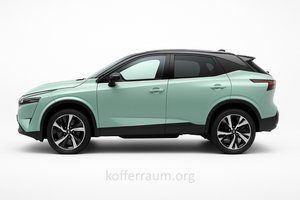
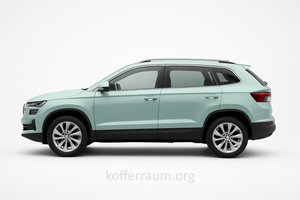
Trunk comparison: Nissan Rogue Sport vs Skoda Karoq
Key Differences (highlighted: >10%)
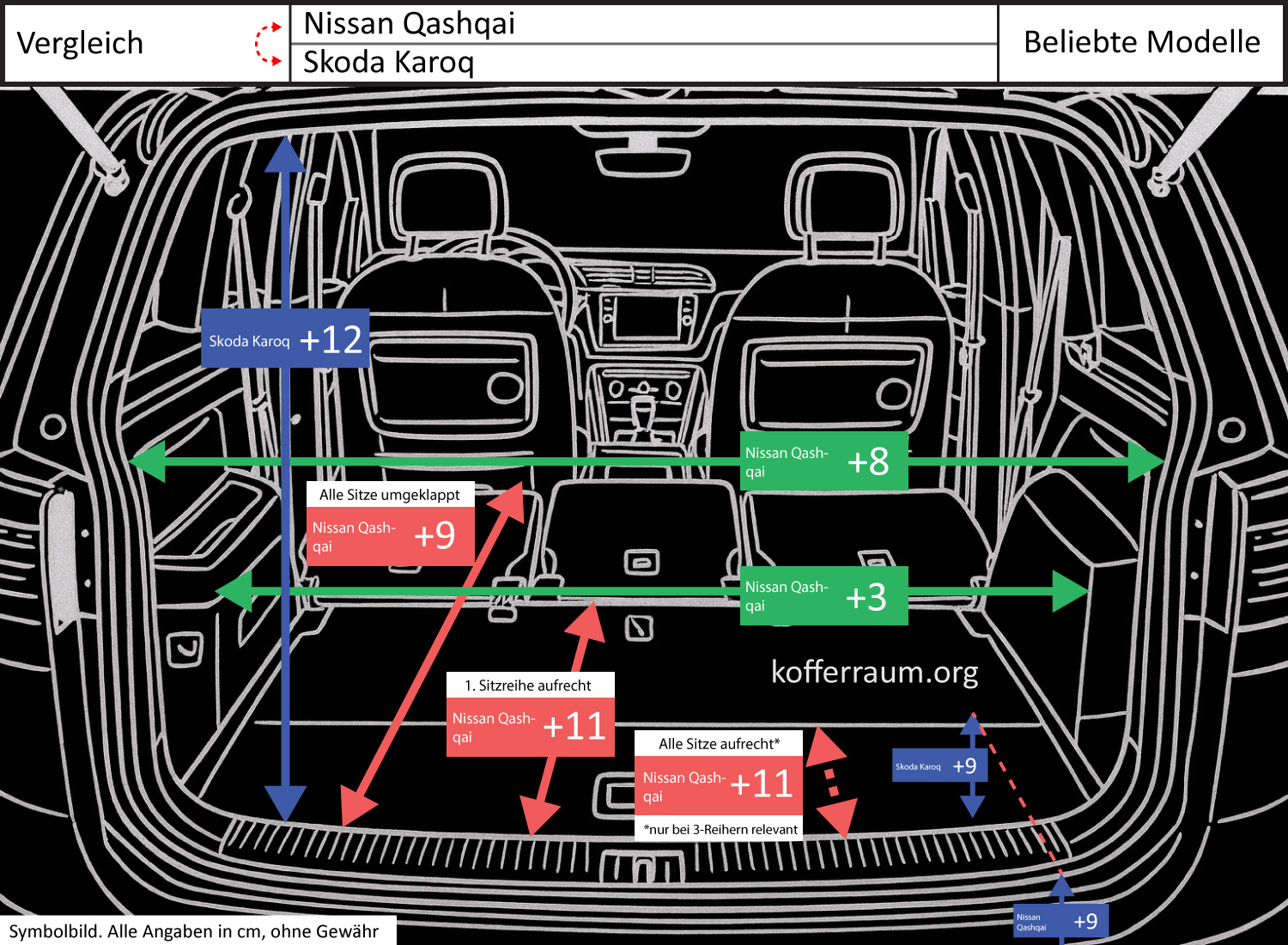
When loading, four differences stand out: The Nissan Qashqai offers with the first row of seats upright a 4.3 in (14%) longer cargo area than the Škoda Karoq, which simplifies loading longer items with seats occupied.
The Škoda, on the other hand, has a higher trunk opening by 4.7 in (15%), providing more vertical installation height when loading.
Also notable is the larger trunk depth (distance from loading edge → trunk floor) of the Karoq by 3.5 in (150%), creating more "depth space" below the loading edge. Additionally, the loading edge on the Qashqai sits 3.5 in (13%) higher above the road, increasing the lifting height when loading.
Impact of these differences on usability
The longer cargo area of the Qashqai with seats upright makes it more suitable for longer items when front passengers must remain seated (e.g., slats, long pipes, skis). The higher loading edge of the Qashqai makes lifting heavier loads more difficult, especially for heavy boxes or furniture pieces.
The Karoq scores points in handling tall or bulky items: the higher opening offers more vertical clearance, the greater depth provides additional storage space below the loading edge, and the lower loading edge reduces lifting effort when loading.
This makes the Karoq practically more favorable for frequent loading of heavy or bulky goods (groceries, crates, strollers, bulky boxes).
Smaller differences (not >10%) — Qashqai has about 3.5 in (6%) more length with seats folded down, 1.2 in (3%) more width at the narrowest point, and the opening width is about 3.1 in (8%) larger — are present but only slightly affect everyday usability.
Conclusion
For users who often need to transport long items without folding down the front seats, the Qashqai is advantageous. Those who need more space for tall or bulky cargo, frequently lift heavy loads, or prefer the lowest possible loading edge and greater interior height benefit more from the Karoq.