Trunk comparison: Opel Astra Wagon vs Skoda Kamiq
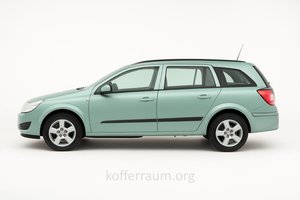
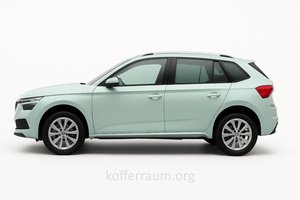
Key Differences
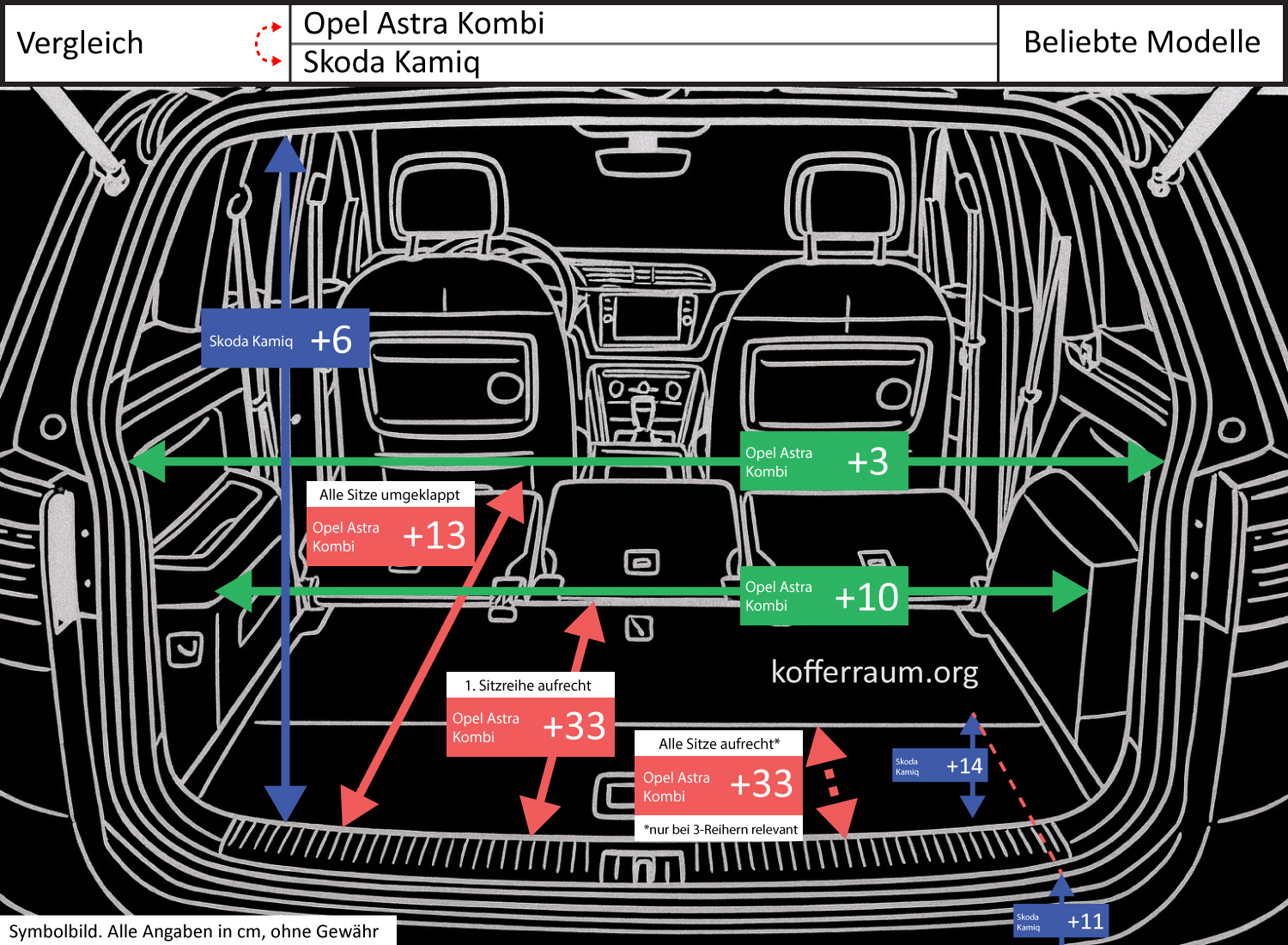
The Opel Astra Wagon offers a significantly longer cargo floor with the front seats upright: +13 in (45%) more depth than the Škoda Kamiq.
Conversely, the Škoda Kamiq has a considerably deeper trunk well (distance from loading edge to trunk floor): +5.5 in (700%), and the Kamiq’s loading edge is also +4.3 in (19%) higher above the ground than the Astra’s.
Smaller differences (e.g., +5.1 in/8% with seats folded, +2.4 in/8% opening height, +1.2 in/3% opening width, or +3.9 in/10% narrowest width favoring the Astra) exist but do not exceed the 10% threshold and are not highlighted here.
Impact on Usability
The Astra’s 45% longer cargo floor with the front row upright makes it more practical for long items (e.g., skis, slats, long boxes) without folding seats down.
The slightly larger narrowest width and marginally greater opening width also make it easier to load wider cargo. Because the Astra’s loading edge is lower, lifting heavy items into the trunk is easier.
The Kamiq offers significantly more usable vertical volume thanks to the 5.5 in deeper trunk well: bulky, tall, or irregularly shaped items can sit deeper in the cargo space and thus be better accommodated without protruding over the loading edge.
However, the 4.3 in higher loading edge makes lifting heavy loads more cumbersome and can complicate loading and unloading; the greater well depth compensates for volume but does not necessarily improve easy access.
Conclusion: For long, flat, or wide cargo that should be easily accessible, the Opel Astra Wagon is more advantageous in everyday use.
For more deep, “recessed” cargo capacity (e.g., when items need to sit deeper in the cargo space), the Škoda Kamiq offers more volume due to the significantly deeper well, at the expense of easier loading because of the higher loading edge.