
Trunk comparison: Opel Astra Wagon vs Volvo V90
Key Differences
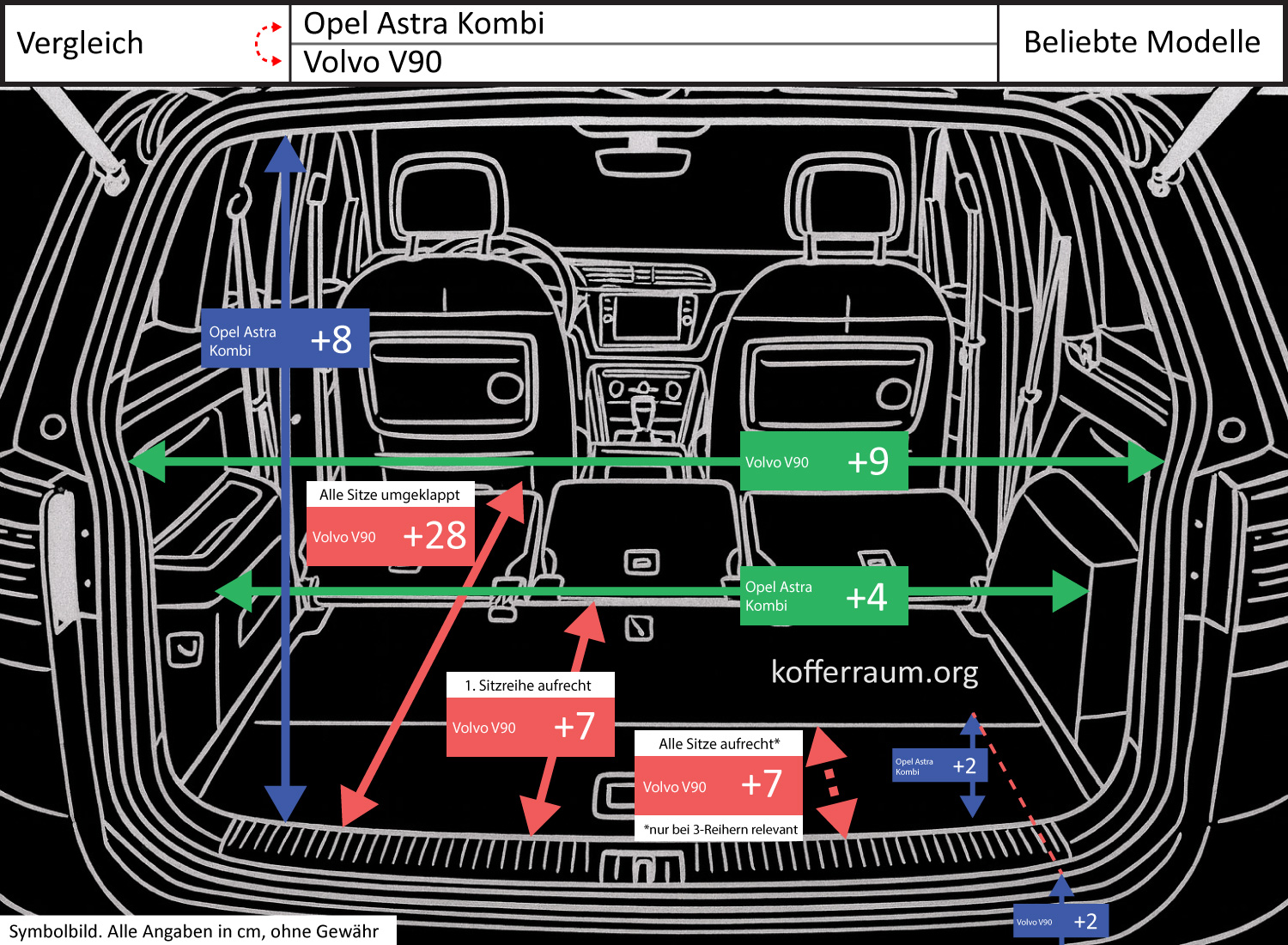
The Volvo V90 offers significantly more cargo length with the rear seats folded down: +11 in (+17%) compared to the Opel Astra Wagon.
This makes the V90 clearly more suitable for long items like slats, long furniture parts, or many skis, because they can be laid flat without protruding into the rear of the vehicle. With the first row of seats upright, the difference is much smaller at +2.8 in (7%) and affects everyday use less.
The trunk opening of the Opel Astra Wagon is 3.1 in higher (+11%) than that of the Volvo V90. For loading tall or bulky boxes and crates, this is a noticeable advantage: bulky, tall items can be lifted straight through the opening more easily without needing to be tilted or turned.
The depth between the loading edge and the trunk floor is 0.8 in greater (+100%) in the Opel Astra Wagon than in the V90 (according to specifications).
Practically, this means there is slightly more usable interior height or "entry ramp" immediately behind the loading edge in the trunk; flat goods therefore rest more easily on the floor and can be better positioned against slipping.
Further Differences and Implications for Use
The loading edge of the Volvo is 0.8 in higher above the road (+3%), which slightly complicates lifting very heavy loads in. The narrowest trunk width is 1.6 in larger (+4%) in the Astra, which helps in tight situations to place larger items centrally.
The width of the trunk opening is 3.5 in larger (+9%) in the Volvo, which facilitates loading wider goods — this advantage is just under the 10% mark but is noticeable in everyday use with wide transports.
Conclusion
For regular transport of long items or larger flat cargo areas with folded seats, the Volvo V90 is the better choice. Those who often load tall or bulky items or value a higher opening and slightly more usable depth behind the loading edge are better served by the Opel Astra Wagon.
Smaller differences in loading edge height and opening width only moderately affect everyday usability; the choice therefore depends on the primary loading profile (long vs. tall/bulky).