
Trunk comparison: Opel Grandland vs Renault Clio
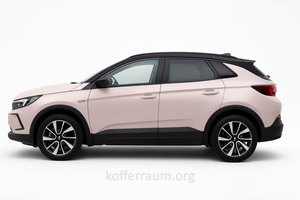
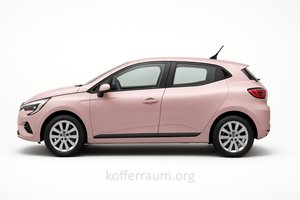
Trunk dimensions and their consequences
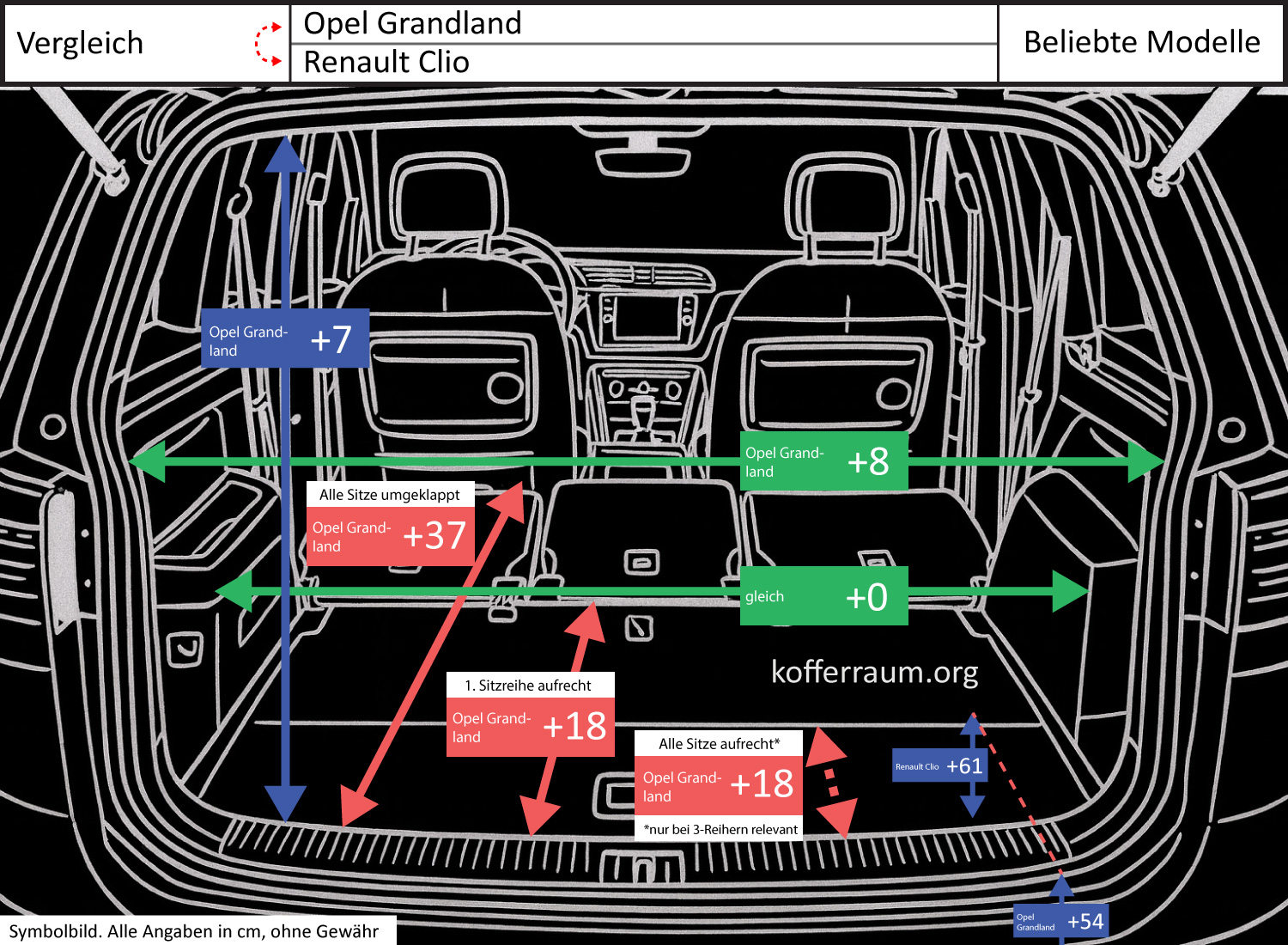
The Opel Grandland offers about 14.6 in (28%) more length with the seats folded down than the Renault Clio. Even with the front seat row upright, the Grandland is around 7.1 in (25%) longer.
This makes the Grandland significantly more practical for long items (e.g., skis, slats, longer boxes) and for trips with bulky luggage: less folding down or restacking needed.
In the Renault Clio, the trunk depth (loading edge to trunk floor) is 24 in (381%) greater than in the Grandland. This means the Clio’s cargo well lies significantly deeper – advantageous when you want to store volume deep inside the vehicle, achieving a lower center of gravity.
However, disadvantages include more difficult access to deeply placed items and that very tall items, despite the lower floor, are harder to store lengthwise due to other length limitations.
The loading edge of the Opel Grandland is 21.3 in (225%) higher above the road than the Clio.
This makes lifting heavy loads into the vehicle more strenuous but reduces bending when looking into the trunk and can offer advantages when loading with rolling containers/shopping bags in a high vehicle build (e.g., typical SUV).
Additional dimensions and practical tips
The width at the narrowest point is the same in both models; the width of the trunk opening is only slightly larger in the Grandland (+3.1 in / 8%) and the height of the opening only slightly higher (+2.8 in / 9%) – both under 10% and thus hardly decisive in practice.
Summary recommendation:
- If you regularly transport long or many bulky items: Opel Grandland.
- If you value a lower loading edge and a deep cargo well (retained volume deep in the vehicle): Renault Clio.
- For comfort when lifting heavy loads, the Clio is more practical; for length and flexibility when loading, the Grandland is superior.