Trunk comparison: Opel Grandland vs Skoda Octavia Wagon
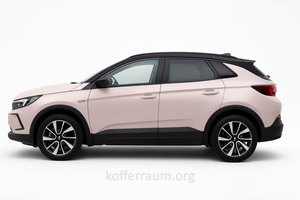
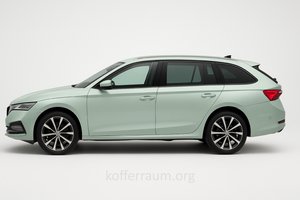
Key Differences
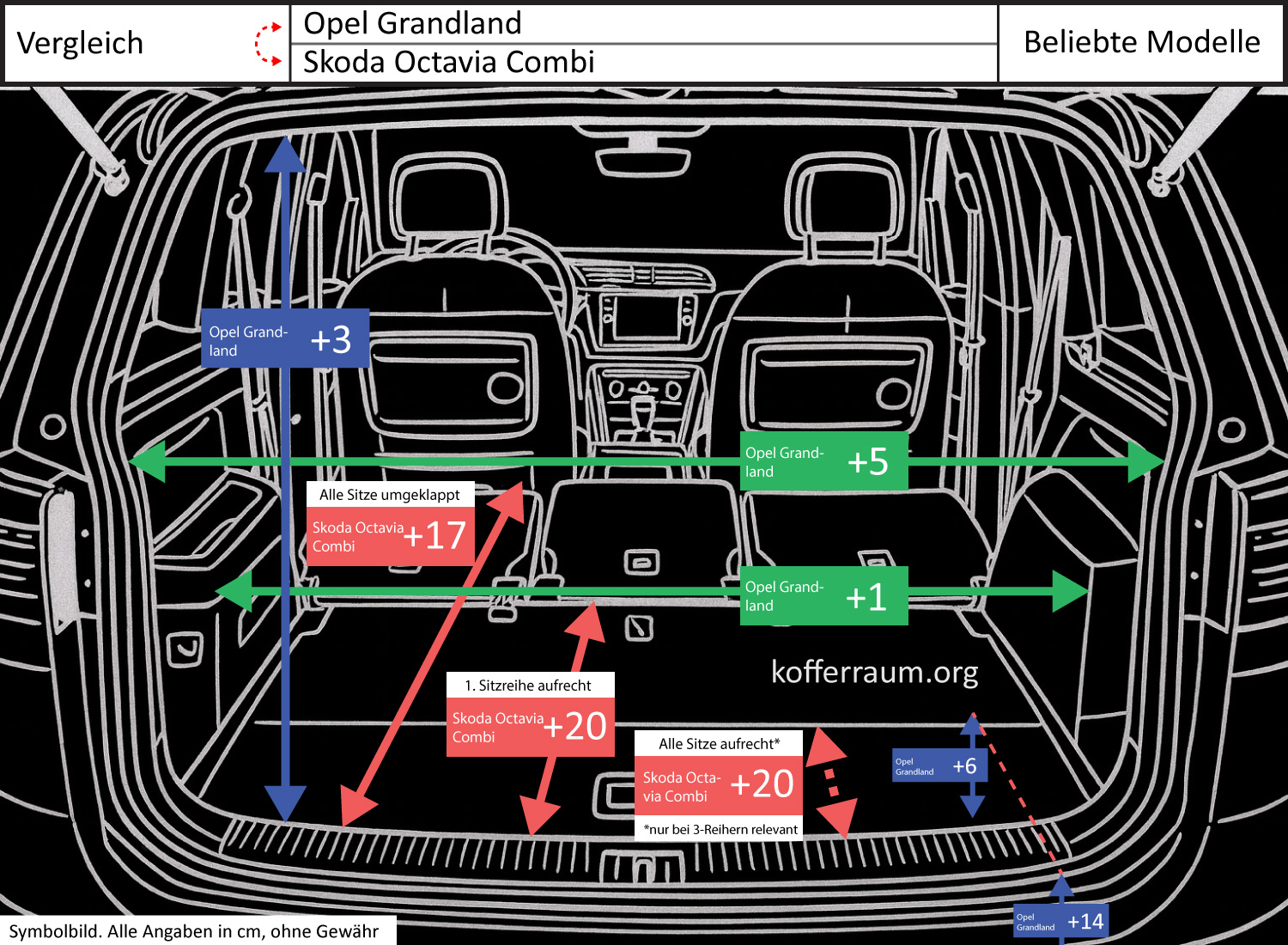
The Škoda Octavia Wagon offers 7.9 in (22%) more trunk length with the first row of seats upright than the Opel Grandland.
In contrast, the Grandland features a significantly different cargo area geometry: the trunk floor depth (loading edge → trunk floor) is 2.4 in (60%) greater and the loading edge is 5.5 in (22%) higher above the road than in the Octavia.
Other differences are smaller: with the seats folded down, the Octavia has about +6.7 in (10%) more length, the Grandland's trunk opening is +1.2 in (4%) higher, the opening width +2 in (5%), and the narrowest width +0.4 in (1%).
Impact on Usability
The longer loading length of the Octavia with the rear seat upright makes it significantly more practical for long items (e.g., slats, skis, furniture parts) without folding the seats – this is a clear advantage in everyday use when regularly transporting long loads.
In the Grandland, the greater trunk depth provides more usable volume below the loading edge; this is beneficial when items need to be stored deeper or stacked higher.
However, the significantly higher loading edge makes lifting heavy objects into the trunk more difficult: loading becomes more strenuous, especially with bulky or heavy loads. Combined, this means: the Grandland offers more "depth space," the Octavia more usable length.
The smaller differences (opening height, opening width, narrowest width) have only minor practical effects; the slightly larger opening width and height of the Grandland make it marginally easier to load wide parts but do not change the core differences mentioned above.
In short: Those who often transport long items or value a lower loading edge and easier loading and unloading are better off with the Octavia.
Those who want to benefit from additional trunk depth (more volume below the loading edge, better stackability) and accept the higher loading edge will find advantages in the Grandland.