Trunk comparison: Peugeot 208 vs Durchschnitt SUV
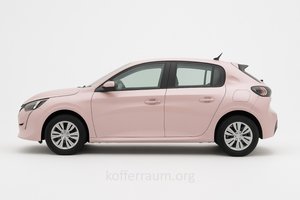
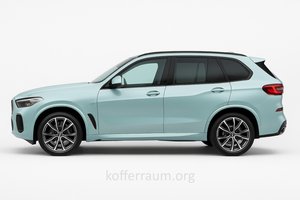
Key Differences
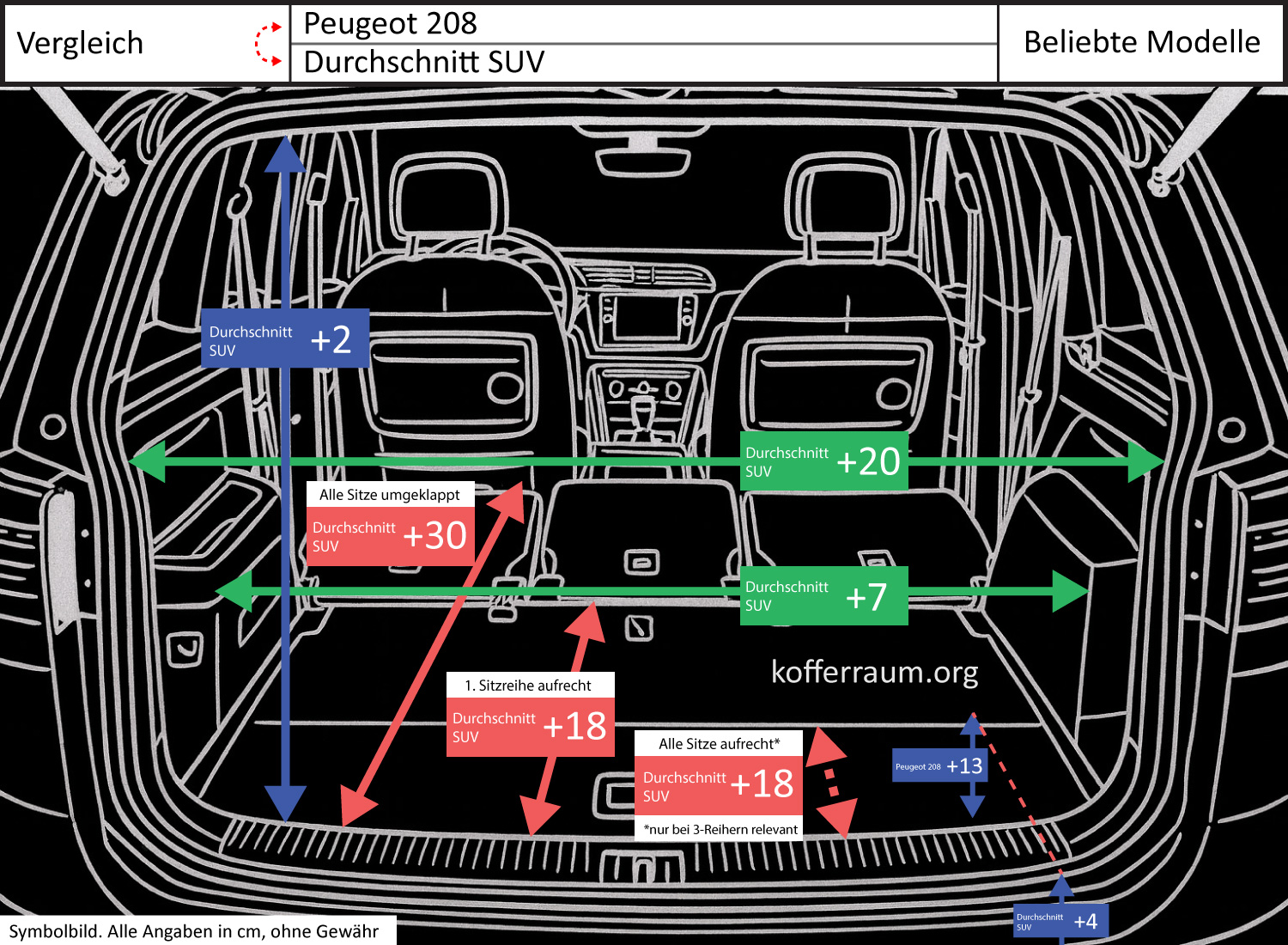
There are four notable differences in cargo volume and trunk shape: The average SUV offers a cargo floor length that is 11.8 in (≈23%) longer with the rear seats folded down and 7.1 in (≈27%) longer with the front seats upright compared to the Peugeot 208. The width of the trunk opening is 7.9 in (≈23%) larger on the SUV.
In contrast, the Peugeot 208 has a significantly greater trunk depth measured from the loading edge to the trunk floor, with 5.1 in (≈260%) more than the average SUV.
Smaller differences (e.g., opening height +0.8 in, loading edge height +1.6 in, narrowest width +2.8 in) exist but remain under 10% and are not highlighted here.
Impact on Usability
The longer cargo length of the SUV, both with folded rear seats and upright seats, makes it clearly more flexible for long items (e.g., furniture parts, long sports equipment, skis) and for luggage when multiple passengers are on board.
The significantly wider trunk opening and greater narrowest width make loading and unloading wide or bulky items like strollers, crates, or large boxes easier; this reduces the need to maneuver when sliding items in and lowers the risk of catching on edges.
The Peugeot 208 scores with its significantly greater depth (loading edge → trunk floor). In practice, this means a deeper cargo well: heavy or bulky items sit lower and can be transported more stably with a low center of gravity.
Together with the slightly lower loading edge of the 208 (only a few centimeters difference), this provides a more manageable, ergonomically favorable access for frequent lifting and unloading of heavy loads.
Conclusion: Those who often transport long or wide items or regularly load bulky luggage will find the average SUV the more practical solution. Those who value a deeper cargo well and easier handling of heavy individual pieces benefit from the Peugeot 208.