Trunk comparison: Peugeot 208 vs Peugeot 308 SW 3-row
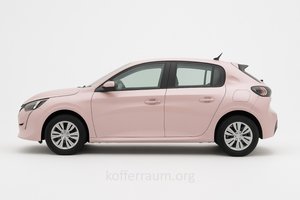
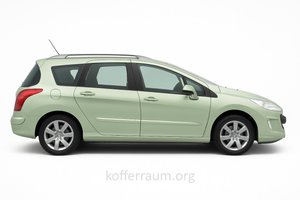
Key Message
The Peugeot 308 SW (3-row) offers significantly better conditions for long and wide or tall cargo, while the Peugeot 208 has advantages in everyday transport with seats upright and in terms of trunk depth.
Noticeable differences concern loading length in various seat configurations, height and width of the opening, as well as the position of the loading edge.
Main Differences (highlighted)
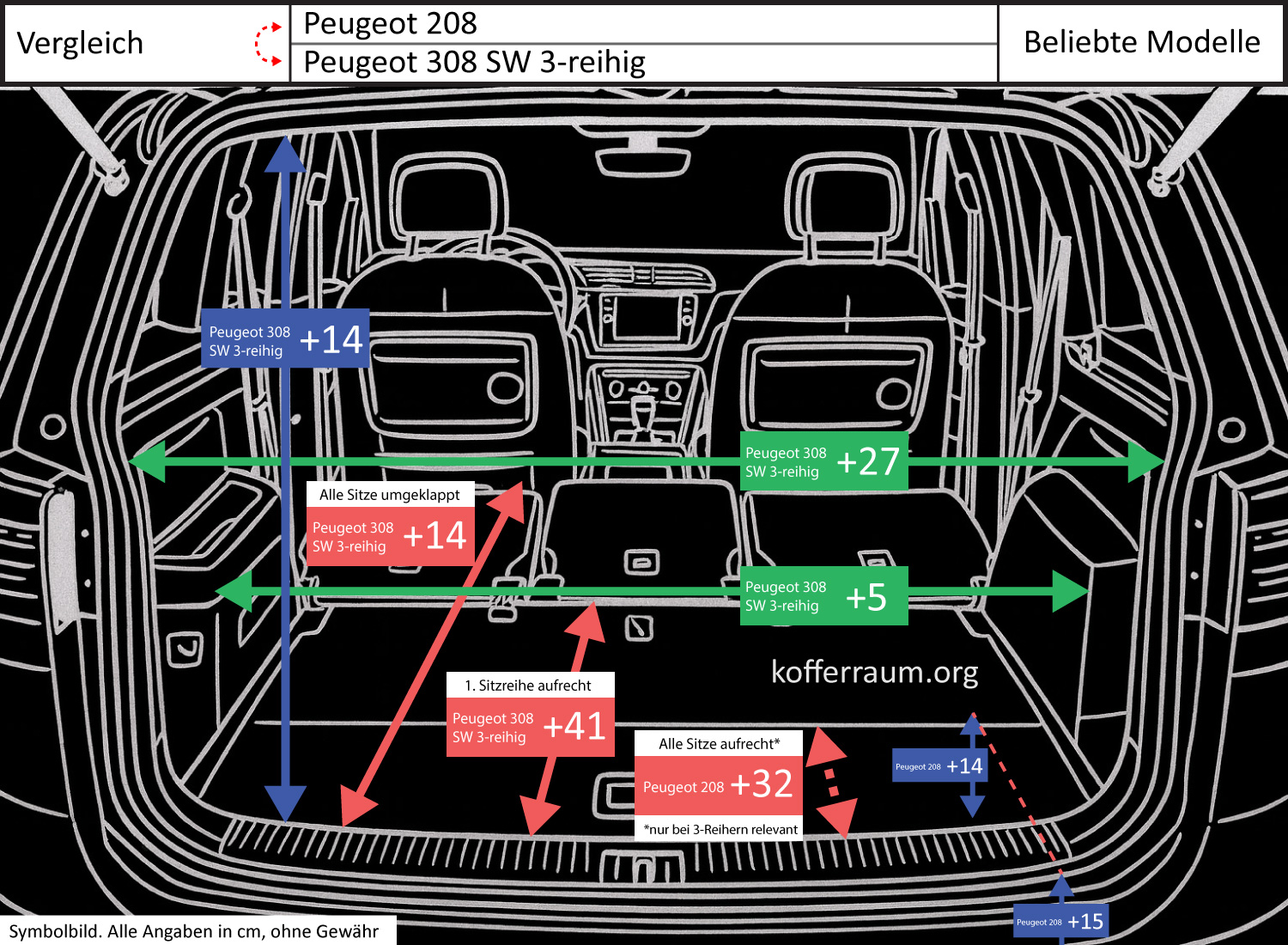
With seats folded down: The 308 SW has a loading area that is +5.5 in (11%) longer, making it better for longer items.
With the first row of seats upright: The 308 SW offers a loading area that is +16.1 in (61%) longer than the 208 — a huge advantage when the front row of seats is to be kept.
With all seats upright: The 208 has a loading area that is +12.6 in (91%) longer than the 308 SW — better for normal trunk use with full seating rows.
Height of the trunk opening: The opening of the 308 SW is +5.5 in (19%) higher, which makes storing tall items easier.
Width of the trunk opening: The 308 SW has an opening that is +10.6 in (31%) wider, making it significantly easier to load wide or bulky cargo.
Depth of the trunk (loading edge → floor): The 208 is +5.5 in (350%) deeper — this indicates more "volume in the well" or better stacking options for smaller luggage.
Loading edge height above the road: The loading edge of the 208 is +5.9 in (27%) higher, which makes lifting heavy items more difficult. The lower loading edge height of the 308 facilitates loading and unloading.
The narrowest width of the trunk differs by only 5% in favor of the 308 and is therefore not considered decisive.
Implications for Usability
For users who regularly need to load long or wide items (e.g., furniture parts, long slats, bicycles with/without reduced disassembly), the Peugeot 308 SW (3-row) is the better choice: larger loading opening, higher opening height, and significantly longer loading area in certain seat positions simplify loading bulky cargo.
The lower loading edge reduces physical strain when lifting.
Those who mostly travel with all seats in use and frequently need normal cargo transport in everyday life benefit from the Peugeot 208: it offers a significantly longer loading area with all seats upright and a deeper trunk well that makes storing and stacking suitcases and shopping bags easier.
The disadvantage is the higher loading edge, which makes lifting heavy loads more strenuous.
Conclusion
308 SW = better for bulky, long, or wide cargo and ergonomic loading/unloading. 208 = more practical trunk with full seat occupancy and for everyday luggage, but with a higher loading edge. The choice depends on whether you more often travel with an upright seat configuration or with folded seats and bulky cargo.