
Trunk comparison: Peugeot 208 vs Volvo V90
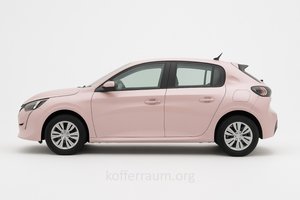
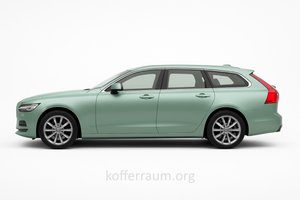
Biggest Differences
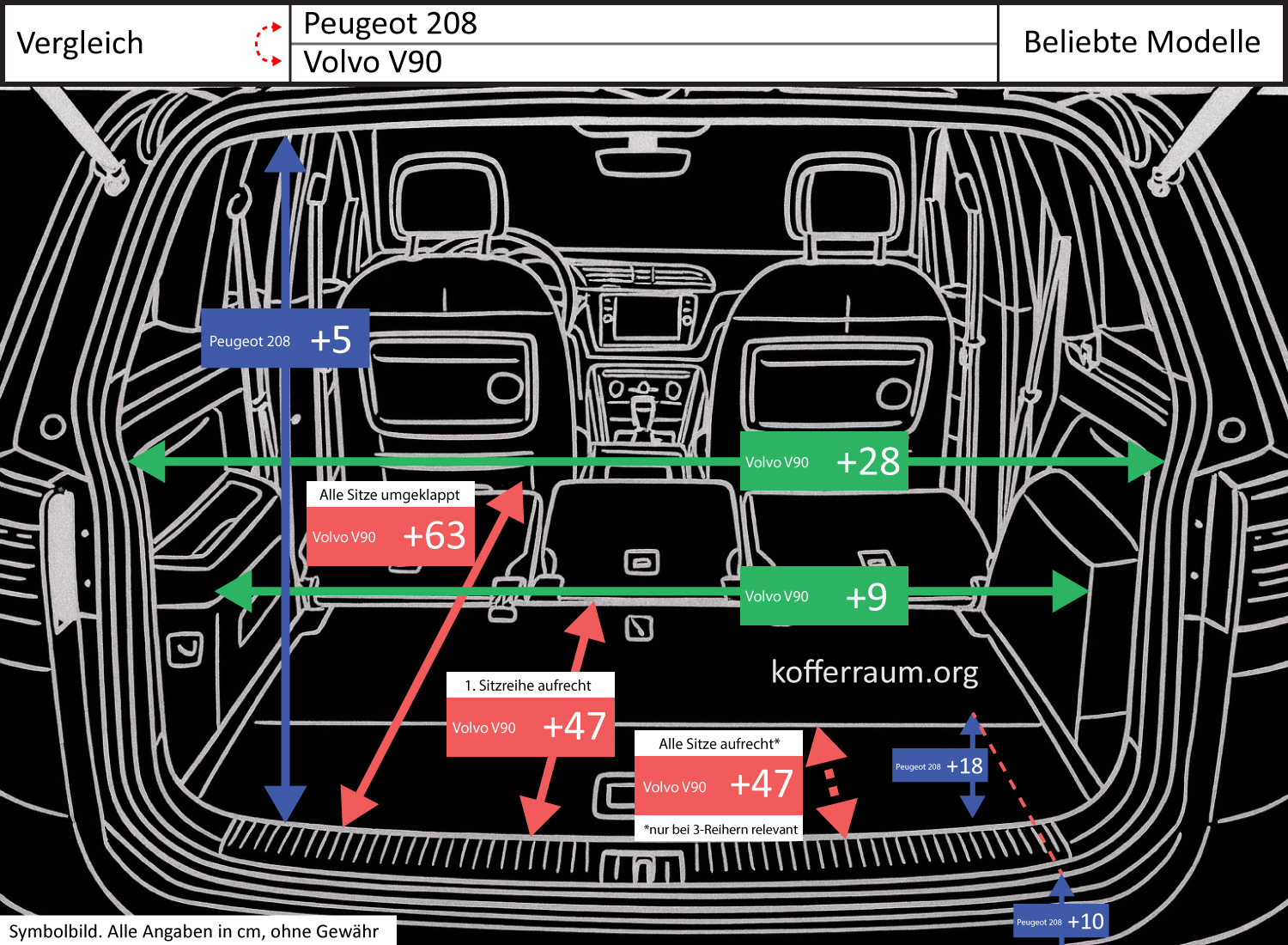
The Volvo V90 offers significantly more longitudinal cargo space: with the rear seat folded down, the trunk is +24.8 in (≈48%) longer, and with the front seats upright, even +18.5 in (≈70%) longer than the Peugeot 208. Additionally, the Volvo has a much wider tailgate opening: the opening is +11 in (≈33%) wider, which makes maneuvering wider items inside easier.
The Peugeot 208, on the other hand, has a significantly greater depth between the loading edge and the trunk floor: +7.1 in (≈1700%) compared to the Volvo. Furthermore, the loading edge of the Peugeot is +3.9 in (≈16%) higher above the road.
What This Means in Practice
Volvo V90 – for long or wide loads: The longer cargo dimensions with folded seats and the significantly wider opening clearly make the V90 more suitable for long items (e.g., furniture, skis, long boards) and wide, bulky parts.
For moving, transporting sports equipment, or when longer cargo needs to be regularly accommodated, the V90 is more practical. The lower loading edge (compared to the Peugeot) makes loading heavy items easier.
Peugeot 208 – deeper trunk floor, higher loading edge: The greater depth from the loading edge to the floor means the 208 has a trunk pan that sits deeper, i.e., a "deeper" cargo area relative to the opening. This can be advantageous when smaller to medium items need to lie more securely and not slide around easily.
However, the higher loading edge makes loading and unloading heavy items more strenuous. For everyday shopping, suitcases, or smaller items, the 208 is sufficient but less suitable for long or very wide cargo.
Conclusion
If you frequently transport long or wide cargo or regularly load and unload heavy items, the Volvo V90 is the better choice due to its length, opening width, and lower loading edge.
If the priority is secure, deeper storage for normal shopping or luggage and the higher loading edge is not an issue, the Peugeot 208 can suffice.