
Trunk comparison: Peugeot 208 vs VW Polo
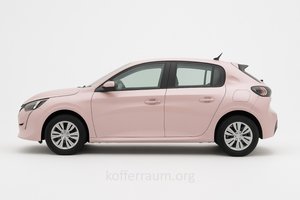
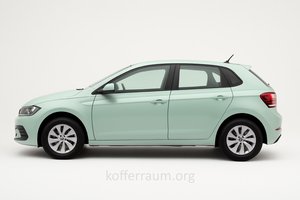
Main Differences
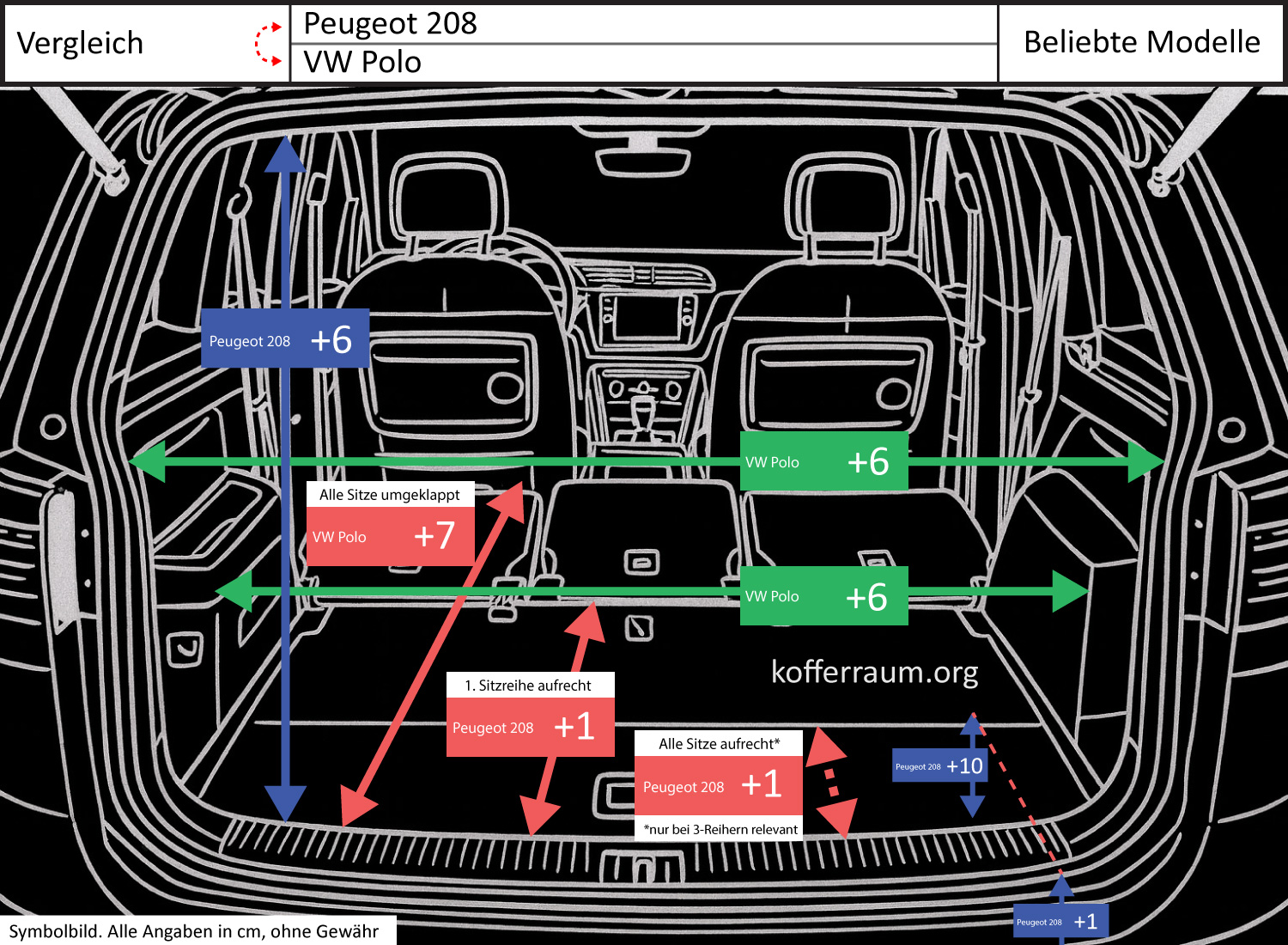
The most noticeable difference concerns the depth of the cargo area: The depth of the trunk (loading edge to trunk floor) is 3.9 in (+125%) greater in the Peugeot 208 than in the VW Polo. Other, but significantly smaller differences: With the seats folded down, the Polo is 2.8 in (5%) longer, while with the front seats upright, the 208 is 0.4 in (2%) longer.
The trunk opening of the 208 is 2.4 in (9%) higher. The loading edge of the 208 is 0.4 in higher above the road. In width, the Polo has advantages: at the narrowest point +2.4 in (6%) and in opening width +2.4 in (7%).
Impact on Usability
The significantly greater depth of the Peugeot makes it more practical for vertical loading and stacking luggage: suitcases, boxes, or upright items can be stored deeper and thus more securely without protruding far over the loading edge.
The Polo's lower loading volume in depth limits the ability to sink bulky, tall cargo "in the trunk."
The Polo scores points in length (with seats folded down) and width: Those transporting long, flat items — such as slats, skis, or flat furniture parts — benefit from the +2.8 in length in the folded state.
The greater width at narrow points and the wider opening make it easier to slide in and position wide or bulky cargo.
The slightly higher trunk opening and the 0.4 in higher loading edge of the Peugeot mean a slightly higher lift when loading, but in practice this is rarely seen as a decisive disadvantage; the gain in depth compensates for this in many loading cases.
In short: The Peugeot 208 is the better choice if vertical storage space and stackability are important; the VW Polo is more practical for wide or particularly long flat loads.