Trunk comparison: Peugeot 3008 vs Peugeot 5008
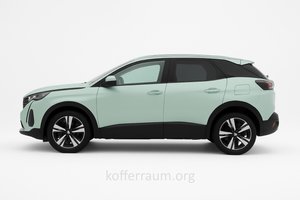
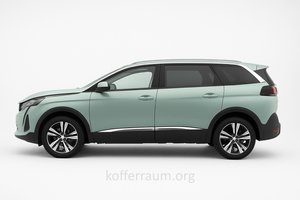
Key Differences (only >10% highlighted)
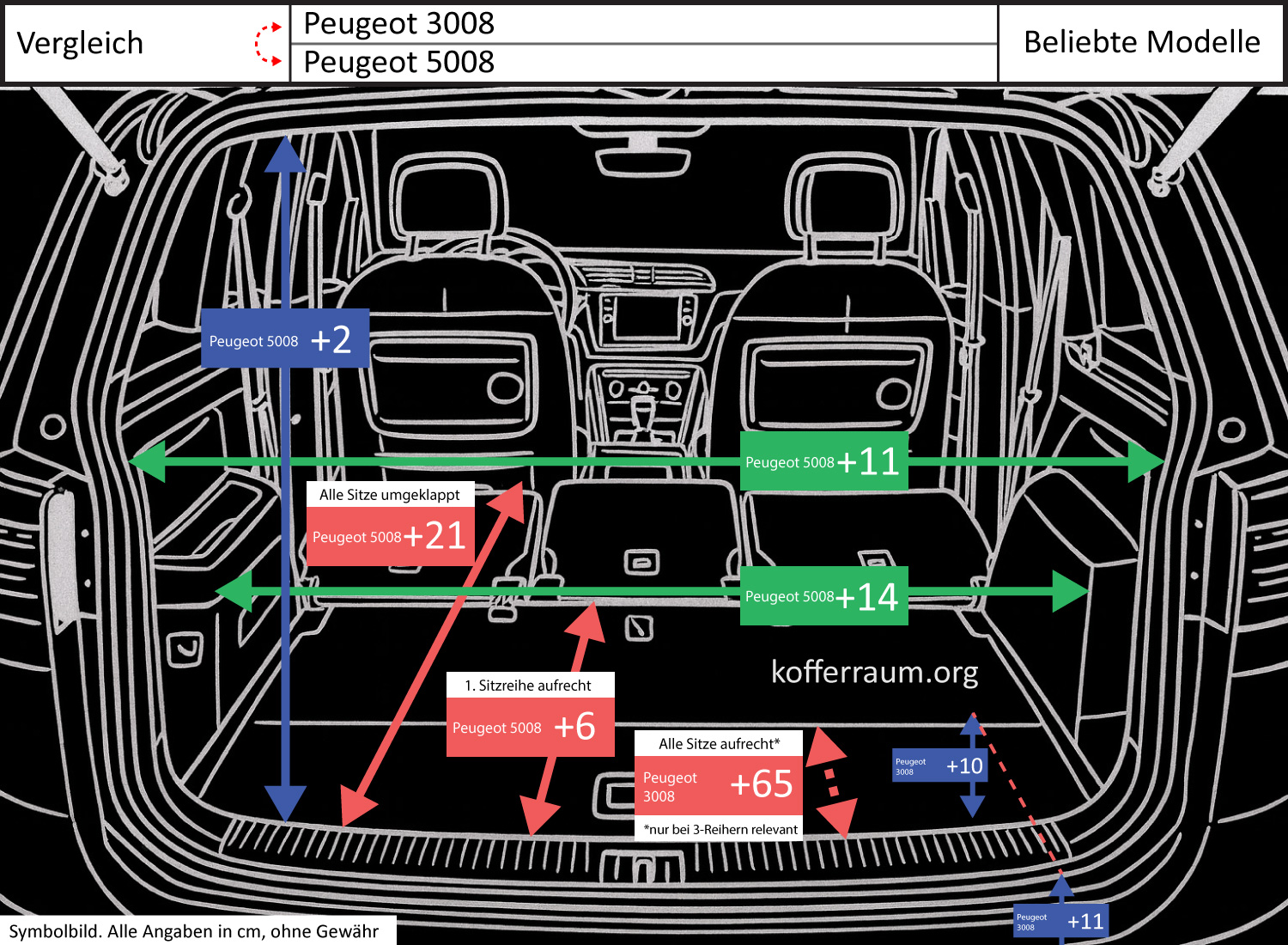
The Peugeot 5008 offers a longer cargo area with the seats folded down: +8.3 in (13%) longer trunk than the 3008, which facilitates loading longer items with the seats folded.
In contrast, the Peugeot 3008 has a significantly larger cargo space with the seats upright: +25.6 in (191%) longer trunk than the 5008, because the 5008 additionally has a third row of seats and therefore significantly less usable length in the trunk remains when all seats are in use.
The depth of the trunk (loading edge to trunk floor) is significantly greater in the 3008: +3.9 in (1000%), indicating more vertical space in the trunk floor.
The loading edge of the 3008 is also +4.3 in (16%) higher above the road than that of the 5008. Finally, the 5008 offers more space for wide items at its narrowest points: +5.5 in (14%) interior width at the narrowest point and a +4.3 in (11%) wider trunk opening compared to the 3008.
Impact on Usability
For long, flat loads with the seats folded down, the 5008 is advantageous due to the additional loading length — for example, when transporting roof battens, skateboards, or long furniture parts.
The greater width of the 5008 at the narrowest point and the larger opening also make it easier to load wide or bulky items.
Those who regularly use all seats (family operation with third row) benefit from significantly more usable trunk length with the seats upright in the 3008. This makes the 3008 more practical if the third row in the 5008 is often needed and luggage still needs to be carried.
The greater depth and higher loading edge of the 3008 mean more usable volume below the loading edge, but also more lifting and tilting effort when loading heavy items — loading and unloading can be less convenient. The 5008 with its lower loading edge is more ergonomic when lifting heavy suitcases or boxes.
In short: 5008 = better for long and wide loads with folded seats and easier loading and unloading; 3008 = more usable length with seats upright and more interior depth, but higher loading edge and thus potentially worse handling of heavy loads.