
Trunk comparison: Peugeot 3008 vs Skoda Superb Wagon
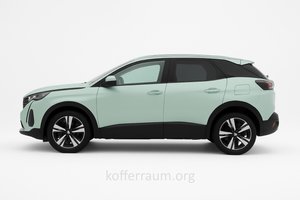
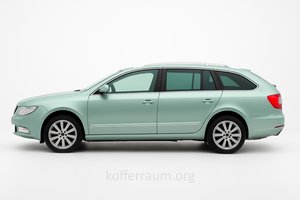
Key Differences
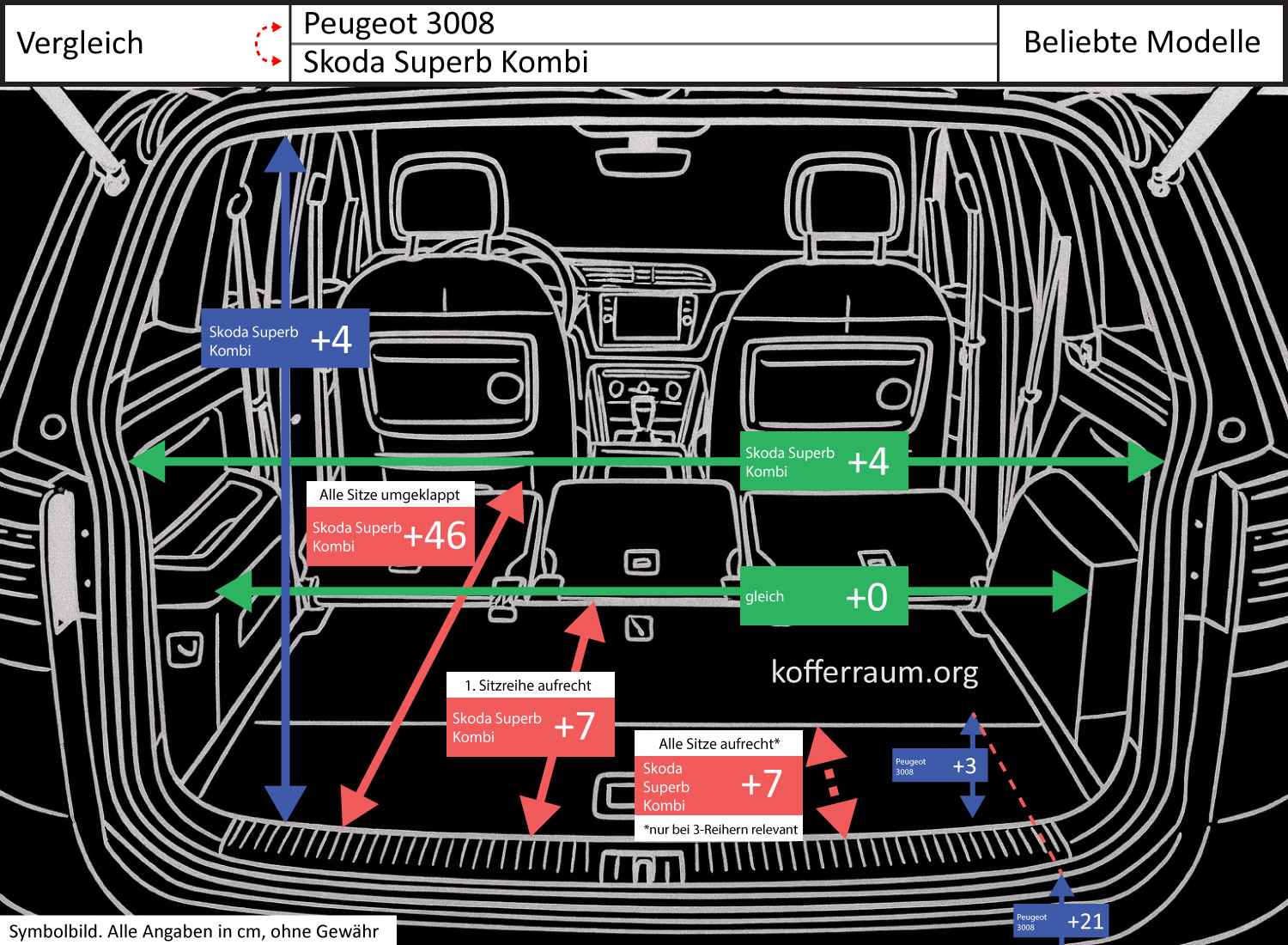
The most noticeable differences concern length and loading height: The Škoda Superb Wagon offers +18.1 in (28%) more cargo space with the seats folded down than the Peugeot 3008. In the Peugeot, the depth between the loading edge and the trunk floor is 1.2 in (38%) greater, and the loading edge itself is 8.3 in (36%) higher above the road than in the Škoda.
Smaller deviations: with the first row of seats upright, the Superb has +2.8 in (7%) more cargo area, the trunk opening is +1.6 in (5%) higher and +1.6 in (4%) wider on the Superb; the narrowest interior width is the same in both.
Impact on Usability
The greater loading length in the Superb (28%) makes it clearly better for long or flat cargo: furniture parts, long boards, slatted frames, or several stacked boxes are easier to load, especially when the rear seats are folded down. Rollable or elongated items also benefit from the additional length.
The significantly higher loading edge of the Peugeot (+8.3 in) increases the effort required to lift large or heavy loads and makes frequent loading and unloading less practical — especially for bulky crates, strollers, or heavy tools.
Combined with the greater depth between the loading edge and trunk floor (+1.2 in / 38%), the load sits deeper in the Peugeot, which on one hand allows stacking items slightly higher behind the opening, but on the other hand does not improve the poor leverage/accessibility: lifting over the high loading edge remains more strenuous.
Width and opening dimensions differ only slightly. The slightly larger opening height and width of the Superb (+1.6 in each) are minor advantages; the interior width at the narrowest point is the same in both, so wide items fit similarly in both.
Conclusion: For transporting long and frequently changing loads, the Škoda Superb Wagon is overall more practical.
For occasional transports where a bit more interior floor depth is useful, the Peugeot can be suitable — however, the significantly higher loading edge makes it less comfortable for frequent or heavy loading and unloading.