
Trunk comparison: Peugeot 308 SW 3-row vs Skoda Karoq
Key Differences (highlighted)
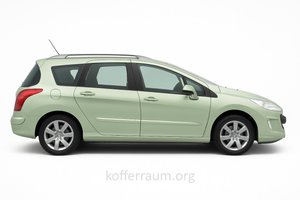
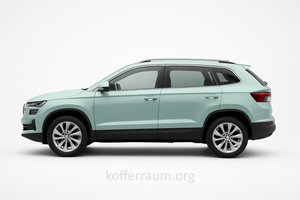
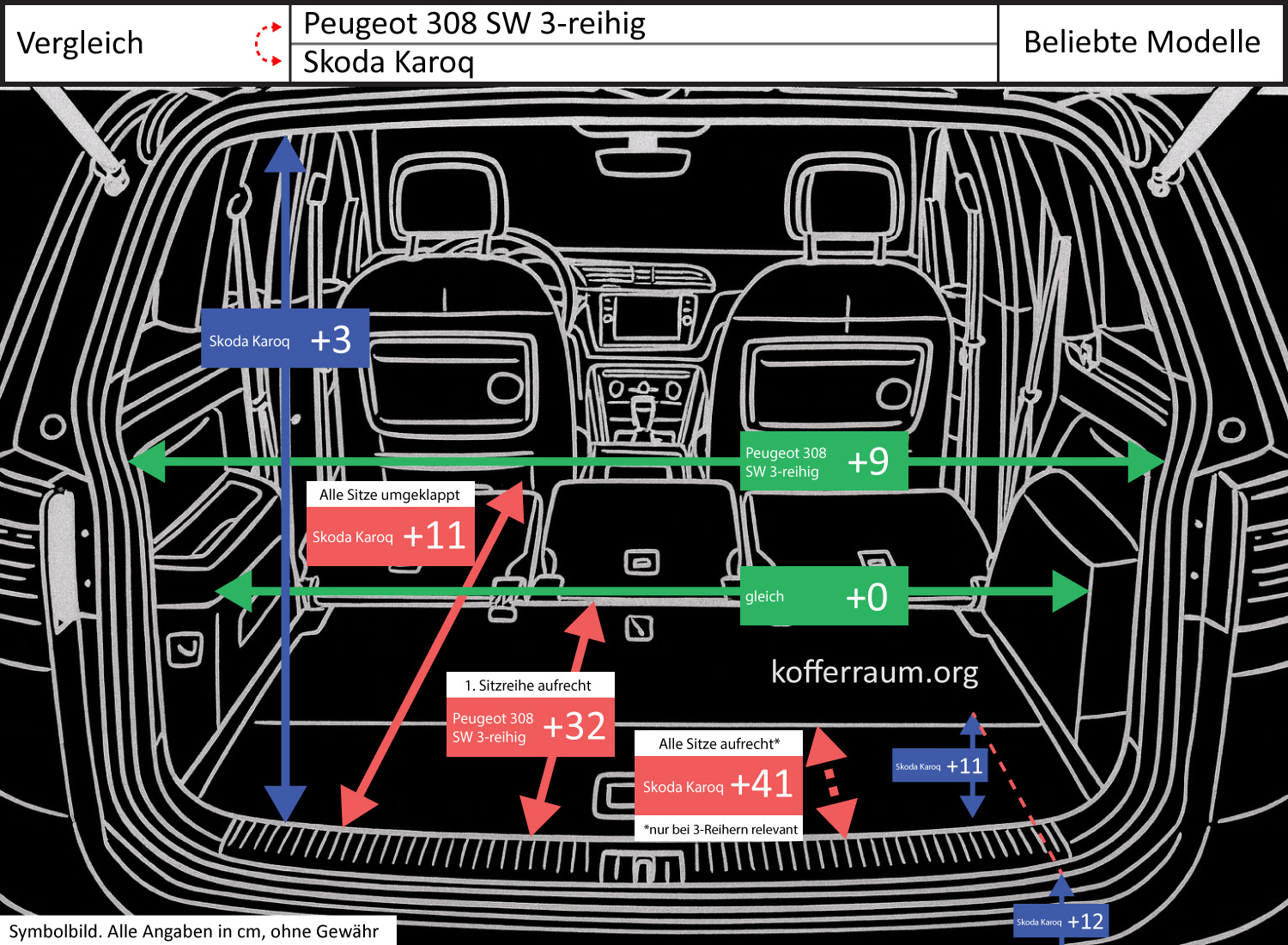
Four differences stand out clearly from the data: The Peugeot offers significantly more cargo length with the first row upright (+12.6 in / +42%), while the Škoda provides a significantly longer trunk with all seats upright (+16.1 in / +117%) when fully occupied.
Additionally, the trunk depth (loading edge to floor) is much greater in the Škoda (+4.3 in / +275%), and the Škoda's loading edge is higher above the ground (+4.7 in / +21%).
What are the implications for usability?
Peugeot 308 SW 3-row: Due to the significantly greater cargo length with the first row upright, the Peugeot is better suited for transporting long items when the rear rows are folded down or not needed (e.g., furniture parts, slatted frames, long rolls).
The lower loading edge of the Peugeot also makes lifting heavy items into the cargo area easier.
Škoda Karoq: With significantly more cargo space when all seats are upright, the Karoq is the more practical choice for trips with full occupancy and luggage needs (family vacations, transporting suitcases behind the last row).
The greater trunk depth offers more vertical space and stability for bulky or tall loads. At the same time, the higher loading edge makes loading heavy items more strenuous — a disadvantage if frequently lifting heavy loads.
Common points: The width at the narrowest point is the same, and the opening width is slightly larger in the Peugeot (+3.5 in / 9%) — however, these differences are below the 10% threshold and thus less significant for the usability decision.
Brief recommendation: Those who often travel fully occupied with luggage benefit more from the Škoda Karoq; those who more frequently transport long items or need a lower loading edge for easier loading are better served by the Peugeot 308 SW 3-row.