
Trunk comparison: Seat Ibiza vs Seat Leon
Main Differences
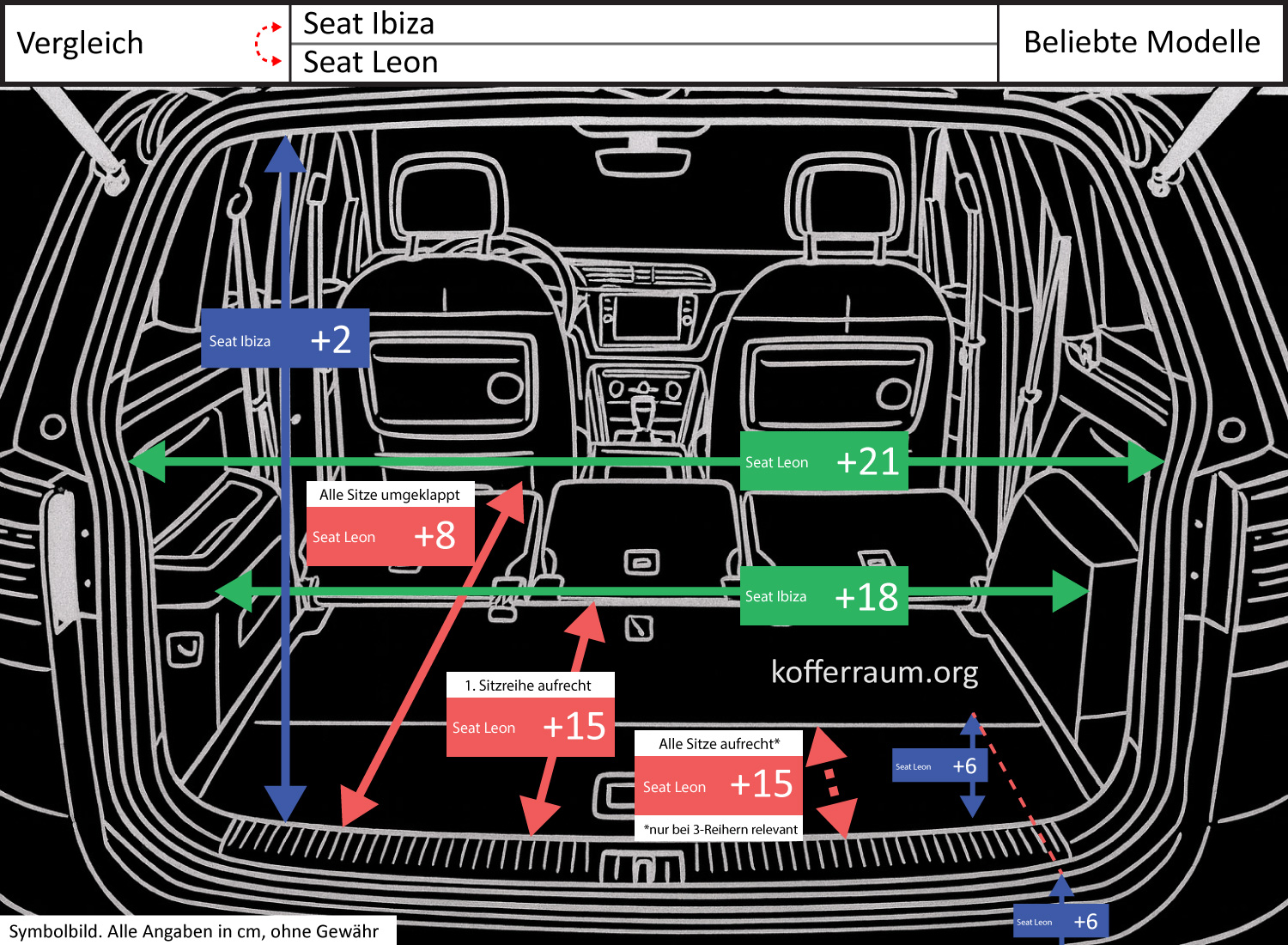
When comparing both models, four differences stand out clearly: The Seat Leon offers a cargo space length that is 5.9 in (22%) longer with the rear seats upright than the Ibiza, the trunk depth (distance from loading edge to trunk floor) is 2.4 in (32%) greater in the Leon, the width at the narrowest point is 7.1 in (22%) greater in the Ibiza than in the Leon, and the width of the trunk opening is 8.3 in (24%) greater in the Leon than in the Ibiza.
Impact on Usability
Consequences of these differences in practice:
- Longer cargo space with upright seats (Leon): The Leon transports longer items without folding down the rear seats (e.g., skis, long packages). For users who regularly carry long items with full seating occupancy, the Leon is more practical.
- Deeper cargo space (Leon): More depth means more room lengthwise and often more volume for tall or stacked cargo. However, a deeper cargo space combined with a slightly higher loading edge can make loading and unloading heavy items more difficult.
- Greater narrowest interior width (Ibiza): The Ibiza accommodates significantly wider items at its narrowest point (7.1 in more). For bulky, wide parts or several suitcases side by side, the Ibiza is advantageous.
- Wider opening (Leon): The significantly larger trunk opening of the Leon makes it easier to slide in bulky or wide items. However, combined with the narrower interior width, it can happen that an item fits through the opening but cannot be optimally positioned inside.
In short: The Leon is better suited for elongated and deep-stackable cargo as well as easier loading through the opening; the Ibiza is better when maximum usable interior width matters. Smaller differences (e.g., +2.4 in with folded seats or +0.8 in opening height) are of little relevance for everyday usability.