Trunk comparison: Seat Leon vs Durchschnitt SUV

Main Differences
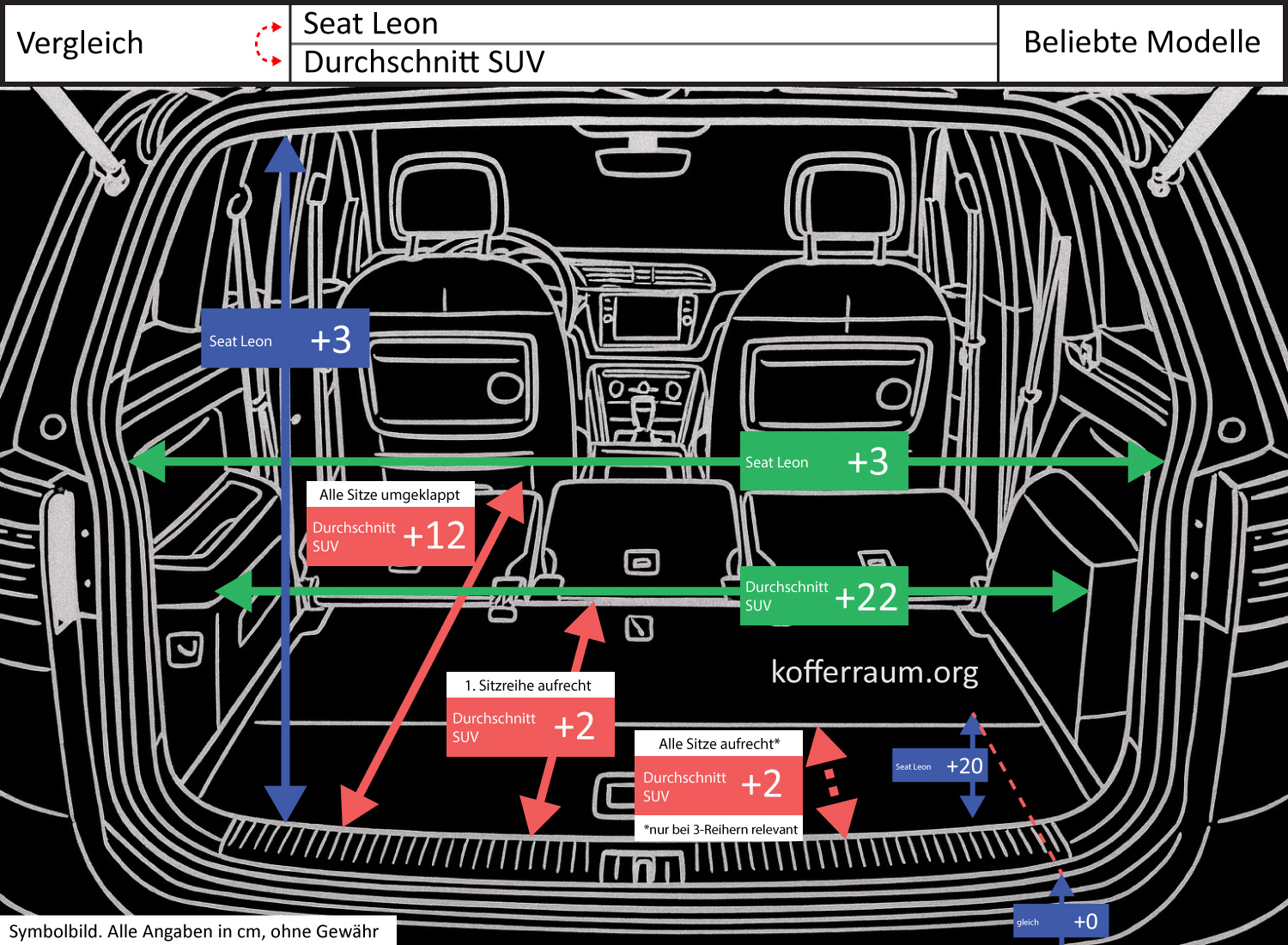
The two most significant differences lie in the depth of the trunk and the minimum interior width:
- Depth (loading edge → trunk floor): Seat Leon is +7.9 in (≈400%) deeper. This means a significantly deeper cargo well in the Leon.
- Width at the narrowest point: Average SUV is +8.7 in (≈27%) wider. SUVs thus offer noticeably more space for wide items inside the trunk.
Other, smaller differences (under 10%) are: the folded-down cargo space in the SUV is about 4.7 in (8%) longer, the trunk opening height of the Leon is about 1.2 in (4%) higher, the opening width of the Leon is about 1.2 in (3%) larger, and the loading edge height of both vehicles is the same.
Impact on Usability
The significantly greater depth in the Seat Leon creates a deeper cargo well, which means:
- bulky but rather narrow or tall items can be better recessed near the floor (more stable storage, less shifting),
- more usable volume near the floor is created, which is advantageous when transporting boxes or stacked items,
- lifting heavy items when loading/unloading can be slightly more difficult because they must be lifted or lowered further down — although the loading edge height is the same, the load sits deeper.
The significantly greater minimum width in the average SUV leads to the following practical advantages:
- wider items (e.g., strollers, wide boxes, parts of furniture) fit more easily or can be transported lying flat,
- there is more room when unloading from the side or pushing bulky parts, making securing and storing easier.
Conclusion: Those who often transport wide, bulky items benefit more from the SUV due to the larger interior width. Those who frequently want to safely store taller or stacked loads near the floor have advantages in the Seat Leon thanks to the significantly deeper cargo well.
Other differences (length with folded seats, opening height, opening width) are minor and only marginally affect everyday use.