
Trunk comparison: Seat Leon vs Volvo XC40

Key Differences
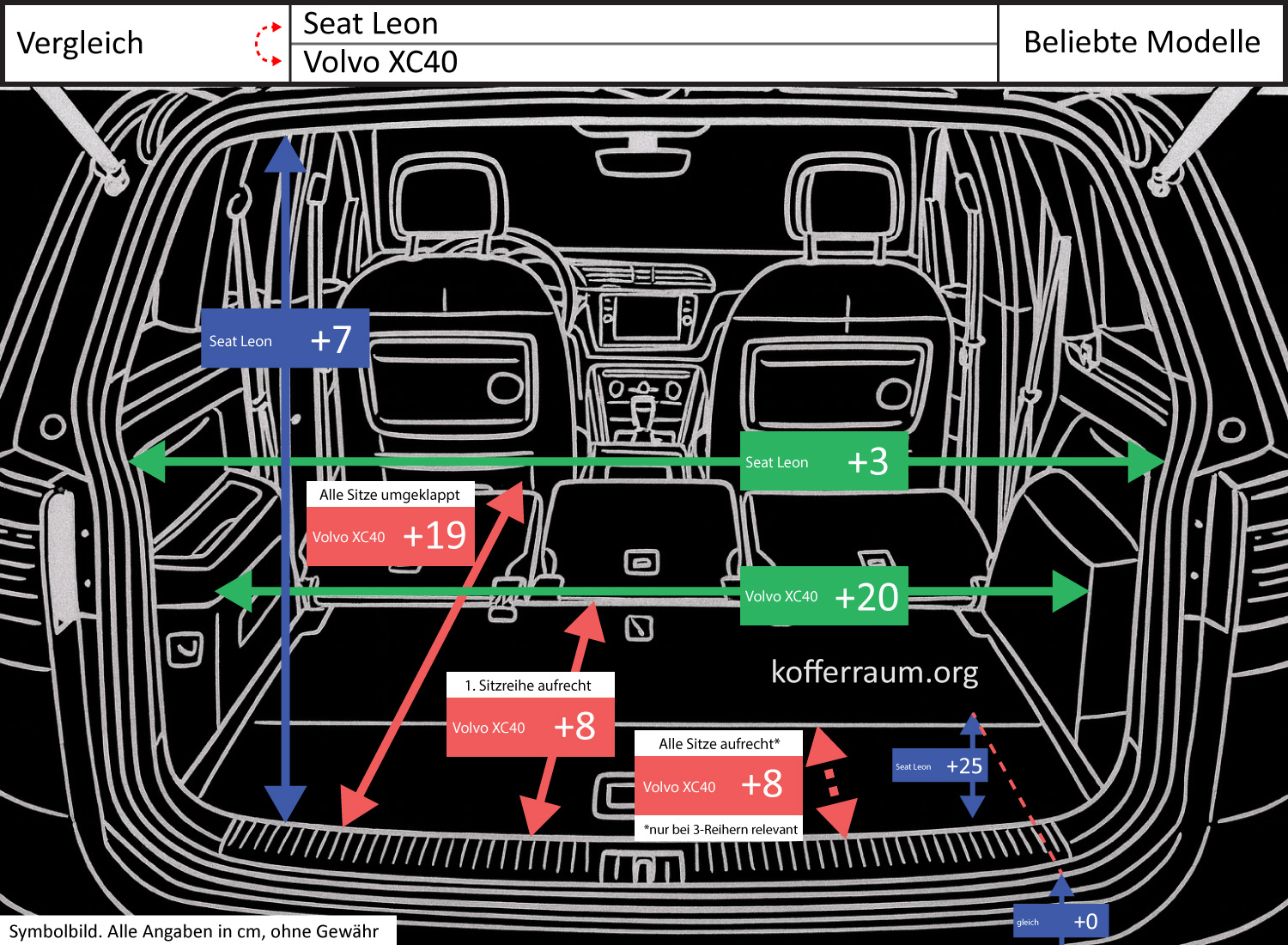
Looking at the cargo area, three differences stand out: The Volvo XC40 offers a cargo floor length that is 7.5 in (≈13%) longer with the seats folded down, the interior width at the narrowest point is 7.9 in (≈25%) larger in the Volvo, and the Seat Leon has a significantly greater depth between the loading edge and trunk floor – by 9.8 in (≈2400%).
Other, smaller deviations: With the first row of seats upright, the Volvo is 3.1 in (≈10%) longer, the height of the trunk opening is 2.8 in (≈10%) larger in the Seat, and the width of the trunk opening is 1.2 in (≈3%) larger in the Seat. The loading edge height is the same for both vehicles.
What are the implications of these differences for usability?
The combination of a longer cargo floor with folded seats and greater interior width makes the Volvo XC40 more practical for long or wide cargo: long slats, furniture parts, skis, or several large suitcases can be more easily accommodated and positioned side by side.
Loading bulky, flat items is also easier in the Volvo.
The significantly greater depth in the Seat Leon means there is more "drop depth" behind the loading edge. This is advantageous when smaller, stackable, or deeper-lying items (groceries, boxes) need to be stored securely and out of sight.
However, the greater depth can make lifting heavy loads somewhat more cumbersome because more vertical space must be overcome, and longer items are less likely to fit well due to the shorter overall length with seats folded down.
Because the loading edge is at the same height, the loading height is similar for both models; larger differences arise more from shape and interior dimensions.
In short: Volvo scores with length and width for bulky or long cargo, while Seat offers advantages through the deep cargo well for secure and concealed storage of smaller loads.