
Trunk comparison: Skoda Elroq vs Durchschnitt Subcompact


Key Differences and Impact on Usability
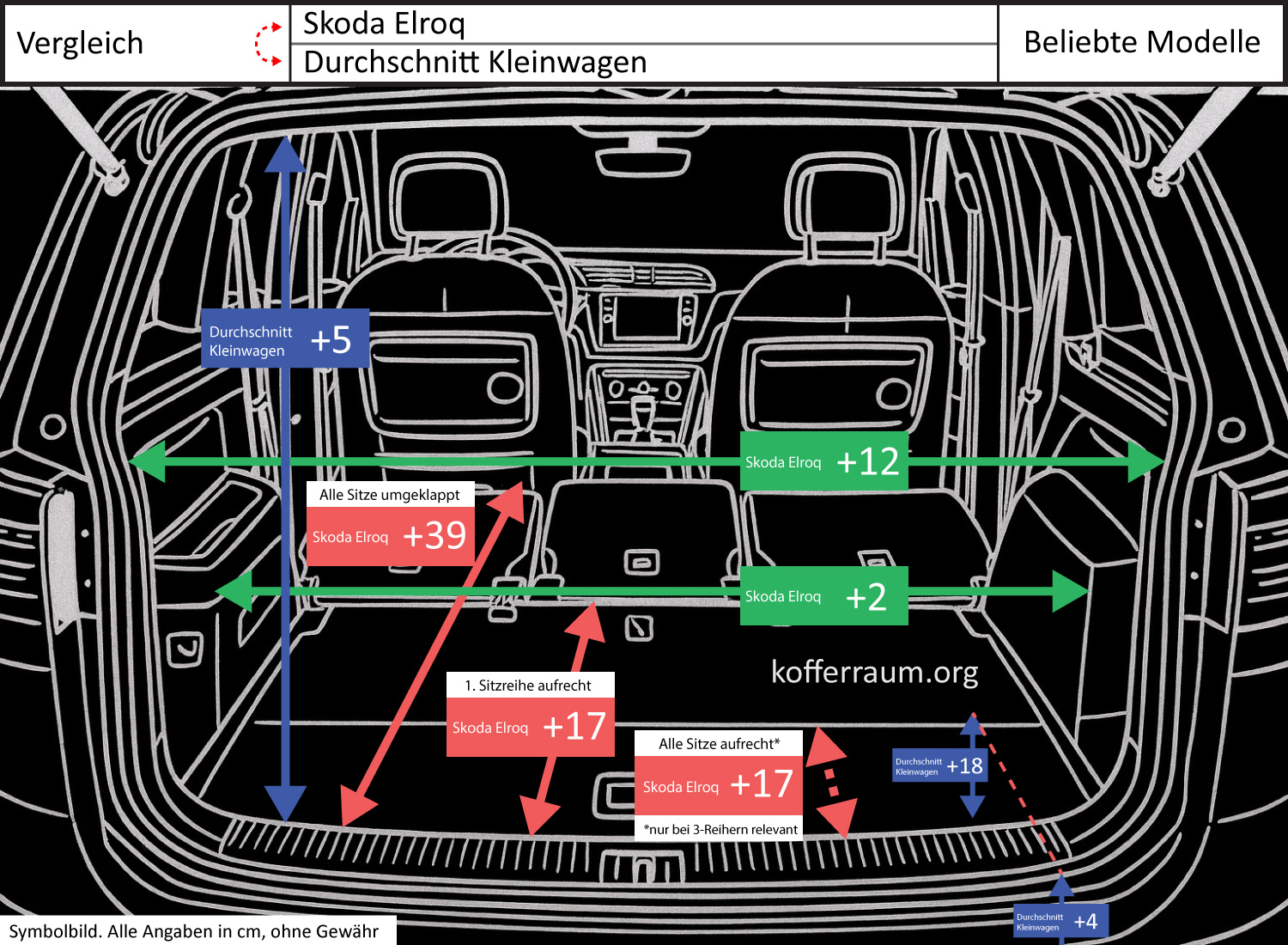
The Škoda Elroq offers a cargo area that is
with the seats folded down and a trunk that is
with the first row of seats upright compared to the average subcompact. Practically, this means longer items (e.g., slats, skis, furniture parts) can be transported more easily and often completely without complicated rearranging; the continuous cargo floor is clearly advantageous for long loads. The trunk opening of the Elroq is
, making it easier to maneuver bulky or wide items in and out. Combined with the longer cargo floor, this noticeably increases everyday and vacation practicality. There is a significant difference in depth (loading edge to trunk floor): the average subcompact is
here. Functionally, this means the Elroq’s trunk floor is significantly closer to the loading edge — an advantage when loading heavy items (smaller step, less lifting), but a possible disadvantage with very deep or bulky loads, as there may be less depth available behind the loading edge. The unusually high percentage indicates a very large relative difference in floor height and leads to distinctly different handling when loading. Smaller differences that hardly matter: the opening height of the average subcompact is 2 in (≈7%) higher and the loading edge is on average 1.6 in (≈6%) higher above the road; the narrowest trunk width differs by only about 2% in favor of the Elroq. These values have limited practical consequences in everyday use. In summary: The Elroq is better suited for long and wide loads as well as easy handling of heavy items due to the longer cargo floor, larger opening, and lower floor height at the loading edge. Average subcompacts, on the other hand, sometimes offer more depth behind the loading edge and a slightly higher opening, which can be advantageous for very deep or tall loads.