
Trunk comparison: Skoda Karoq vs Durchschnitt SUV


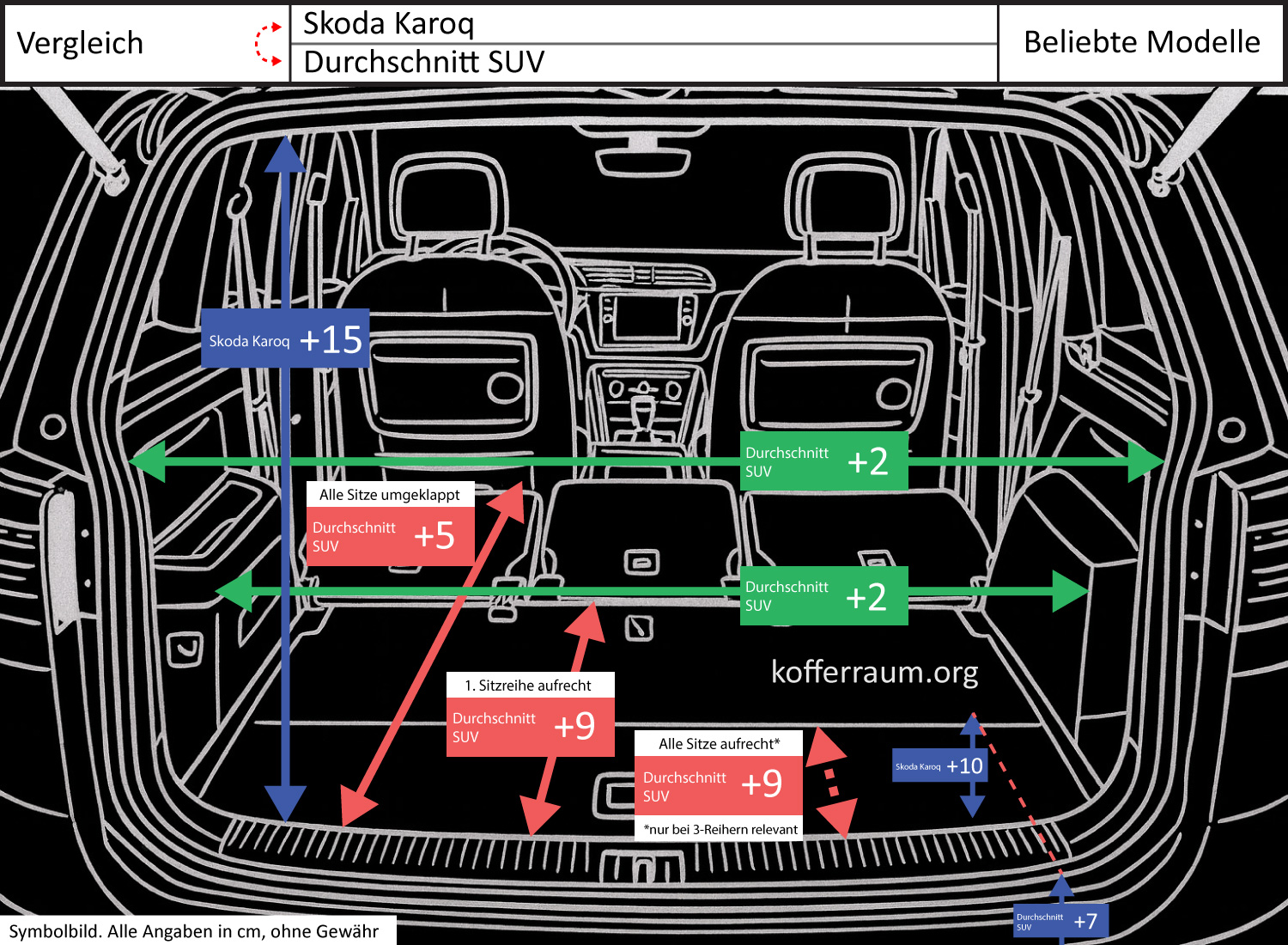
Key Differences (>10%)
The comparison shows three notable deviations: First, the average SUV has a larger cargo space lengthwise with the front seats upright: +3.5 in (≈12%) compared to the Karoq. Second, the trunk opening of the Karoq is significantly higher: +5.9 in (≈19%) compared to the average.
Third, the depth of the trunk between the loading edge and trunk floor in the Karoq is significantly greater: +3.9 in (≈200%), meaning substantially more usable vertical space.
What this means for usability
The longer usable depth with the first row upright in the average SUV makes it more practical for long, flat items that need to be transported without folding down the seats (e.g., slats, longer luggage, or sports equipment).
The Karoq scores points because it offers a higher opening and significantly greater vertical depth: this makes loading taller or bulkier items easier and allows better stacking in the cargo area. Practically speaking, bulky boxes, crates, or tall items fit more easily in the Karoq and are easier to handle.
There is also an ergonomic factor: the loading edge of the Karoq is lower (the average is about 2.8 in higher here), which simplifies lifting heavy loads — a clear advantage for frequent loading and unloading.
Small width differences (±0.8 in) and the folded length differences (≈3%) are negligible for most everyday cases.
Conclusion: Those who frequently transport long, flat items benefit more from the average SUV. Those who often carry bulky, tall, or stacked cargo and value easy loading and unloading have the more practical solution with the Škoda Karoq.