
Trunk comparison: Tesla Model 3 vs Durchschnitt Compact SUV

Key Differences
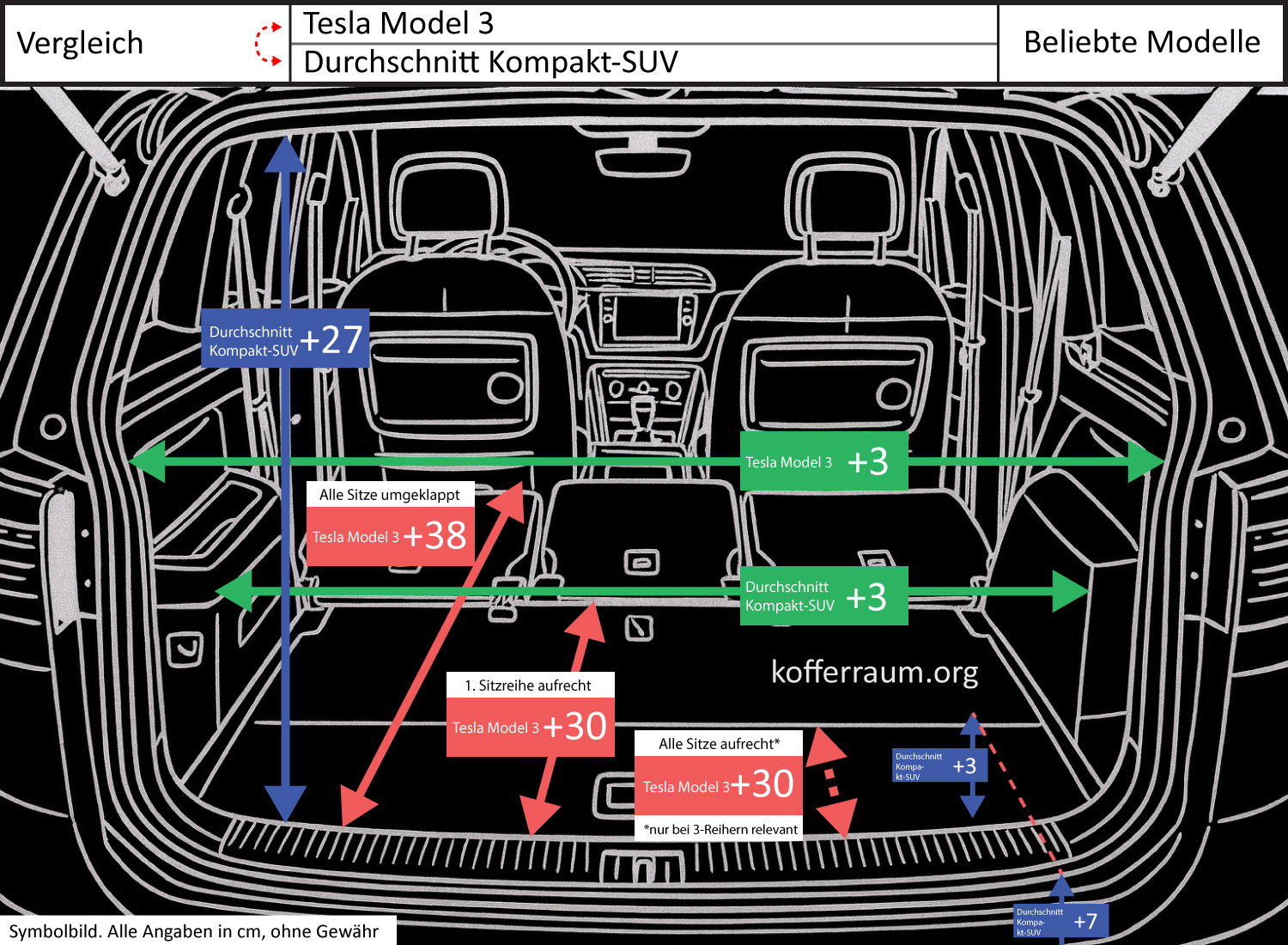
The Tesla Model 3 offers significantly more loading length: with the seats folded down, the trunk is 15 in (26%) longer, and with the front row upright, it is 11.8 in (39%) longer than the average compact SUV.
In contrast, the average compact SUV has a considerably higher trunk opening and more vertical space: the height of the trunk opening is 10.6 in (52%) higher and the depth from the loading edge to the trunk floor is 1.2 in (27%) greater than in the Model 3. Smaller differences in width (±1.2 in) and loading edge height (+2.8 in / 10% in favor of the SUV) exist but are below or at the 10% mark and are less significant.
Impact on Usability
The greater loading length of the Model 3 makes the vehicle more practical for long items (e.g., slats, skis, long boxes, or furniture parts), especially when the rear seats are folded down: such goods can often be loaded flat and without much rearranging.
For transports that primarily require length or where the load should be flat and stretched out, the Model 3 is therefore more advantageous in everyday use.
The compact SUV, on the other hand, is better suited for bulky or tall cargo: the higher trunk opening and greater depth from the loading edge to the floor make it easier to load tall items, stack boxes, and load bulky, tall goods.
Those who frequently travel with suitcases, boxes, or larger, bulky items benefit from the additional vertical space and the deeper cargo floor.
Practical consequence of the loading edge height: The SUV’s loading edge is slightly higher (+2.8 in / 10%), which makes lifting heavy items over the edge somewhat more strenuous; the Model 3 sits lower here and is somewhat more ergonomic when lifting items in.
Width differences of about 1.2 in are hardly noticeable and have little impact on everyday use.