Trunk comparison: Tesla Model 3 vs VW Passat Wagon
Key Differences
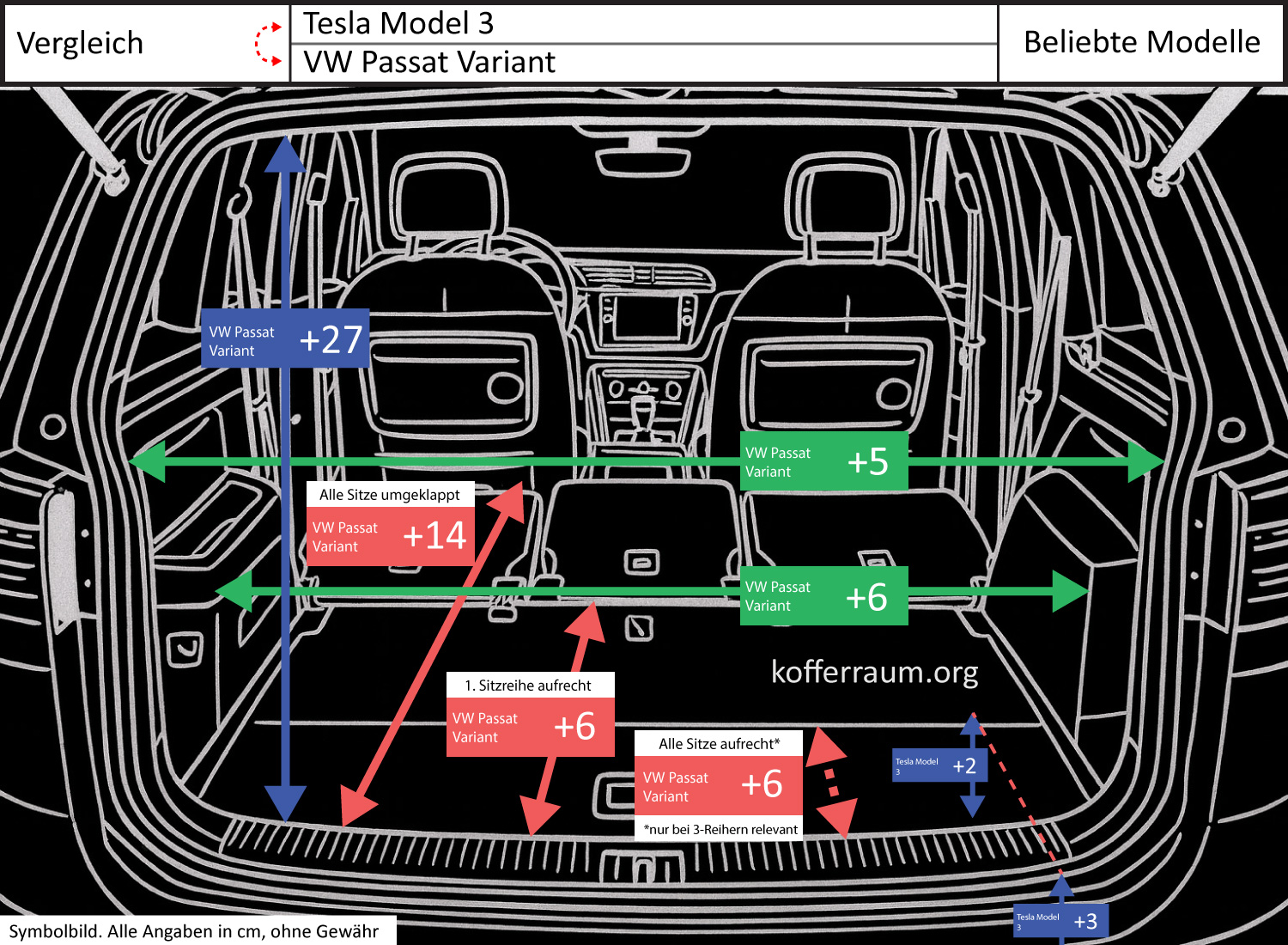
The trunk opening of the VW Passat Wagon is significantly higher (+10.6 in / +52%). This means: tall or bulky items can be loaded more easily in the Passat and are less likely to get stuck at the opening.
For crates, boxes, or furniture pieces, the vertical clearance is noticeably greater, making loading and unloading more ergonomic.
The depth of the trunk (loading edge to trunk floor) is 0.8 in or 22% greater in the Tesla Model 3.
Practically, this means the Tesla has a deeper trunk bed – an advantage when stacking volume goods or hiding luggage below the loading edge. However, the cargo sits lower, which can make reaching heavy items on the floor more difficult.
Additional Differences and Implications for Usability
The loading length with folded seats is 5.5 in (7%) longer in the Passat, and with the first row of seats upright, it is 2.4 in (6%) longer. These differences are functionally present but moderate: very long items fit better in the Passat, while for many everyday items the advantage is small.
The narrowest trunk width is 2.4 in (6%) greater in the Passat, and the width of the opening is 2 in (5%) wider — here too, these are slight advantages for the Passat when loading wider items, but they do not represent dramatic limitations for the Tesla.
The loading edge of the Tesla is 1.2 in (5%) higher above the road. This slightly increases the effort required to lift heavy suitcases in and makes loading and unloading less comfortable than in the Passat.
Conclusion
For frequent loading of tall or bulky items, the VW Passat Wagon is the more practical choice due to its significantly higher trunk opening and generally somewhat larger opening dimensions.
The Tesla Model 3 offers advantages with its deeper trunk floor when stacking and using interior volume but makes handling heavy items a bit more cumbersome. Those who regularly transport tall or bulky cargo: Passat. Those who value a deeper loading bed and compact, low-placed luggage: Tesla.