
Trunk comparison: Toyota Corolla Wagon vs Volvo XC60


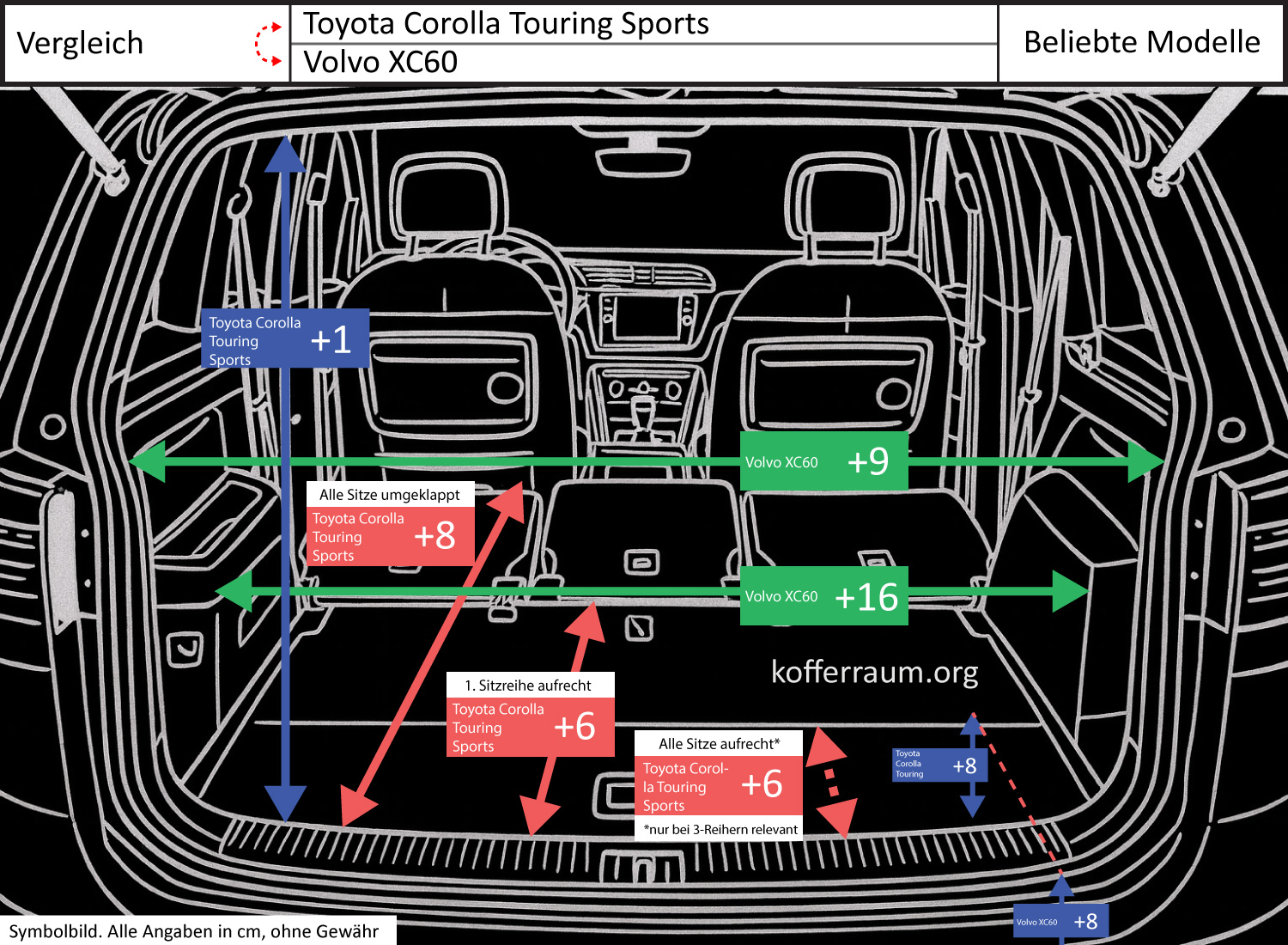
Key Differences
The Toyota Corolla Touring Sports offers a significantly lower trunk sill between the loading edge and the trunk floor (
) – this means a noticeably deeper trunk compartment behind the loading edge. In contrast, the Volvo XC60 has a higher loading edge above the road surface (
), and the trunk is wider at its narrowest point (
) than the Toyota.
Impact on Usability
The greater depth in the Toyota creates a "depression" in the cargo space where bulky or tall items can be partially recessed; this increases effective cargo space utilization for flat, long, or irregular loads and helps prevent easier shifting. Because the Toyota's loading edge is lower than the Volvo's, loading heavy items is easier (less lifting height). The higher loading edge in the Volvo, on the other hand, requires a bit more lifting effort when loading. The greater minimum width in the Volvo improves storing wide items and placing luggage side by side – for bulky, wide loads, the XC60 is more practical. Smaller differences such as the slightly greater overall length of the Toyota with folded seats (+4%) or with the rear seat upright (+6%) as well as the slightly wider trunk opening in the Volvo (+9%) are less critical in everyday use but can be relevant in individual cases with very long luggage or through-loading. Conclusion: For easier lifting and better storage in a deeper cargo well, the Toyota is advantageous; for wider loads, the Volvo is better suited.