
Trunk comparison: Volvo V90 vs VW Passat Wagon
Core Differences and Their Impact on Usability
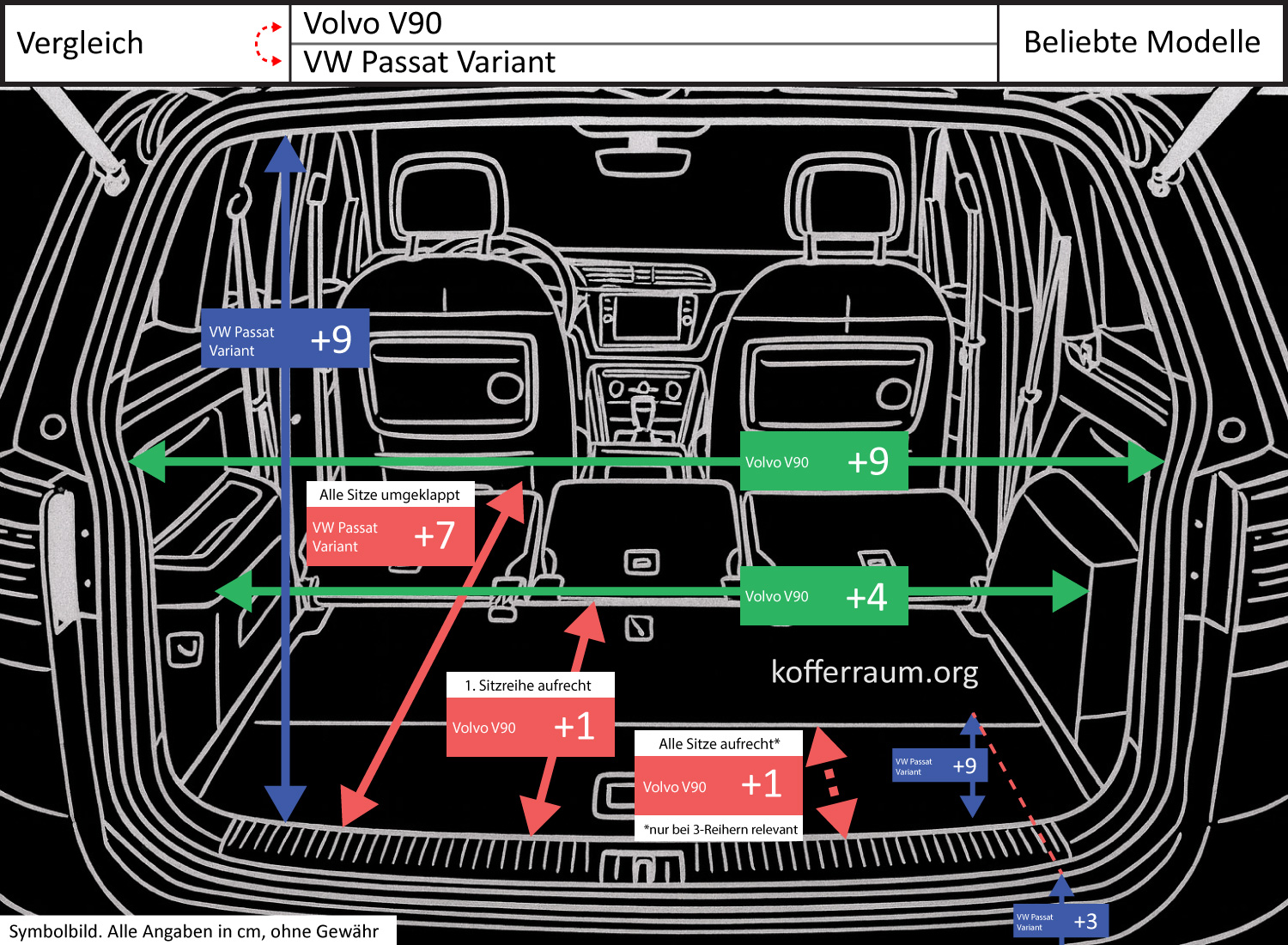
The VW Passat Wagon offers a significantly larger trunk opening and a notably deeper trunk floor than the Volvo V90.
, making it easier to load taller or bulky items vertically.
, meaning the loading floor sits lower and forms a noticeably deeper cargo well. These two differences work together: the Passat accommodates taller cargo better but requires more effort to lift items in (the loading edge is 1.2 in higher above the road) and makes reaching the trunk floor more difficult because the cargo well is deeper. The Volvo, on the other hand, has a flatter, more accessible loading surface and lower reach to the floor, which makes loading heavy or frequently lifted items overall easier. Additional, smaller differences also affect usability. With the seats folded down, the Passat is 2.8 in (4%) longer, while with the first row upright, the Volvo is 0.4 in (1%) longer — both figures are minor and result in comparable cargo space lengths in practice. The narrowest width of the cargo area is 1.6 in (4%) greater in the Volvo, and the width of the trunk opening is 3.5 in (9%) larger on the Volvo; this makes the Volvo more advantageous for wide, flat items, even though these differences are below the 10% threshold. Conclusion: Those who often load tall or very long cargo through the opening benefit from the Passat (larger opening and longer length with seats folded). Those who frequently load heavy, wide, or awkward items and value easy access to the trunk floor and less strain when lifting are better served by the Volvo V90.