
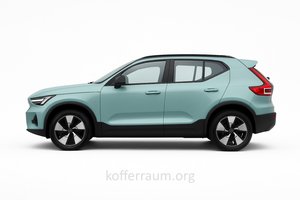
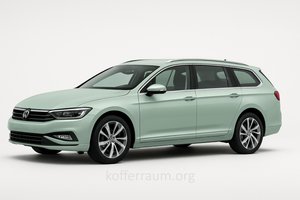
Trunk comparison: Volvo XC40 vs VW Passat Wagon
Key Differences
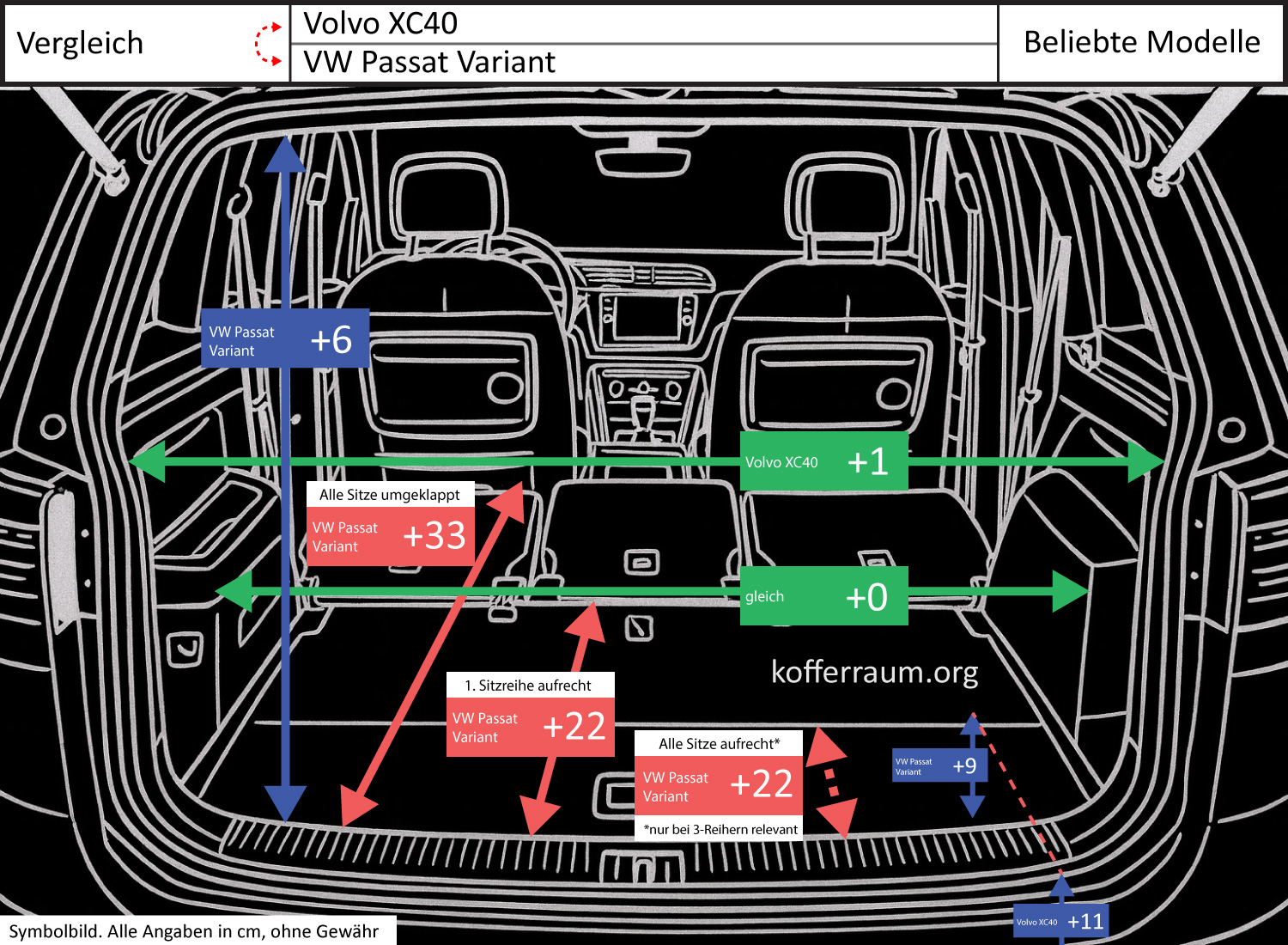
The VW Passat Wagon offers a longer cargo area with the seats folded down: +13 in (20%) more length than the Volvo XC40. Even with the front seats upright, the Passat is +8.7 in (24%) longer.
The depth of the trunk (distance from loading edge → trunk floor) is significantly greater in the Passat: +3.5 in (800%). The loading edge of the Volvo XC40, on the other hand, is +4.3 in (17%) higher above the road than that of the Passat.
Impact on Usability
The longer cargo area in the Passat (both with folded seats and with the front seats upright) makes it clearly more practical for long items such as slats, skis, furniture parts, or long boxes.
Those who regularly transport bulky or long cargo have more room in the Passat and need to fold down the rear seats less often.
The greater depth of the Passat means that the cargo floor lies further below the loading edge. Together with the lower loading edge height of the Passat, this makes loading heavy or bulky items easier: less lifting, easier sliding in, and often more usable volume below the trunk opening.
In the XC40, the higher loading edge requires more effort when lifting heavy loads and limits comfortable loading.
Width and narrow spots: The width at the narrowest point is the same in both models, and the trunk opening of the XC40 is only minimally wider (+0.4 in)—this has no relevant practical effect.
The slightly greater opening height of the Passat (+2.4 in, about 8%) is a small advantage when handling tall items but plays a minor role compared to the differences mentioned above.
Conclusion
For users who frequently transport long, bulky, or heavy cargo, the VW Passat Wagon is clearly more practical: more cargo length, deeper floor, and lower loading edge make loading easier and increase usable volume.
The Volvo XC40 remains a more compact alternative but offers significantly fewer practical advantages when transporting larger or heavier goods.