
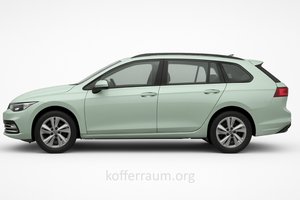
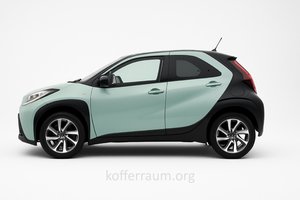
Trunk comparison: VW Golf Wagon vs Durchschnitt Subcompact
Key Differences
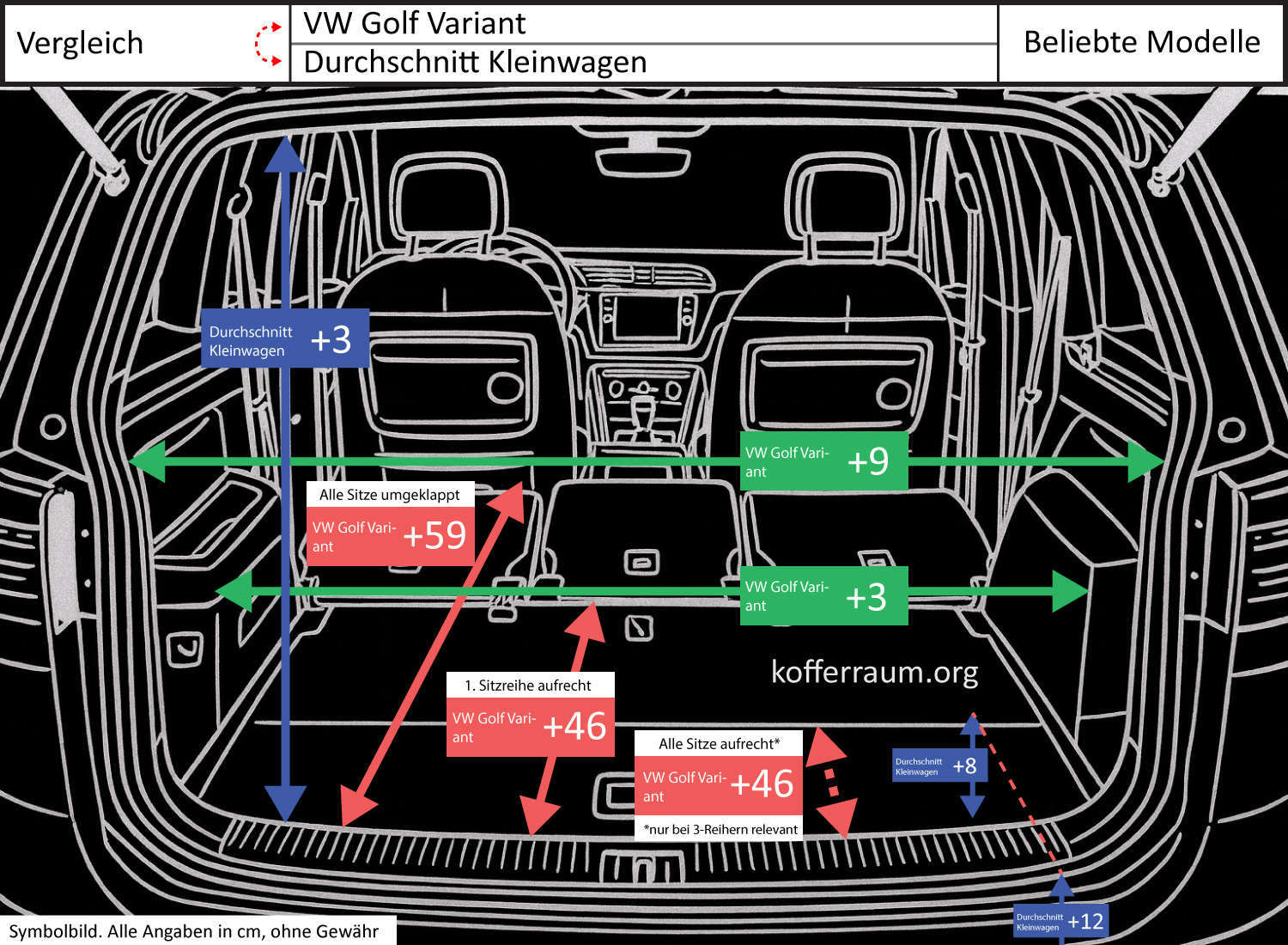
The VW Golf Wagon offers significantly more usable length: with the seats folded down, the trunk is 23.2 in (46%) longer, and with the front seats upright, it is 18.1 in (73%) longer than the average subcompact.
On the other hand, the average subcompact has a significantly deeper trunk area (loading edge to trunk floor): plus 3.1 in (73%) depth.
Additionally, the loading edge of the average subcompact is 4.7 in (20%) higher above the ground than that of the VW Golf Wagon. Smaller differences (e.g., opening and interior widths by 3–3.5 in) exist but do not exceed the 10% threshold.
What Impact Does This Have on Usability?
The significantly greater length of the Golf Wagon means practical advantages when transporting long items: slats, furniture parts, skis, or bulky boxes can be transported more easily and often without folding or adjusting the front seats.
Especially the large increase measured with the front seats upright makes the Golf Wagon more attractive when passengers remain seated in front.
The greater depth and higher loading edge of the average subcompact affect two areas: on one hand, more volume can be created directly behind the loading edge (useful when you want to securely store tall or stacked items in the deep trunk), on the other hand, loading and unloading heavy or bulky loads becomes less convenient.
A higher loading edge increases the effort needed to lift items into the trunk; a deeper loading floor makes it harder to reach and pull items out from the trunk floor.
In practice, this means: those who frequently transport long, flat, or bulky items (craftsman supplies, furniture, sports equipment) have a clear advantage with the VW Golf Wagon.
Those who rather need storage space directly behind the loading edge and rarely lift heavy loads can benefit from the deeper trunk of an average subcompact — but at the cost of higher effort when loading.