
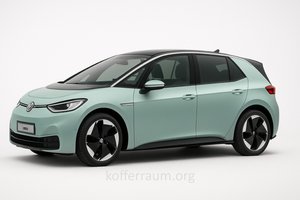
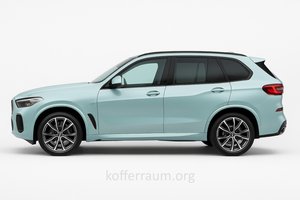
Trunk comparison: VW ID.3 vs Durchschnitt SUV
Key Differences
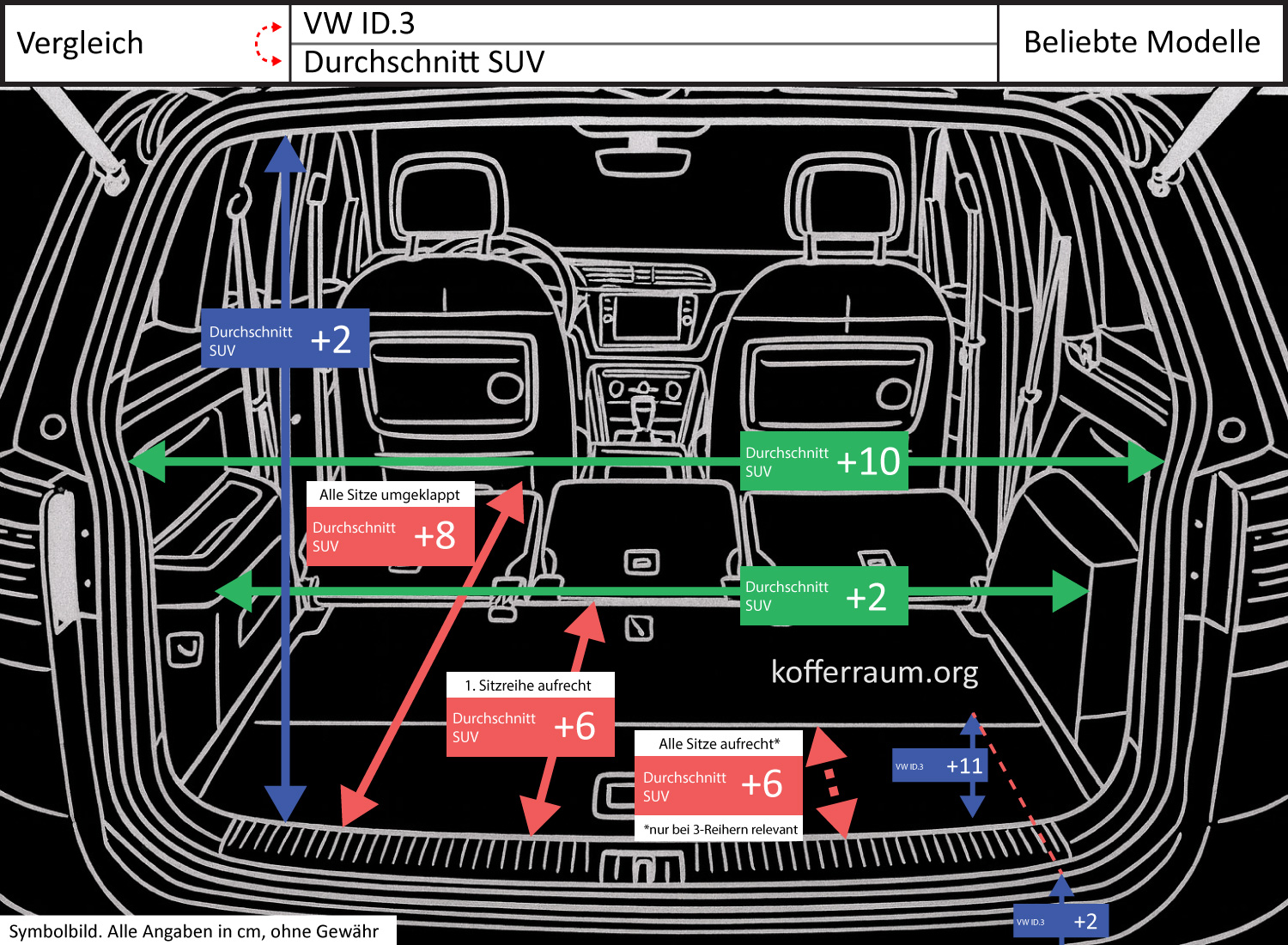
The average SUV offers a longer usable length in the trunk: with the seats folded down it is +3.1 in (≈5%) longer, and with the first row of seats upright it is +2.4 in (≈8%) longer than the VW ID.3. The trunk opening of the SUV is +3.9 in (≈10%) wider and +0.8 in (≈3%) taller; the narrowest point in the trunk is only slightly wider in the SUV (+0.8 in / ≈2%).
The loading edge of the ID.3 is slightly higher (+0.8 in / ≈3%) above the ground.
Notably, the depth of the trunk (loading edge to trunk floor): the VW ID.3 is +4.3 in (≈220%) deeper here than the average SUV.
Impact on Usability
The longer loading length of the SUV makes it better suited for long items like skis, slats, or furniture parts — when it comes to transporting flat-stretched or very long loads, the SUV has the advantage.
The wider trunk opening of the SUV (≈10% larger) also makes it easier to load wider or bulky items, giving the SUV a practical advantage, although the difference is just under 10%.
The significantly greater depth in the ID.3 (loading edge → trunk floor) means more "vertical space" behind the loading edge: suitcases, bags, or stacked items can be stored further below the loading edge, which improves volume when stacking higher and can reduce shifting.
At the same time, the loading edge of the ID.3 is slightly higher, which makes lifting heavy items a bit more strenuous, but the effect is small at +0.8 in.
In practice, this means: For bulky, long, or wide loads, the average SUV is usually the more practical choice; for everyday luggage, stacked shopping, or when a deeper cargo space (better depth behind the loading edge) is advantageous, the ID.3 offers clear benefits.
Smaller differences in opening height, narrowest width, and loading edge height are usually negligible in daily use but can be noticeable with special loads (very wide boxes, heavy furniture).