
Trunk comparison: VW Passat Wagon vs Durchschnitt Compact SUV

Key Differences (>10%)
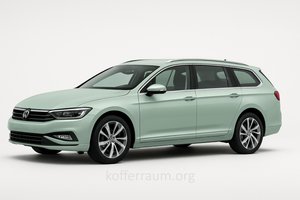
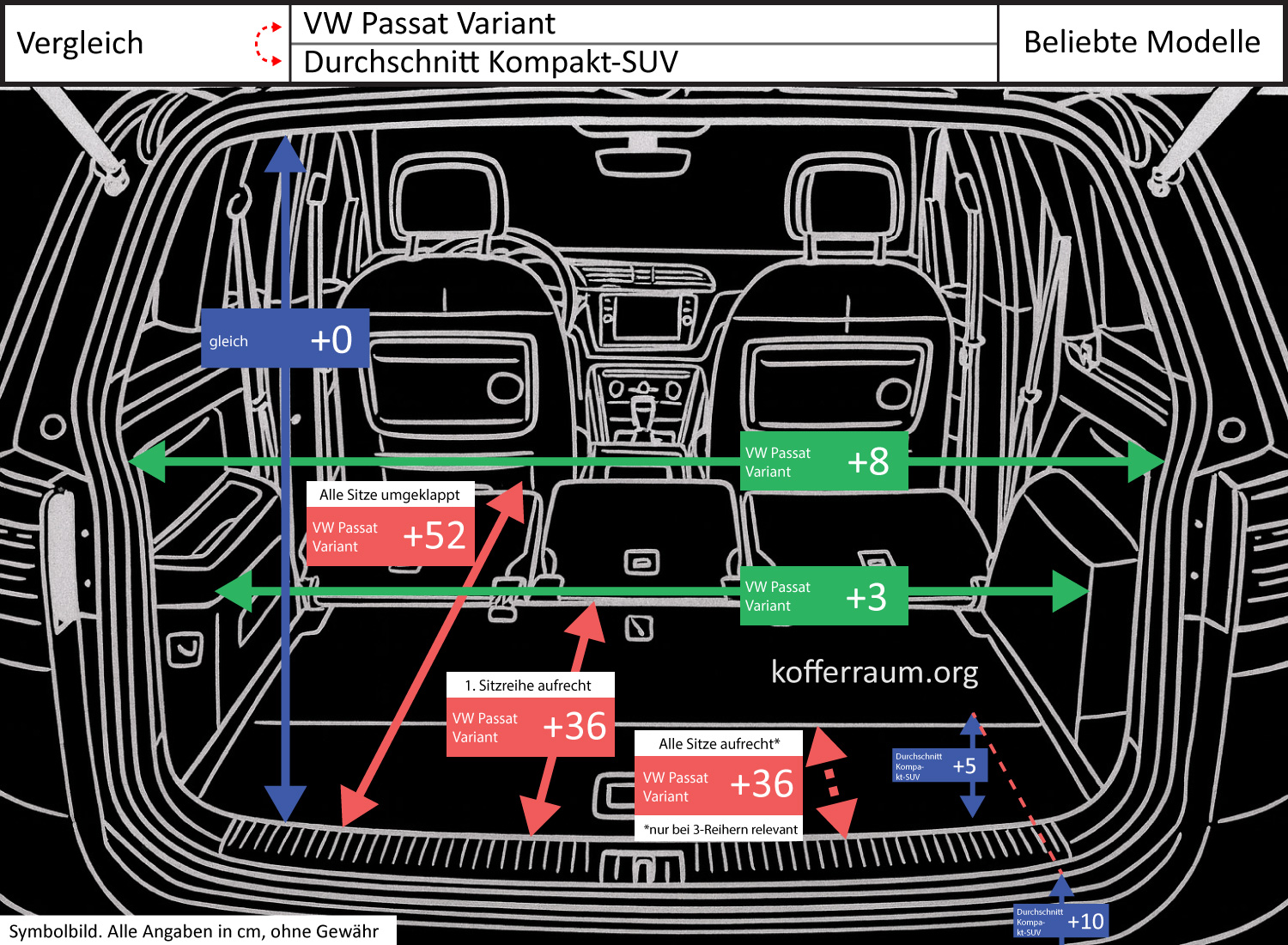
Longer cargo floor in the Passat: The VW Passat Wagon offers a cargo floor that is 20.5 in (35%) longer with the seats folded down and 14.2 in (47%) longer with the first row upright than the average compact SUV.
Greater interior depth and higher loading edge in the SUV: The average compact SUV has 2 in (56%) more depth from the loading edge to the trunk floor and a loading edge that is 3.9 in (16%) higher above the road than the Passat.
Practical Implications / Usability
The significantly longer cargo floor of the Passat makes it noticeably better suited for long or bulky items (slats, furniture parts, skis, long boxes).
Even with the rear seats normally occupied, longer items can be accommodated in the Passat — practical for tradespeople, DIY enthusiasts, or travelers with long luggage.
The compact SUV, on the other hand, offers a deeper interior recess and a significantly higher loading edge.
The higher loading edge makes lifting heavy items into the trunk more difficult compared to the Passat; however, the greater depth can provide a deeper "set" cargo volume, which is useful for transporting bulky but lower loads.
Due to the combination of a higher loading edge and greater depth, the trunk floor of the SUV sits slightly higher above road level than in the Passat, making loading and unloading heavy loads less back-friendly but potentially easier for loading and unloading stacks or boxes.
The trunk opening height is the same, meaning there is no difference in vertical clearance for very tall items.
Small width advantages favoring the Passat at narrow points (+1.2 in / 3%) and at the opening (+3.1 in / 8%) exist but fall below the 10% threshold and have only minor practical impact in most everyday situations — they slightly ease loading wide items but are not a decisive factor compared to the differences mentioned above.
In summary: For long, bulky cargo the Passat is clearly advantageous; for lower-lying, lower stacks and a higher trunk floor level (with pros and cons for lifting) the compact SUV may be suitable.