
Trunk comparison: VW T-Cross vs Durchschnitt Subcompact

Key Differences
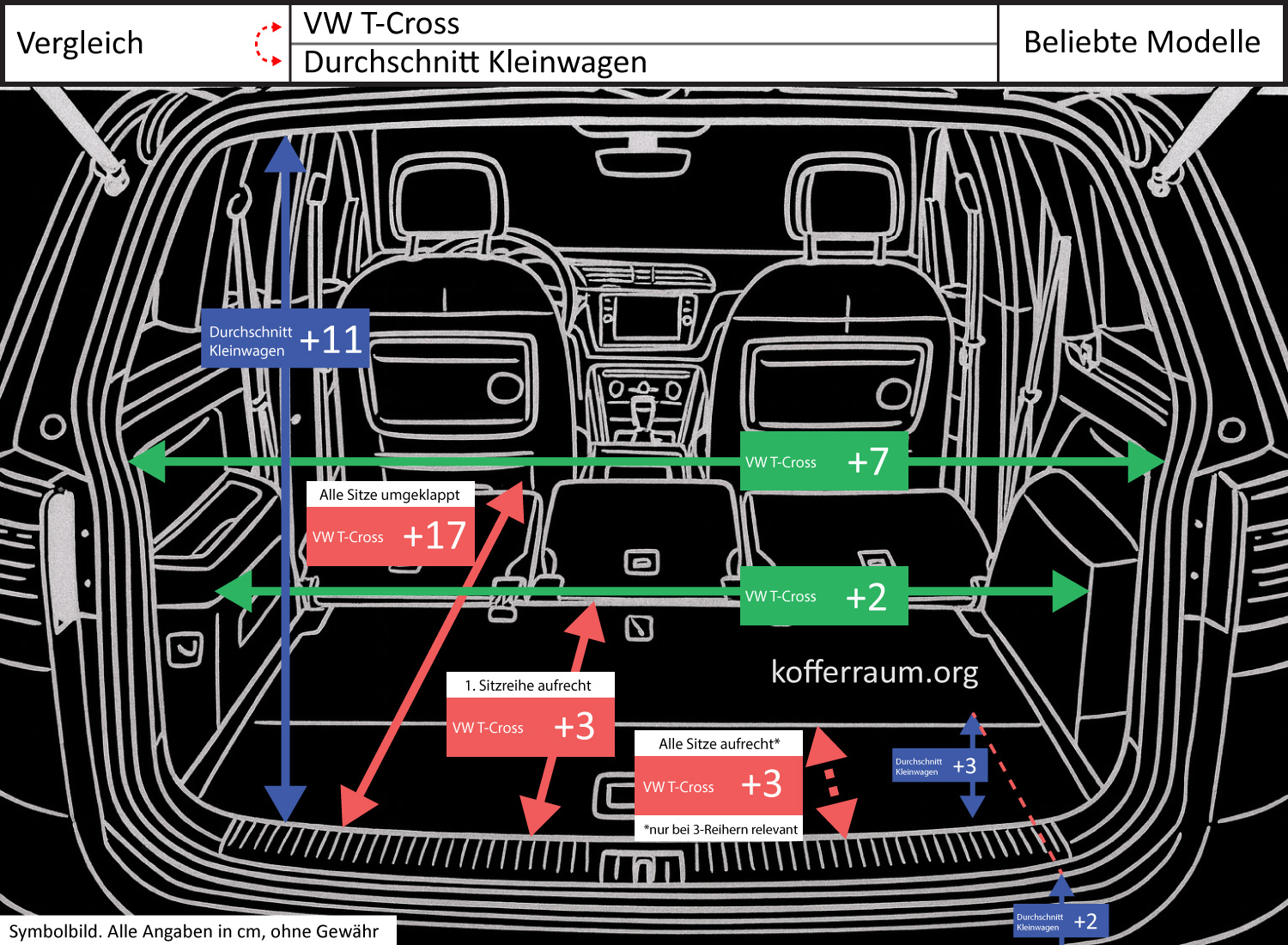
The VW T‑Cross offers a longer loading length with the rear seat folded down: +6.7 in (≈13%) compared to the average subcompact. In contrast, the average subcompact has a significantly larger trunk opening: +4.3 in (≈16%) and a greater interior height from the loading edge rim to the trunk floor: +1.2 in (≈19%).
Smaller deviations (under 10%) concern the loading length with the front seat row upright (+1.2 in / 5% in favor of the T‑Cross), the width at the narrowest point (+0.8 in / 2% in favor of the T‑Cross), the width of the trunk opening (+2.8 in / 8% in favor of the T‑Cross), as well as the loading edge height above the road (+0.8 in / 3% in favor of the average).
Implications for Usability
Because the T‑Cross is significantly longer in the folded rear seat area, it is better suited for transporting long items (e.g., slats, long furniture parts, skis) when the rear seats are folded down.
The slightly greater width at the narrowest point and the wider trunk opening make loading wider or irregularly shaped cargo easier.
The average subcompact, on the other hand, scores points for vertical usability: the higher trunk opening and greater interior height of the loading area make loading taller or bulkier items easier (e.g., stacked crates, tall boxes, plants), as more space is available in height and bulky tall cargo fits more easily through the opening.
The slightly higher loading edge above the road can make lifting in a bit more difficult, but it is minimal (+0.8 in) and hardly noticeable in everyday use.
In summary: For long and wide cargo with folded seats, the VW T‑Cross is more advantageous; for taller or stackable cargo with seats upright, the average subcompact is more practical due to the higher opening and greater interior height.