
Trunk comparison: VW Taigo vs Durchschnitt Wagon

Key Differences (>10%)
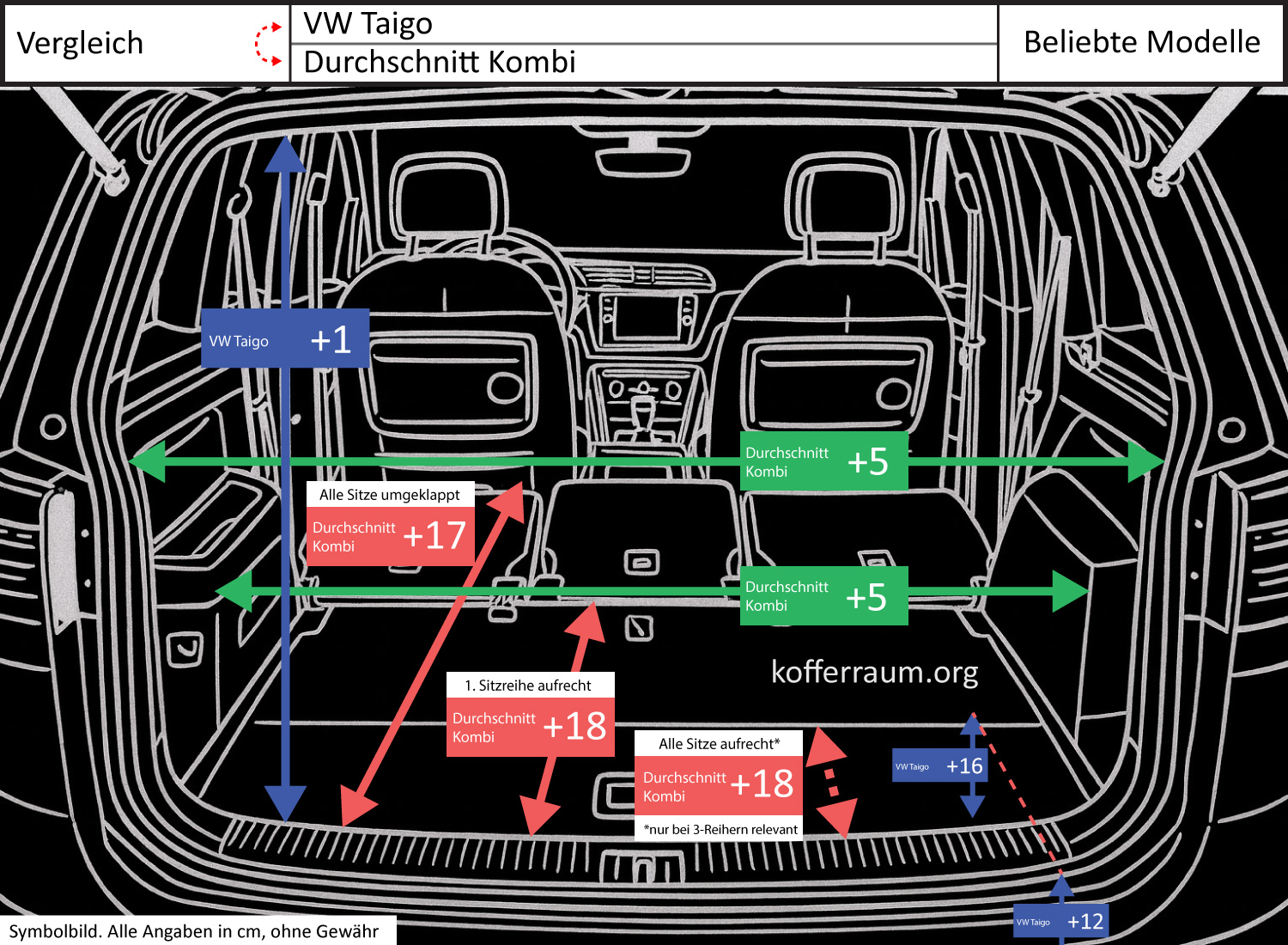
The average wagon offers about +6.7 in (11%) more cargo length with the seats folded down and about +7.1 in (22%) more cargo length with the front row upright than the VW Taigo.
In contrast, the VW Taigo has a significantly deeper trunk depth (measured from the loading edge to the trunk floor): it is +6.3 in (400%) larger. Additionally, the loading edge of the Taigo is +4.7 in (19%) higher above the ground than that of the average wagon.
Impact on Usability
The greater cargo length of the wagon makes it more practical for long items (e.g., furniture, roof box-supported transports, skis, or long moldings) and for daily storage of numerous suitcases and bulky luggage with seats folded or upright.
Buyers who regularly need to transport long loads clearly benefit from the wagon.
The lower trunk floor in the Taigo creates a recessed cargo area that offers more usable volume for stackable or bulky but not too long items and keeps things lower in the cargo space during cornering.
At the same time, the +4.7 in higher loading edge makes lifting heavy loads more difficult: loading boxes or heavy luggage requires more strength or a ramp. For users who often have to lift heavy loads or want to lift strollers in without help, this is a disadvantage.
Width and opening differences (each about +2 in in favor of the wagon) as well as the +0.4 in higher opening height of the Taigo are minor and have little effect on everyday usability: very wide items fit somewhat easier through the opening in the wagon.
Conclusion: Those who regularly transport long or wide loads are better served by the wagon. Those who rather transport stackable everyday items and appreciate somewhat more recessed volume can benefit from the Taigo—but must accept the higher loading edge when loading.