Transporting Strollers in the Trunk: Parent-Friendly Tips, Checklists & the Best Car Types
When traveling with a baby or toddler, you quickly realize: the stroller trunk moment often determines whether the trip starts relaxed or becomes stressful right when loading.
This guide shows you step by step how to store a stroller in the trunk practically, cleanly, and safely – and which vehicle types (station wagon, SUV, sedan, compact car, van & more) are especially helpful in everyday life.
If you're unsure whether a particular stroller fits in your car: use the trunk dimensions as a guide. On kofferraum.org you’ll find average values by vehicle class (e.g. station wagon, SUV or sedan).
The Essentials in 60 Seconds
- Fold first, then plan: Many problems with stroller in the car arise from the wrong order (e.g. wheels not removed, handle not folded down).
- Opening is more important than volume: Sedans can have a large trunk – but a small opening.
- Store stable & clean: Place the stroller so nothing rattles or the canopy/covers get scratched.
- Everyday tip: A simple protective mat + a “fixed point” in the trunk saves nerves (and protects the car).

Not All Strollers Are the Same – The Type You Transport Makes a Difference
When it comes to stroller transport, the design is crucial. Here’s a quick overview:
- Compact buggy: usually the easiest to store; ideal for small trunks and frequent loading/unloading.
- Combination stroller (frame + carrycot): flexible but bulkier – often better to load the carrycot and frame separately.
- Jogger / off-road: large wheels, wide frame – when transporting stroller in the trunk, you often need to remove wheels or use the trunk space very efficiently.
- Twin or sibling stroller: often requires a station wagon/van or very generous loading space; here the trunk opening quickly becomes the limit.
Good news: Almost every stroller can be packed more “trunk-friendly” – with the right technique.
Checklist: How to Determine in Advance if the Stroller Fits
You don’t have to measure everything down to the millimeter. For a reliable assessment, these simple steps are enough:
1) Realistically test the folded size
Fold the stroller as you actually do in everyday life (including folding down the handle, turning/removing wheels, folding the canopy).
Many “doesn’t fit” moments happen because the stroller isn’t fully folded as in real use.
2) The trunk opening is the bottleneck
Focus less on liters and more on how well you can get the stroller through the opening.
This is especially relevant for sedans, coupes, and convertibles.
3) Use average dimensions as a guide
If you don’t have your car yet or want to compare classes: check the average values.
Especially helpful are:
station wagon,
van,
SUV,
compact car
and hatchback.
Storing the Stroller in the Trunk: 12 Proven Tips from Everyday Parenting
Tips that immediately create space
- Remove wheels (if possible): Large rear wheels are often the “space hog”. One quick step can make a difference.
- Separate frame & carrycot: For combination strollers, frame and baby seat/carrycot often fit better separately.
- “Diagonal instead of straight”: Especially in compact cars or hatchbacks, loading diagonally uses the depth better.
- Handle down: The handle often stands high – turning it down or to the side reduces height.
- Light parts first: Light items (diaper bag) on top or beside, heavy parts at the bottom – prevents crushing and protects the stroller.
Tips for less dirt, scratches, and stress
- Trunk mat or blanket: Stroller wheels bring sand, mud, salt – a mat saves cleaning time.
- Wheels in a bag: Especially handy if you remove wheels or the stroller is wet.
- Fixed “parking spot” in the trunk: If the stroller always lies the same way, you pack faster – and there’s less rattling.
- Protect canopy/covers: No sharp edges or heavy groceries pressing directly on fabric parts.
- Watch door/tailgate: A pinched strap or fabric can cause damage later.
Tips for safety when transporting the stroller
- Anti-slip protection: If the stroller “moves” in the trunk, a non-slip mat helps.
- Secure when fully loaded: If you also have luggage: place heavy bags so they don’t damage the stroller or tip over.
This way storing stroller in the trunk becomes a routine, not a daily puzzle.
Which Car Types Are Best Suited for Strollers? (with Tips per Class)
Here comes the parent reality check: Not every car is equally “stroller-friendly” – even if the trunk looks large on paper.
Key everyday factors are opening, loading height, flat loading surface, and how well you can still fit shopping or luggage alongside the stroller.
Station wagon: the classic for stroller in the trunk
A station wagon is often the most relaxed solution: large rear opening,
long loading floor, good everyday usability. For many families, “station wagon + stroller” is the combination with the least stress.
- Ideal for: combination strollers, joggers, also sibling strollers (depending on model).
- Parent tip: Use the space to position the stroller so you still have a “shopping corridor” next to it.
SUV: lots of space feeling – but watch loading height and loading angle
An SUV often has a good opening and more height –
practical if you don’t want to “press” the stroller flat.
At the same time, the loading height is often higher than a station wagon, which can be relevant for daily loading (especially after a C-section or with back pain).
- Ideal for: families who like higher entry and often use the trunk.
- Parent tip: Test in everyday life if you can comfortably lift the stroller – if necessary, choose a lighter model.
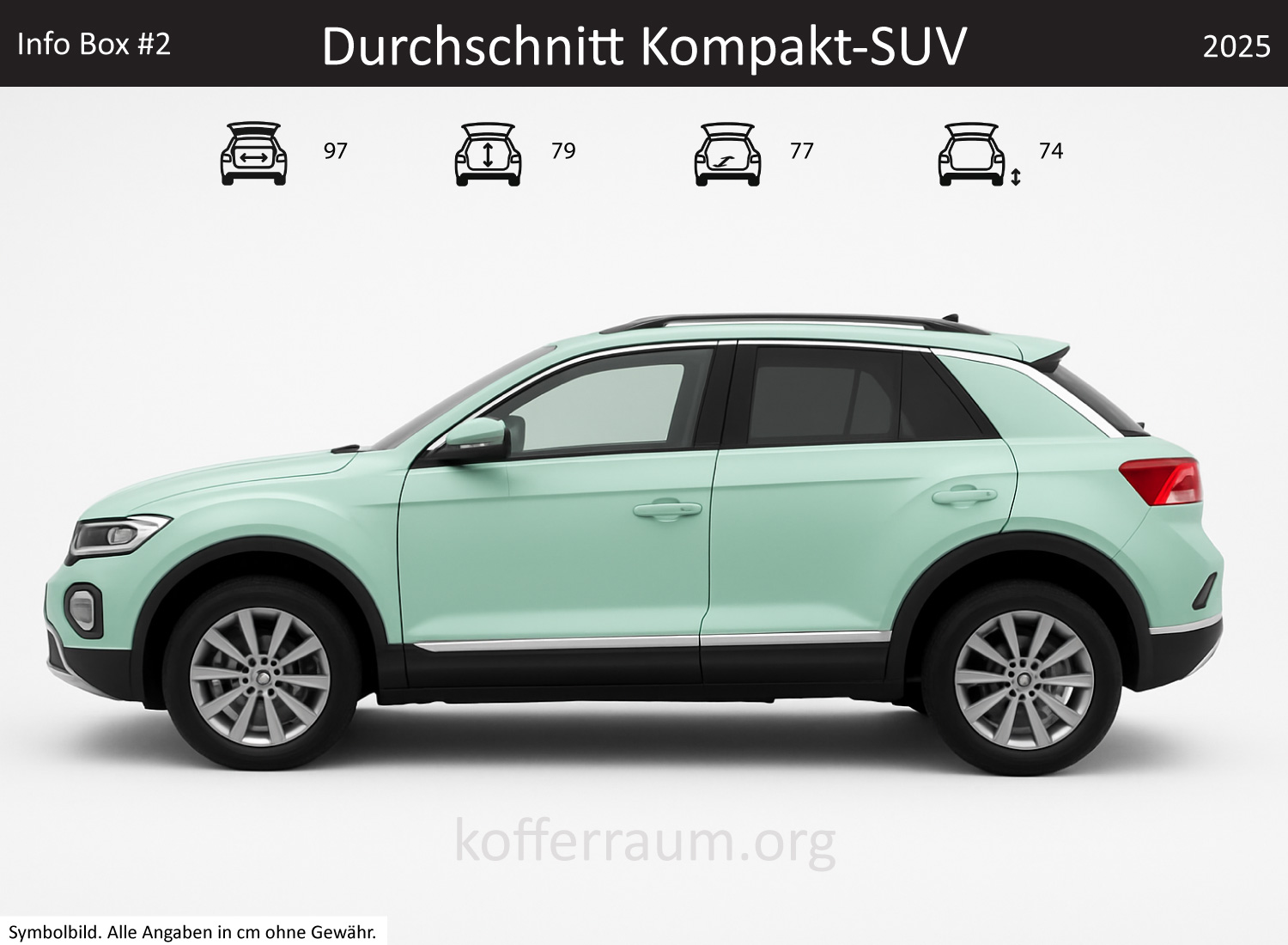
Compact SUV: popular, practical – but sometimes tighter than expected
Compact SUVs look big outside, but the trunk can be shorter inside.
This matters if you have a long combination stroller or jogger. Advantage: usually good opening, but usable depth can be limited.
- Ideal for: buggy, compact combination strollers.
- Parent tip: Plan extra space for diaper bag/shopping – otherwise the trunk fills up quickly.
Hatchback: practical in everyday life, but “Tetris” with bigger strollers
With hatchbacks, the tailgate is often practical,
but the trunk shape can narrow upwards/backwards.
For stroller in the car, this works well with a compact folded size – for large frames, removing wheels and diagonal loading help.
- Ideal for: buggy, compact stroller, city use.
- Parent tip: Put a blanket in the trunk: hatchback loading areas often have more “contact points” on the stroller.
Compact car: possible – if you choose the stroller accordingly
A compact car can be absolutely family-friendly,
if you use a compact stroller or separate parts (frame + carrycot).
Often the challenge is not just depth but sensible loading with additional luggage.
- Ideal for: buggies, lightweight strollers, everyday city use.
- Parent tip: If you often do big shopping trips: check if shopping + stroller work well together.
Sedan: large trunk – but often small opening
The catch with sedans:
you often have a lot of volume, but the trunk opening is limited.
When transporting stroller in the trunk, this means:
fold flat, remove wheels, and preferably a frame that folds compactly without “overhang”.
- Ideal for: compact frames, buggies, separate loading (frame/carrycot).
- Parent tip: Definitely test with the real folded size – with sedans it often fails at the opening, not the space.
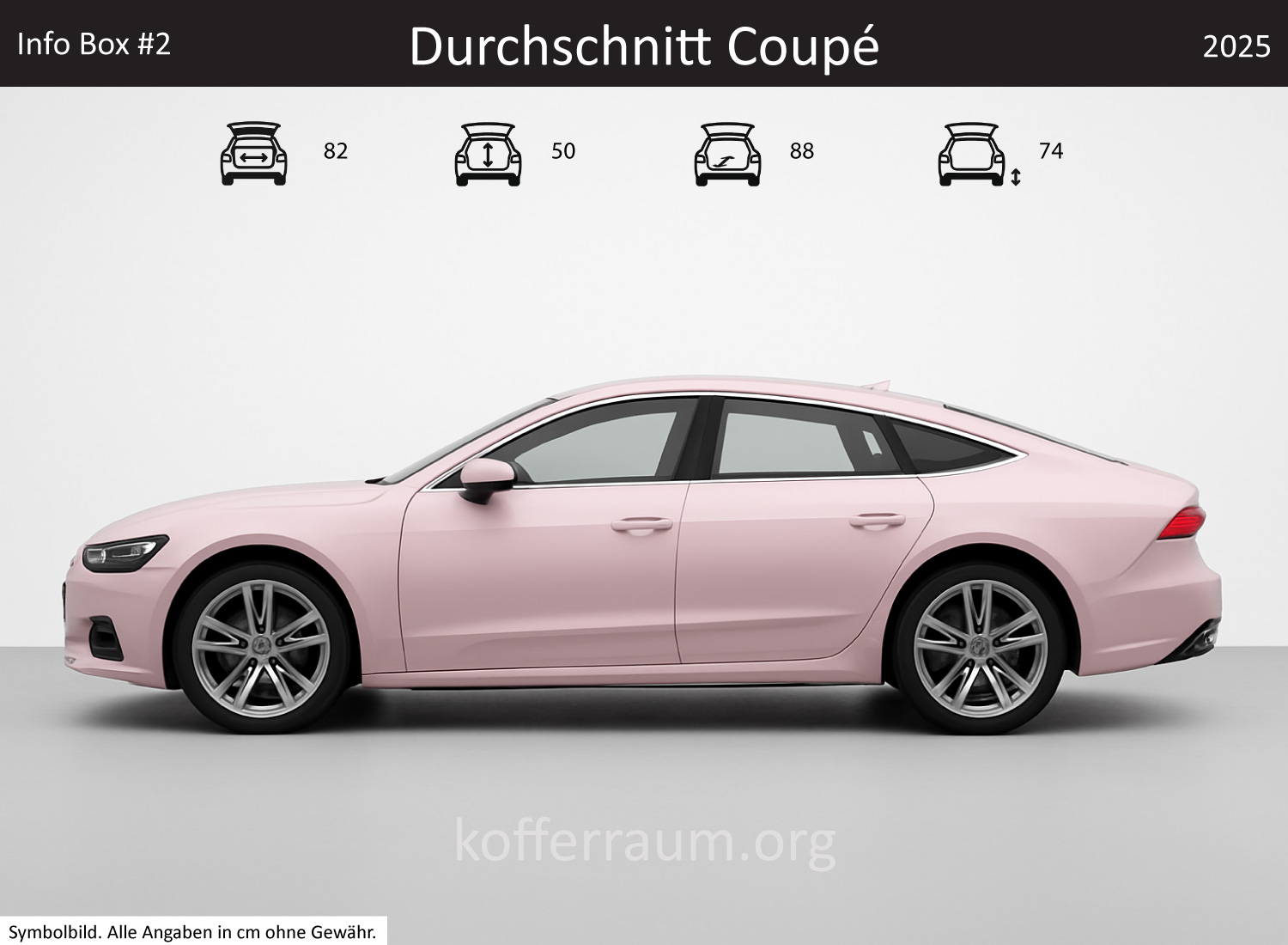
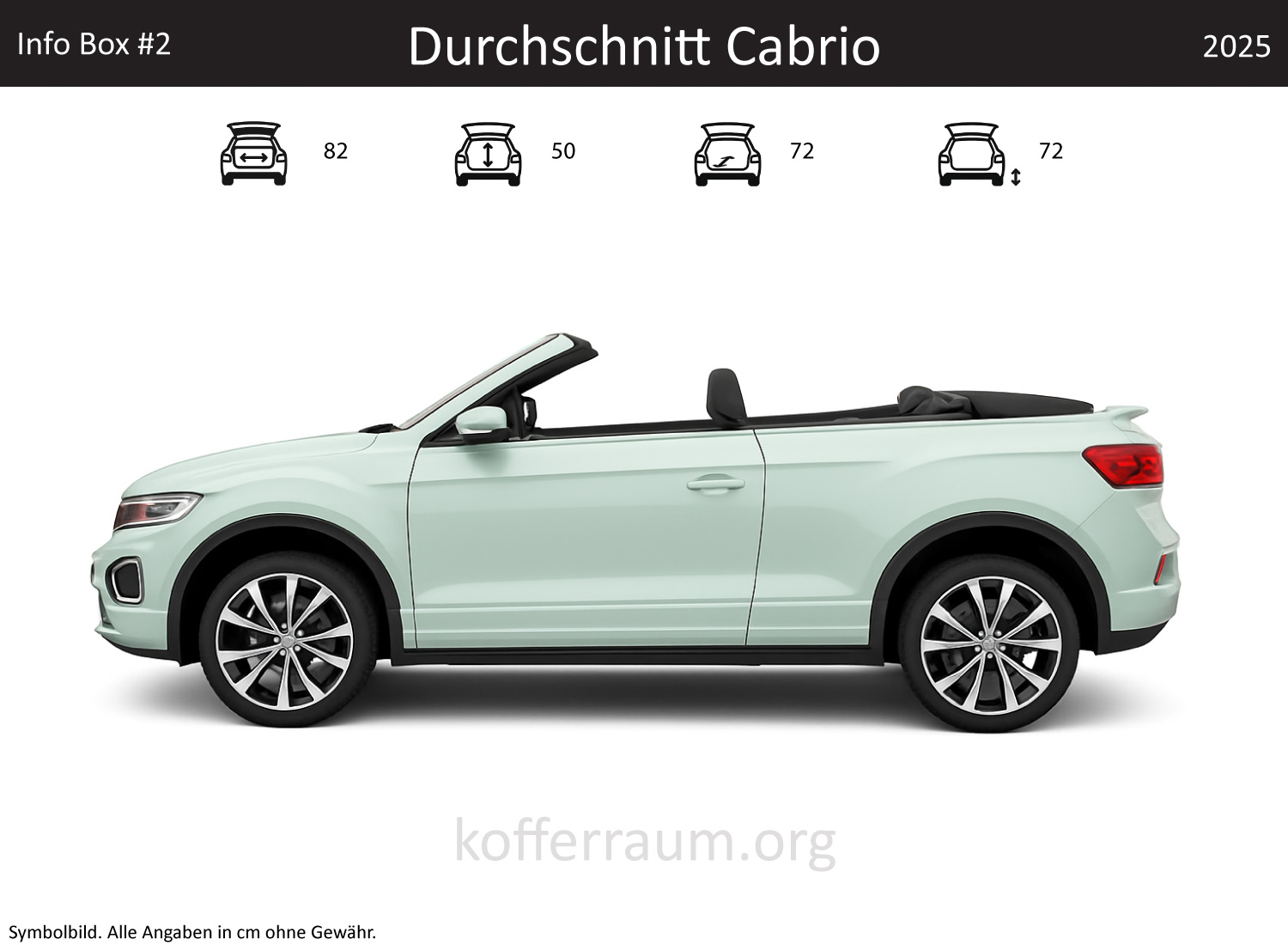
Coupe & convertible: doable, but often only with very compact folded size
With coupes and convertibles
trunk shape and opening are often limited (convertibles also have roof mechanism/storage).
For everyday use, it usually only works with buggies or very compact strollers.
- Ideal for: buggy, travel stroller.
- Parent tip: If you regularly travel with a stroller, this vehicle class can quickly become tiring.
Van: the stress-free family solution
A van is often the “easy does it” category:
large opening, plenty of height, flat loading floor. Here the stroller usually fits without removing wheels – and there’s room for everything that comes with kids.
- Ideal for: large strollers, sibling strollers, long trips, lots of luggage.
- Parent tip: If you often load alone: vans are usually very back-friendly due to the loading edge and access.
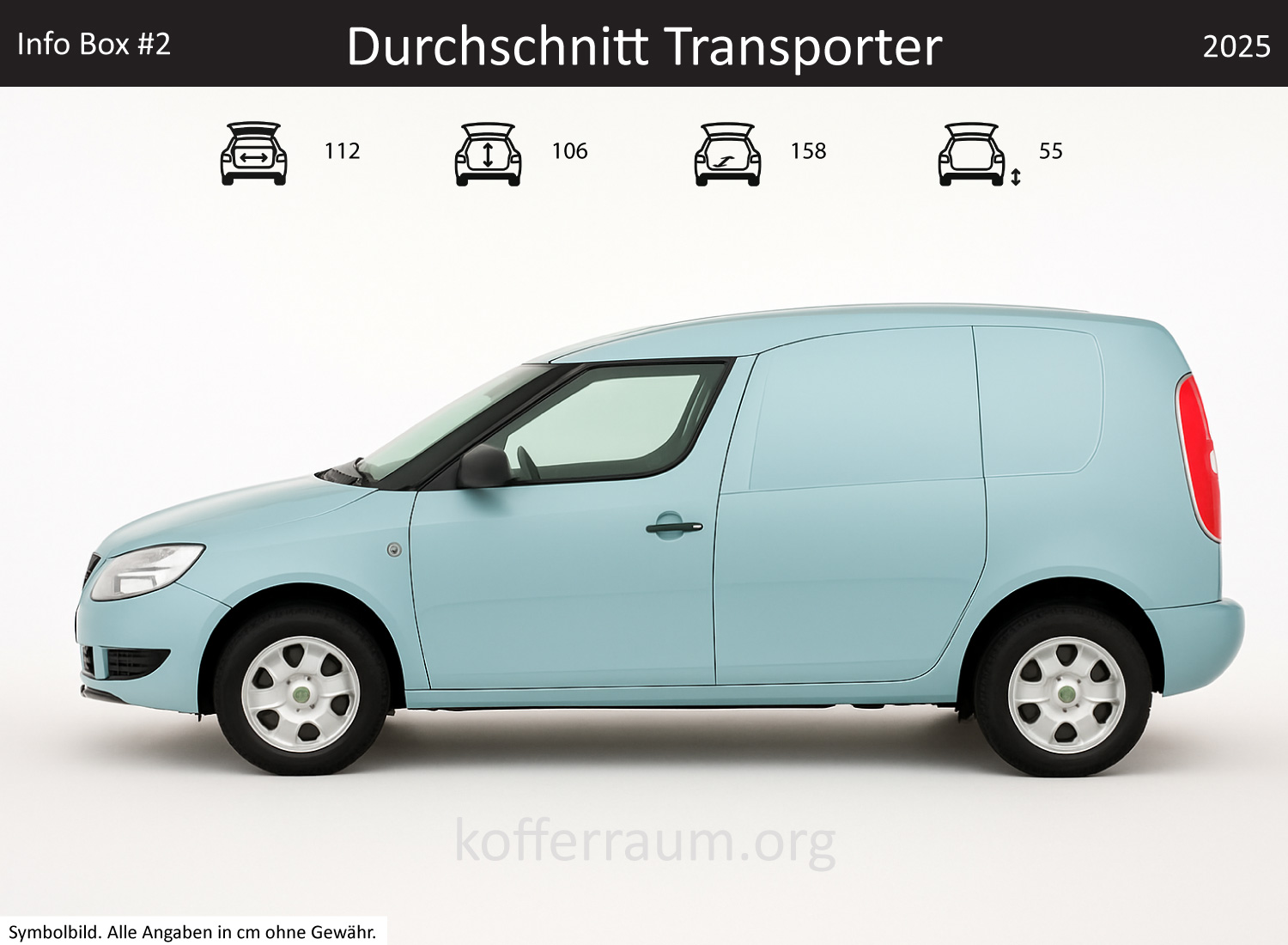
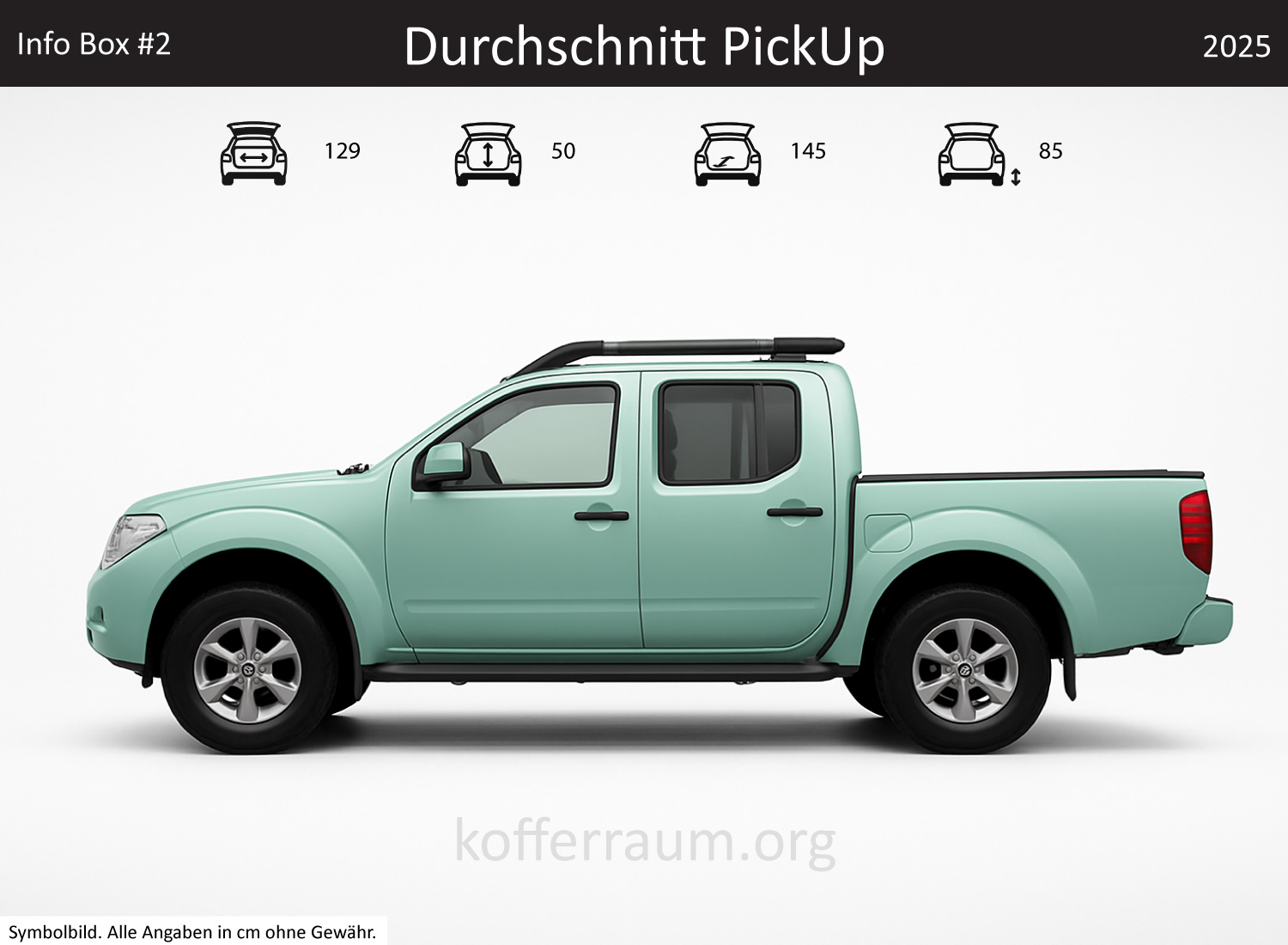
Transporter & pickup: maximum space – but consider everyday use and safety
With transporters and pickups
space is rarely the problem.
Instead, everyday factors are more important: accessibility, load securing, and (for pickups) weather protection of the loading area.
- Ideal for: trips, outdoor, lots of luggage plus stroller.
- Parent tip: For pickups, transport the stroller weatherproof only with a cover/hardtop.
Average Trunk Dimensions by Vehicle Type (Gallery)
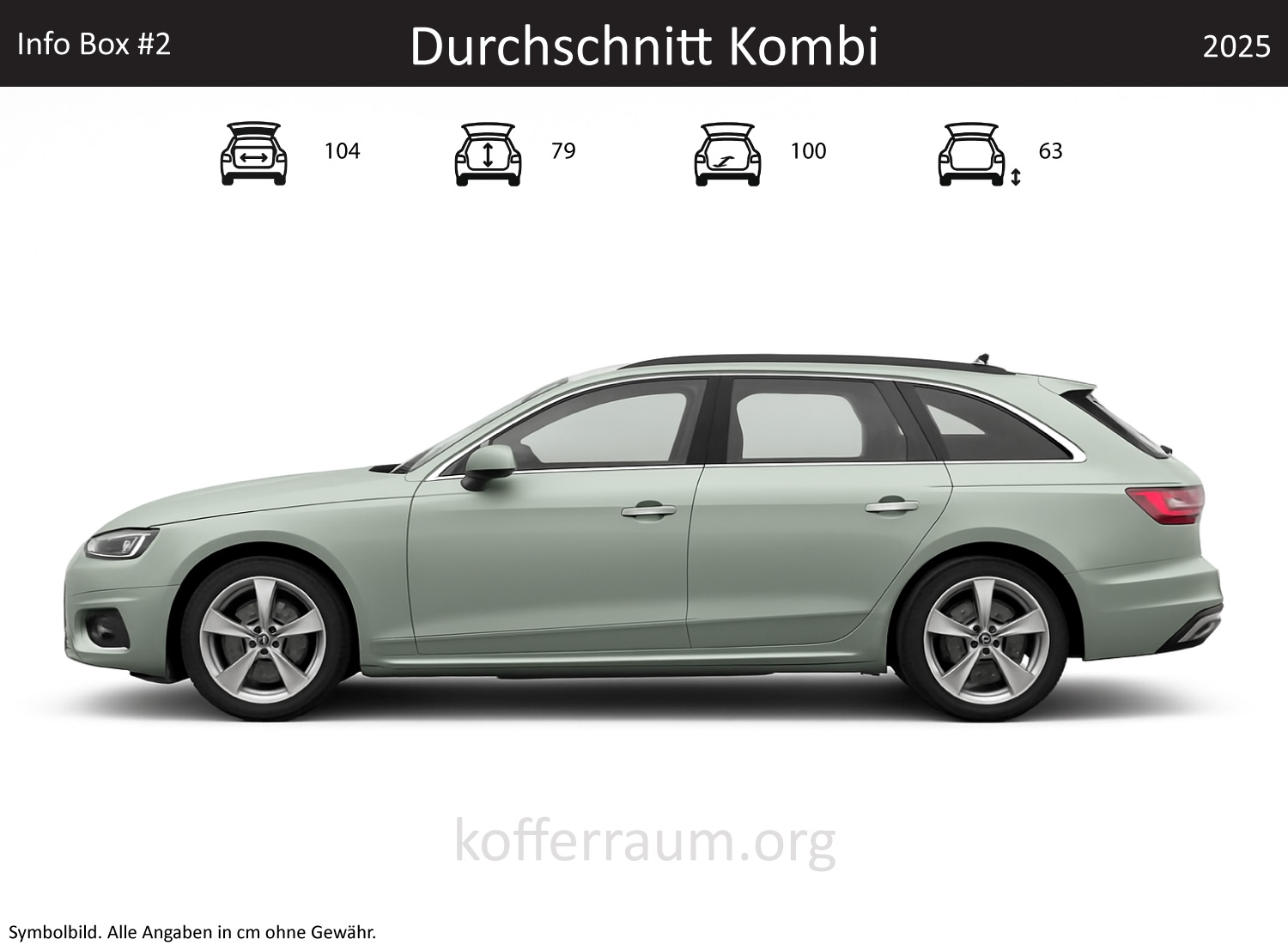
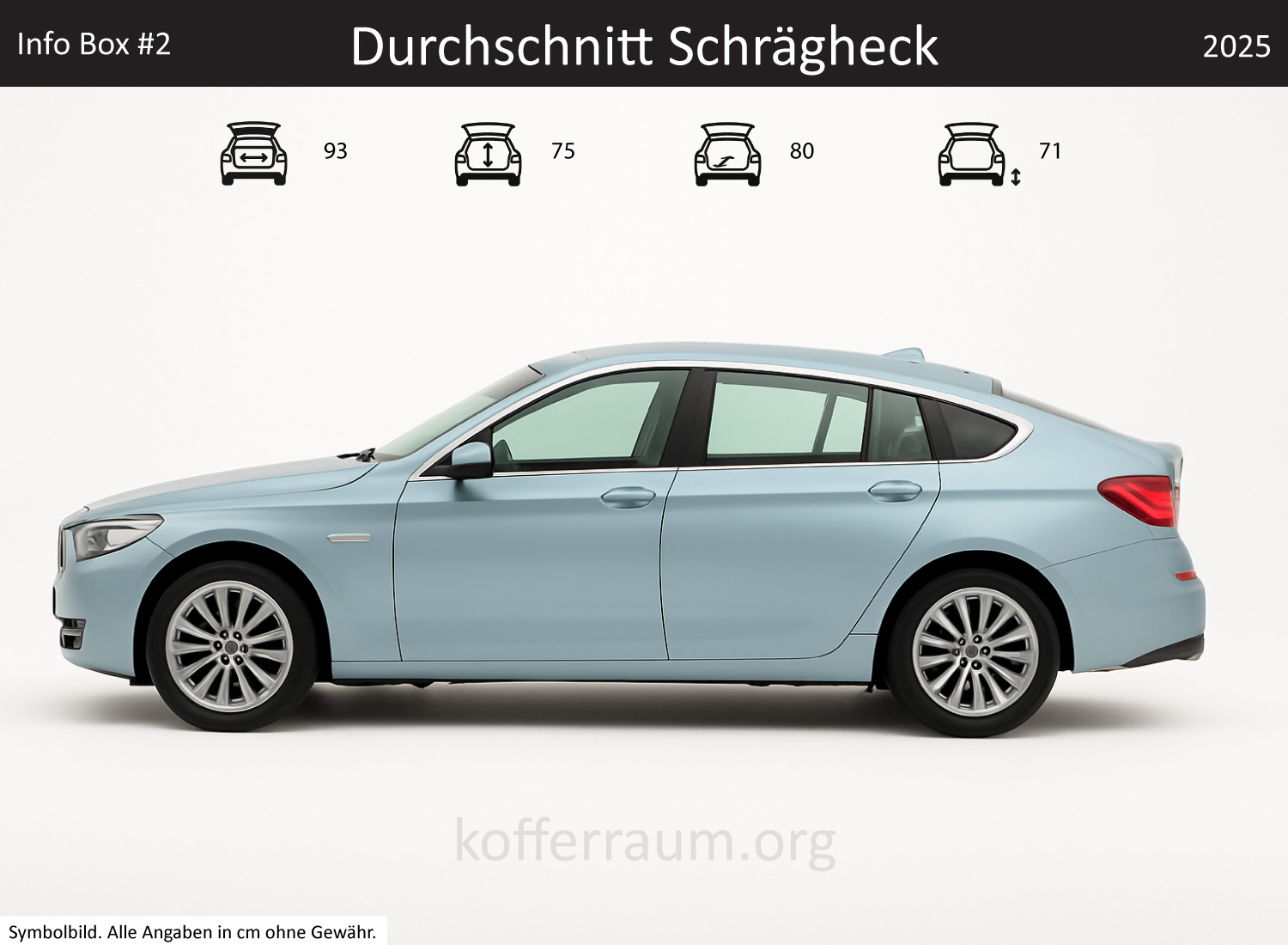
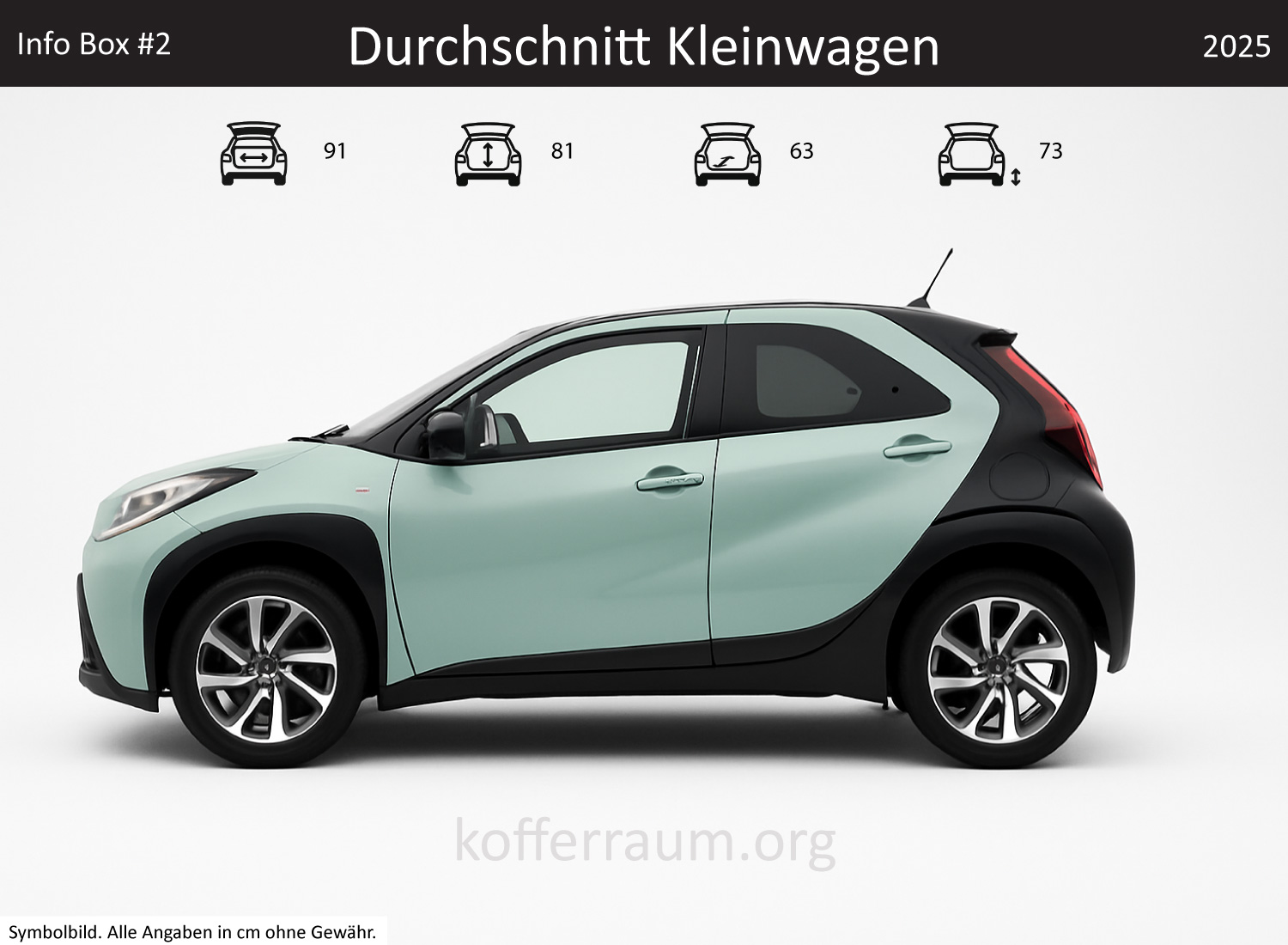
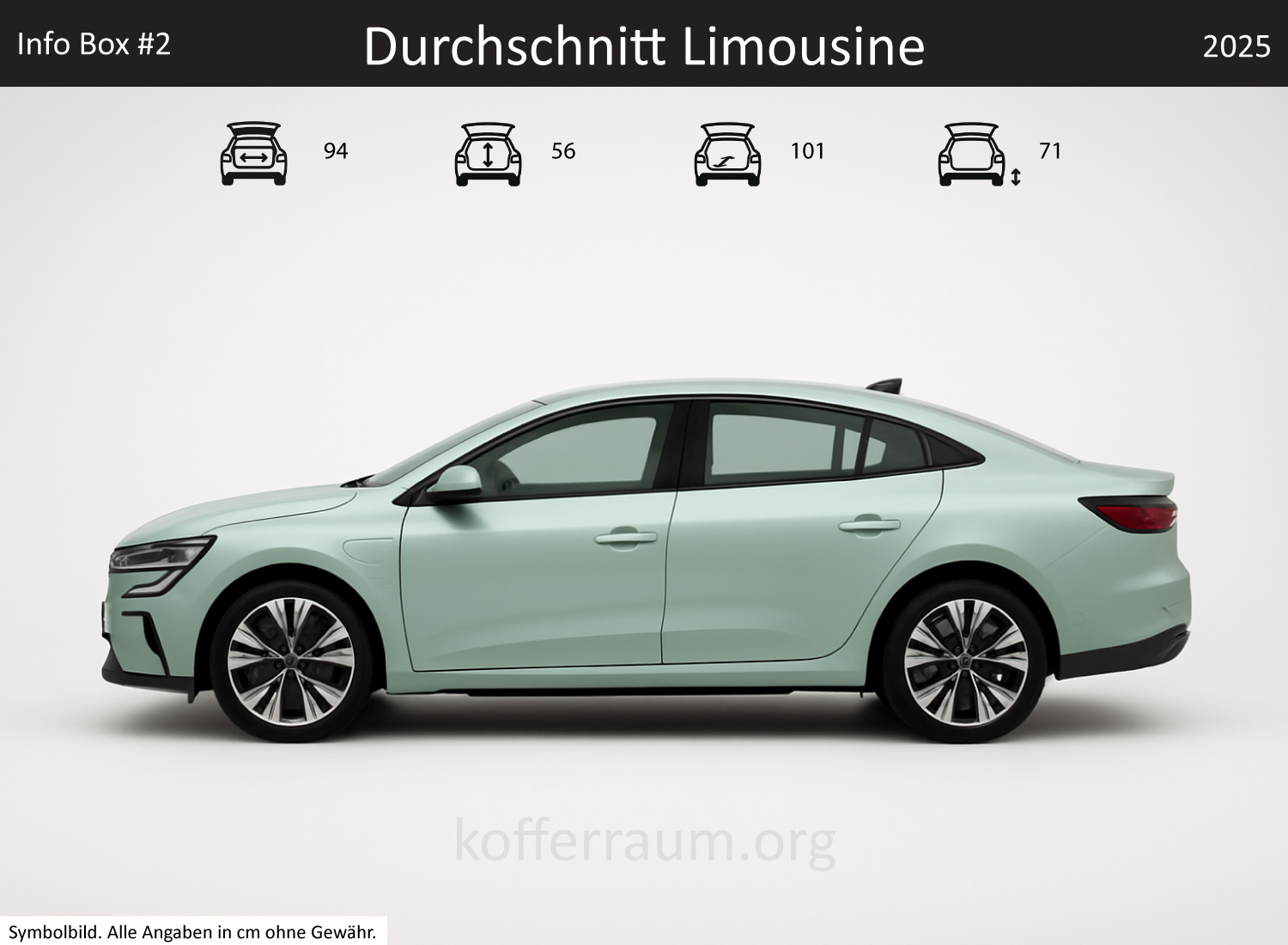
The following overviews show average values by vehicle class – ideal to quickly get a feel for
how well a stroller will likely fit in the trunk.
For details, use the respective pages: All Average Classes at a Glance.
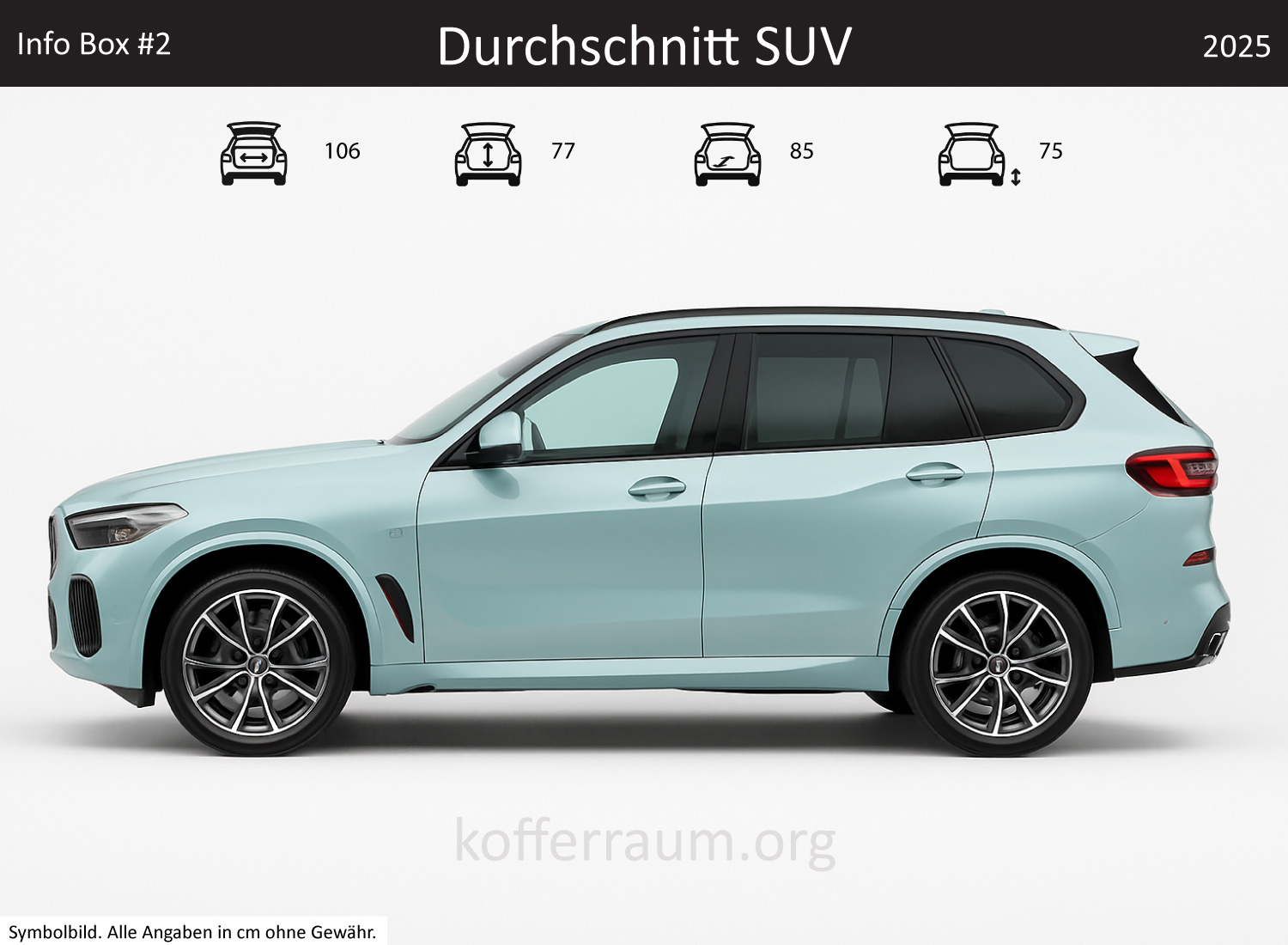
SUV – good opening and height, but loading height and usable depth can be decisive in everyday life.
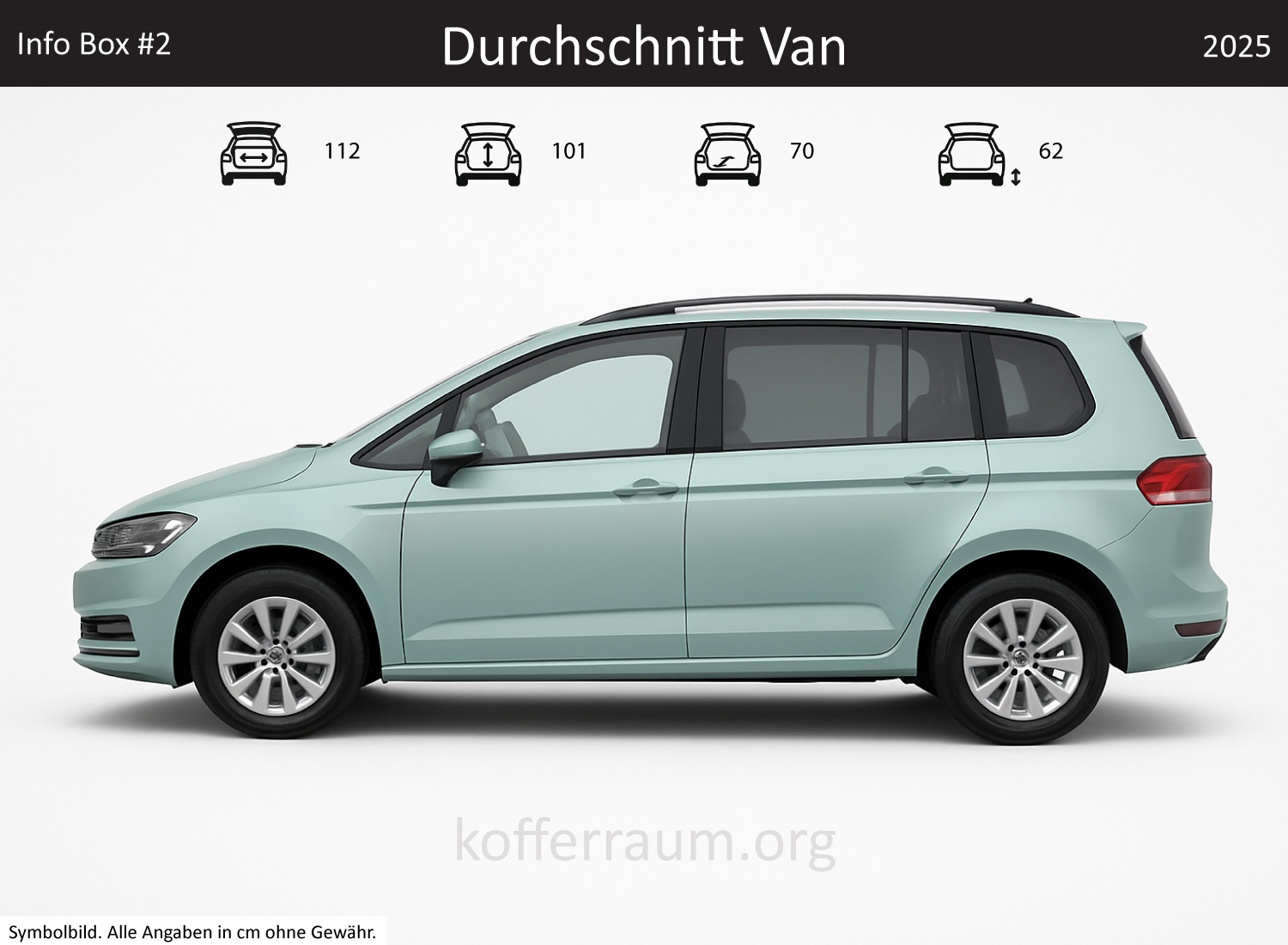
Van – the stress-free family class: large access, plenty of height, usually little “Tetris” when loading.
If You Need to Fit Luggage Alongside the Stroller: Organization Systems That Really Help
The biggest stress often isn’t “getting the stroller in”, but “and now shopping, diaper bag, toys, jackets…”.
These small habits make the difference:
- A dedicated box/bag for small items: pacifiers, wipes, trash bags, change of clothes – everything has its place.
- Diaper bag not just anywhere: either always on top or in the rear footwell so you can reach it quickly on the go.
- Separate shopping: heavy items first (drinks), fragile on top – this keeps the stroller protected.
- Short paths: if possible: position the stroller so you can pull it out in one go.
Safety When Transporting the Stroller: What Parents Often Overlook
A stroller is sturdy – but in the car it can still slip or hit other objects during a hard brake.
The goal is not “perfect”, but “reasonably safe”:
- No heavy items on the stroller: water bottles or suitcases can damage canopy, frame, and covers.
- Non-slip mat: minimizes movement and noise – and protects the trunk floor.
- Secure loose parts: wheel covers, adapters, cup holders – everything that rattles is best put in a bag.
- When fully loaded: create “separation zones” (e.g. box left, stroller right) so nothing tips over.
This way transporting stroller in the trunk is calmer even on longer trips – and your car stays nicer longer.
FAQ: Common Questions About Strollers in the Trunk
How do I best place the stroller in the trunk?
The best position is the one that is quick, doesn’t crush anything, and doesn’t rattle. Often works:
frame flat, wheels to the side or removed, delicate fabric parts on top. In smaller cars, diagonal loading helps.
What do I do if the stroller doesn’t fit in the trunk?
First check: fully folded? Handle folded down? Wheels removed? If it still doesn’t fit,
usually the opening or depth is limiting (typical for sedan/coupe/convertible).
Then a more compact buggy or a differently folding frame can be the best solution.
Which car type is best if I often travel with a stroller?
For most families, station wagons and vans
are the most relaxed. SUVs are also good if the loading height is comfortable for you.
Can I transport a stroller standing up in the trunk?
Sometimes yes, if it stands stable and nothing presses. However, lying down is often gentler on fabric parts
and prevents the stroller from tipping during driving. The key is: calm, stable, without crushing.
Is the stroller safe enough in the car if it just “lies there”?
For short everyday trips, that’s often okay if it lies stable and doesn’t slip.
If you have additional luggage or long trips, non-slip mats and clear “zones” in the trunk help.
Conclusion: The Best Stroller Trunk Is the One That Fits Your Everyday Life
When it comes to stroller trunk, it’s not just about “somehow fits”, but “fits stress-free”:
folded size, opening, loading height, and everyday usability decide.
If you want to compare vehicle classes, use the average values on kofferraum.org – especially helpful are
station wagon, van,
SUV and compact car.
With the tips from this article, storing stroller in the trunk becomes routine –
and you have more headspace for what really matters: traveling relaxed.